
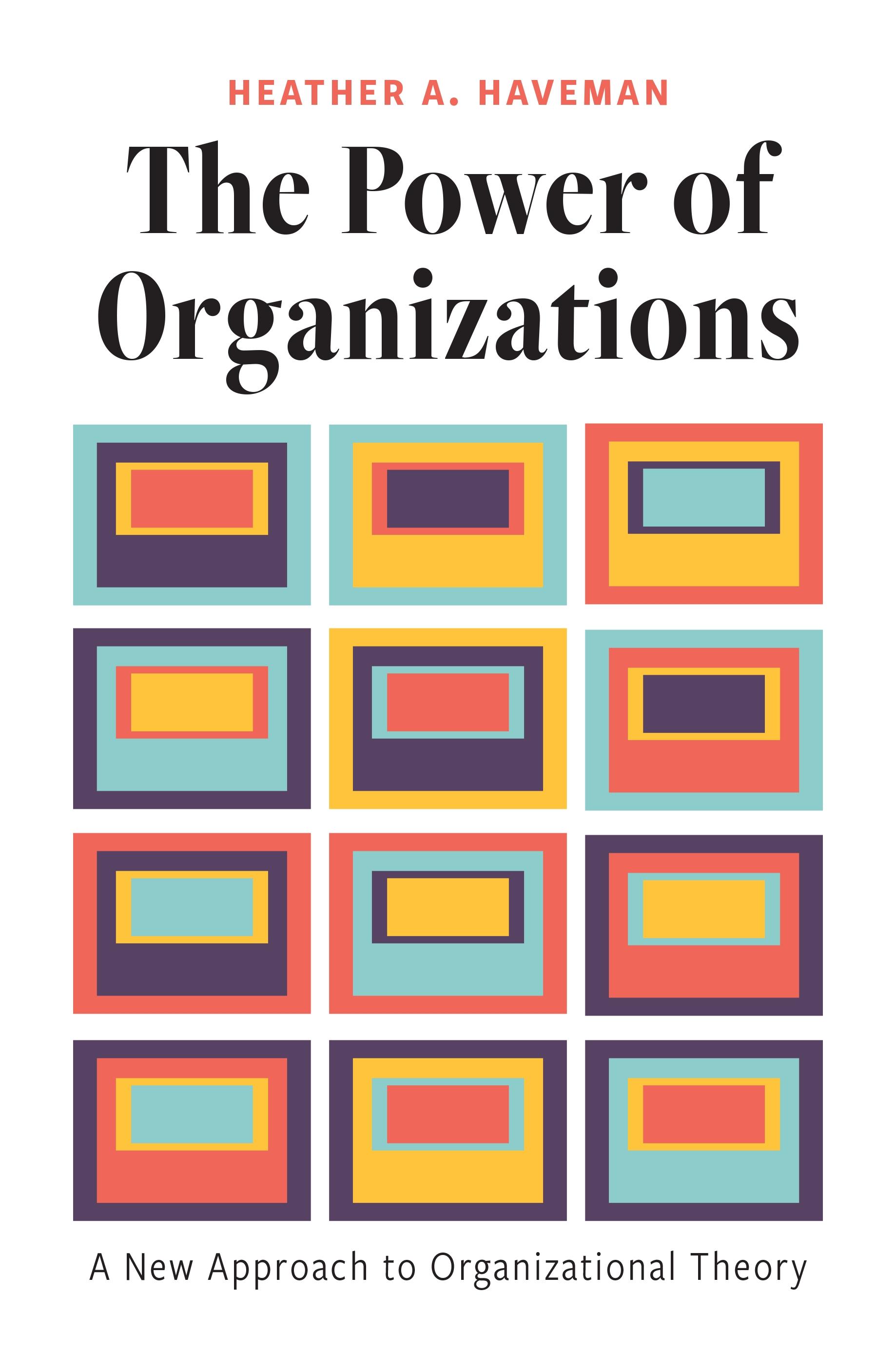
How organizations developed in history, how they operate, and how research on them has evolved
Organizations are all around us: government agencies, multinational corporations, social-movement organizations, religious congregations, scientific bodies, sports teams, and more. Immensely powerful, they shape all social, economic, political, and cultural life, and are critical for the planning and coordination of every activity from manufacturing cardboard boxes to synthesizing new drugs and reducing greenhouse gas emissions. To understand our world, we must understand organizations. The Power of Organizations defines the features of organizations, examines how they operate, traces their rise over the course of a millennium, and explains how research on organizations has evolved from the mid-nineteenth century to today.
Heather Haveman shows how almost all contemporary research on organizations fits into three general perspectives: demographic, relational, and cultural. She offers constructive criticism of existing research, showing how it can be remade to be both more interesting and influential. She examines how we can use existing theories to understand the changes wrought by digital technologies, and she argues that organizational scholars can and should alter the impact that organizations have on society, particularly societal and global inequality, formal politics, and environmental degradation.
The Power of Organizations demonstrates the benefits and dangers of these ubiquitous foundations of modern society.
Płać wygodnie kartą, Klarną, Apple Pay lub Google Pay. Nie jesteś zadowolony? Zawsze masz 14-dniową gwarancję zwrotu pieniędzy. Więcej przeczytasz w naszych warunkach. Masz pytania? Napisz do nas na hello@memmo.org.
Memmo ułatwia naukę – gdziekolwiek jesteś na świecie. U nas znajdziesz podręczniki i sprytne narzędzia do nauki w jednym miejscu: streszczenia, quizy, podcasty i fiszki. A do tego Ted, Twój kumpel do nauki, który odpowie na wszystko, co Cię nurtuje. Ponad 50 000 studentów już tu się uczy – stworzone, byś uczył się szybciej i mniej stresował.