
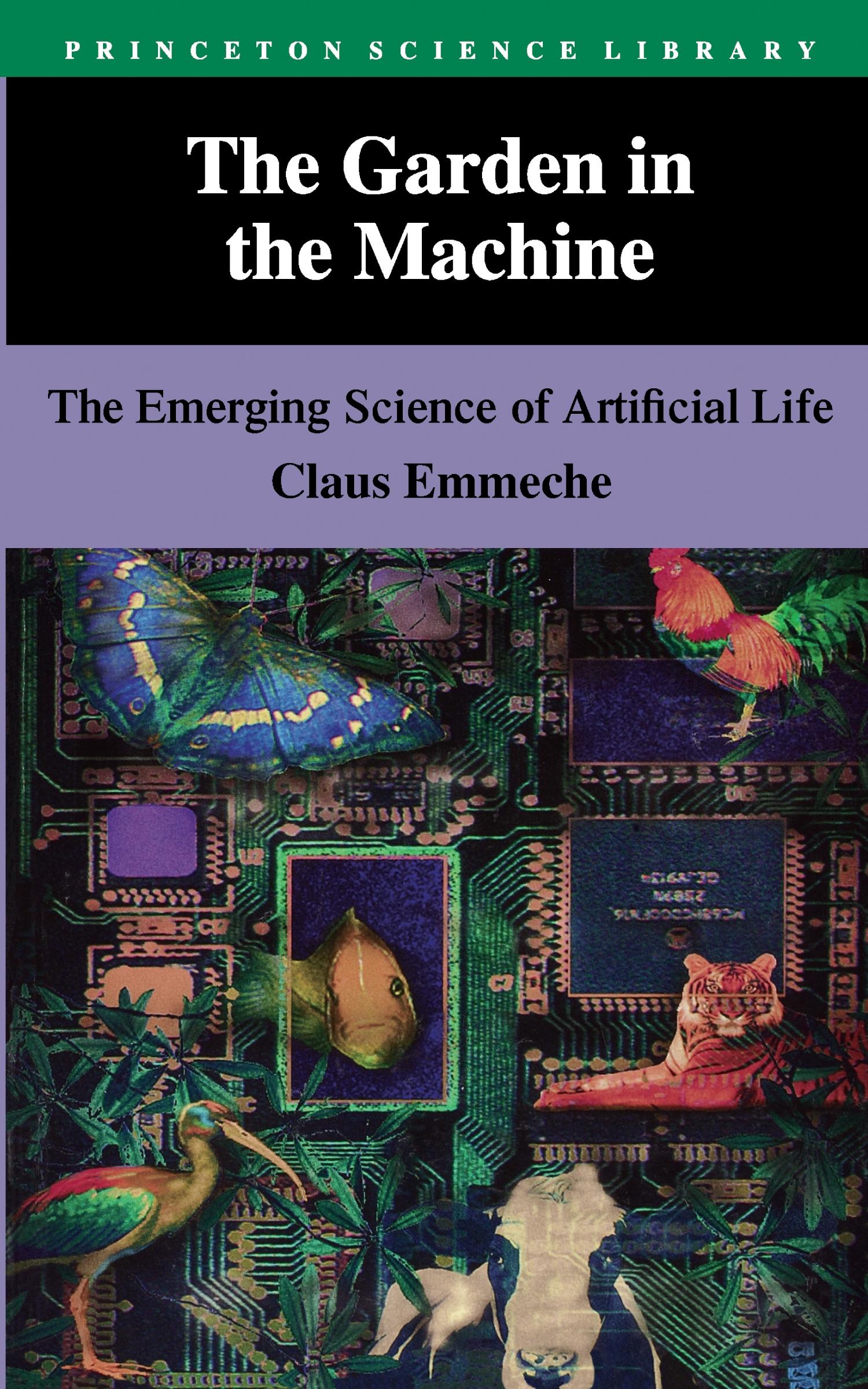
What is life? Is it just the biologically familiar--birds, trees, snails, people--or is it an infinitely complex set of patterns that a computer could simulate? What role does intelligence play in separating the organic from the inorganic, the living from the inert? Does life evolve along a predestined path, or does it suddenly emerge from what appeared lifeless and programmatic?
In this easily accessible and wide-ranging survey, Claus Emmeche outlines many of the challenges and controversies involved in the dynamic and curious science of artificial life. Emmeche describes the work being done by an international network of biologists, computer scientists, and physicists who are using computers to study life as it could be, or as it might evolve under conditions different from those on earth.
Many artificial-life researchers believe that they can create new life in the computer by simulating the processes observed in traditional, biological life-forms. The flight of a flock of birds, for example, can be reproduced faithfully and in all its complexity by a relatively simple computer program that is designed to generate electronic "boids." Are these "boids" then alive? The central problem, Emmeche notes, lies in defining the salient differences between biological life and computer simulations of its processes. And yet, if we can breathe life into a computer, what might this mean for our other assumptions about what it means to be alive?
The Garden in the Machine touches on every aspect of this complex and rapidly developing discipline, including its connections to artificial intelligence, chaos theory, computational theory, and studies of emergence. Drawing on the most current work in the field, this book is a major overview of artificial life. Professionals and nonscientists alike will find it an invaluable guide to concepts and technologies that may forever change our definition of life.
Płać wygodnie kartą, Klarną, Apple Pay lub Google Pay. Nie jesteś zadowolony? Zawsze masz 14-dniową gwarancję zwrotu pieniędzy. Więcej przeczytasz w naszych warunkach. Masz pytania? Napisz do nas na hello@memmo.org.
Memmo ułatwia naukę – gdziekolwiek jesteś na świecie. U nas znajdziesz podręczniki i sprytne narzędzia do nauki w jednym miejscu: streszczenia, quizy, podcasty i fiszki. A do tego Ted, Twój kumpel do nauki, który odpowie na wszystko, co Cię nurtuje. Ponad 50 000 studentów już tu się uczy – stworzone, byś uczył się szybciej i mniej stresował.