
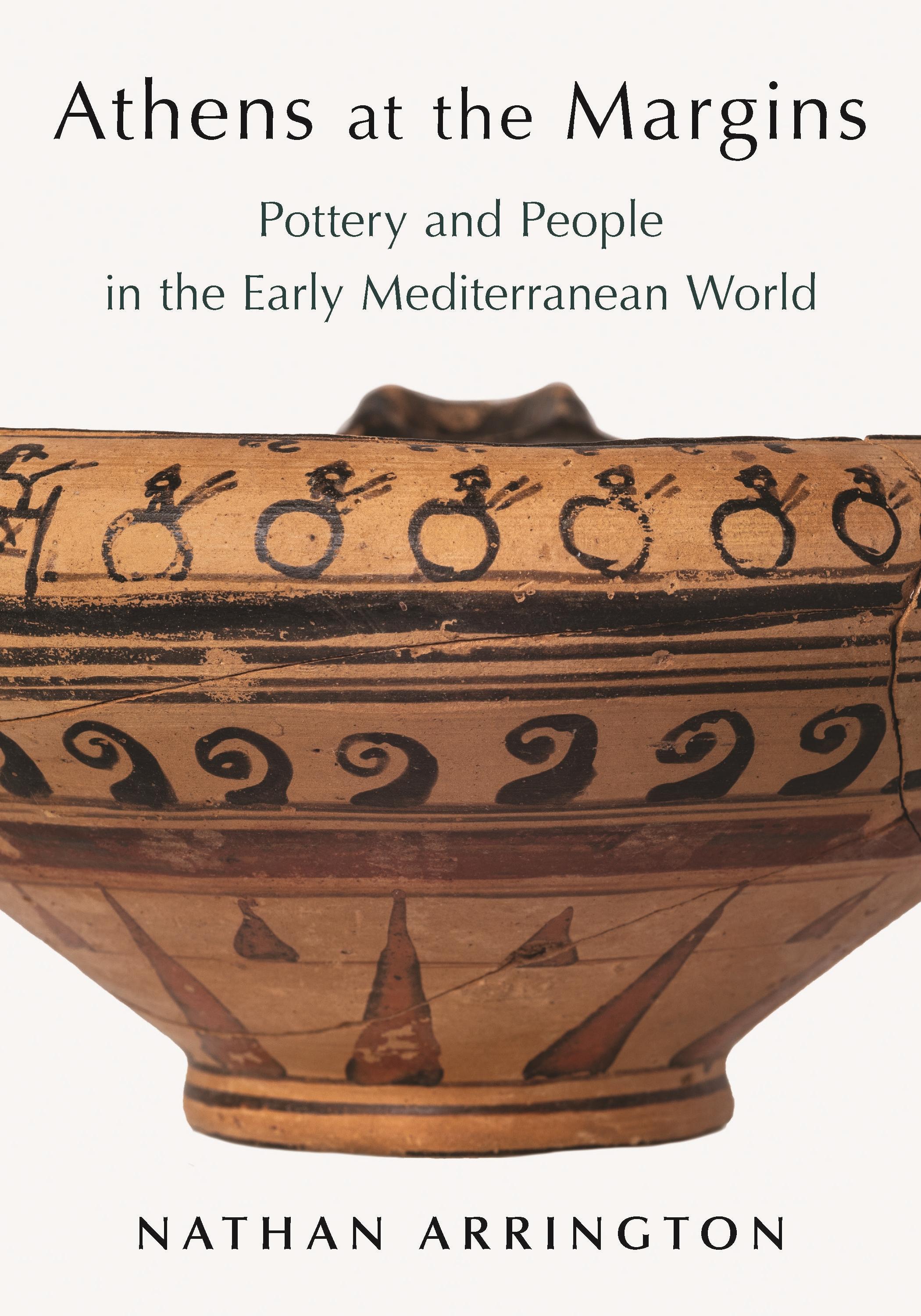
How the interactions of non-elites influenced Athenian material culture and society
The seventh century BC in ancient Greece is referred to as the Orientalizing period because of the strong presence of Near Eastern elements in art and culture. Conventional narratives argue that goods and knowledge flowed from East to West through cosmopolitan elites. Rejecting this explanation, Athens at the Margins proposes a new narrative of the origins behind the style and its significance, investigating how material culture shaped the ways people and communities thought of themselves.
Athens and the region of Attica belonged to an interconnected Mediterranean, in which people, goods, and ideas moved in unexpected directions. Network thinking provides a way to conceive of this mobility, which generated a style of pottery that was heterogeneous and dynamic. Although the elite had power, they were unable to agree on the norms of conspicuous consumption and status display. A range of social actors used objects, contributing to cultural change and to the socially mediated production of meaning. Historiography and the analysis of evidence from a wide range of contexts—cemeteries, sanctuaries, workshops, and symposia—offers the possibility to step outside the aesthetic frameworks imposed by classical Greek masterpieces and to expand the canon of Greek art.
Highlighting the results of new excavations and looking at the interactions of people with material culture, Athens at the Margins provocatively shifts perspectives on Greek art and its relationship to the eastern Mediterranean.
Płać wygodnie kartą, Klarną, Apple Pay lub Google Pay. Nie jesteś zadowolony? Zawsze masz 14-dniową gwarancję zwrotu pieniędzy. Więcej przeczytasz w naszych warunkach. Masz pytania? Napisz do nas na hello@memmo.org.
Memmo ułatwia naukę – gdziekolwiek jesteś na świecie. U nas znajdziesz podręczniki i sprytne narzędzia do nauki w jednym miejscu: streszczenia, quizy, podcasty i fiszki. A do tego Ted, Twój kumpel do nauki, który odpowie na wszystko, co Cię nurtuje. Ponad 50 000 studentów już tu się uczy – stworzone, byś uczył się szybciej i mniej stresował.