
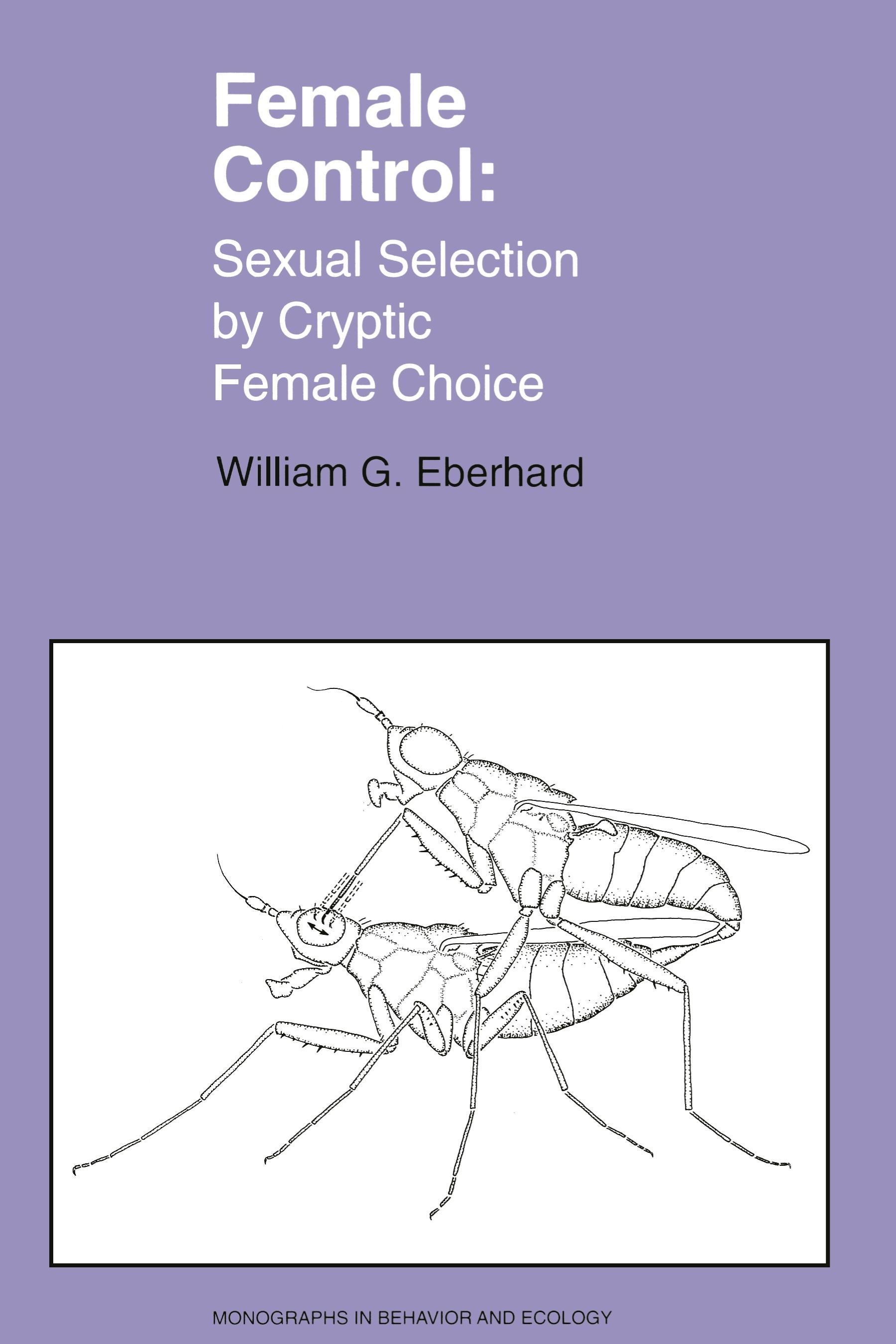
A growing body of evidence has begun to reveal flaws in the traditional assumption of female passivity and lack of discrimination after copulation has begun. William Eberhard has compiled an impressive array of research on the ability of females to shape the outcome of mating. He describes studies of many different cryptic mechanisms by which a female can accept a male for copulation but nevertheless reject him as a father. Evidence from various fields indicates that such selectivity by females may be the norm rather than the exception. Because most post-copulatory competition between males for paternity is played out within the bodies of females, female behavior, morphology, and physiology probably often influence male success in these contests. Eberhard draws examples from a diversity of organisms, ranging from ctenophores to scorpions, nematodes to frogs, and crickets to humans.
Cryptic female choice establishes a new bridge between sexual selection theory and reproductive physiology, in particular the physiological effects of male seminal products on female reproductive processes, such as sperm transport, oviposition, and remating. Eberhard interweaves his review of previous studies with speculation on the consequences of this theoretical development, and indicates promising new directions for future research.
Płać wygodnie kartą, Klarną, Apple Pay lub Google Pay. Nie jesteś zadowolony? Zawsze masz 14-dniową gwarancję zwrotu pieniędzy. Więcej przeczytasz w naszych warunkach. Masz pytania? Napisz do nas na hello@memmo.org.
Memmo ułatwia naukę – gdziekolwiek jesteś na świecie. U nas znajdziesz podręczniki i sprytne narzędzia do nauki w jednym miejscu: streszczenia, quizy, podcasty i fiszki. A do tego Ted, Twój kumpel do nauki, który odpowie na wszystko, co Cię nurtuje. Ponad 50 000 studentów już tu się uczy – stworzone, byś uczył się szybciej i mniej stresował.