
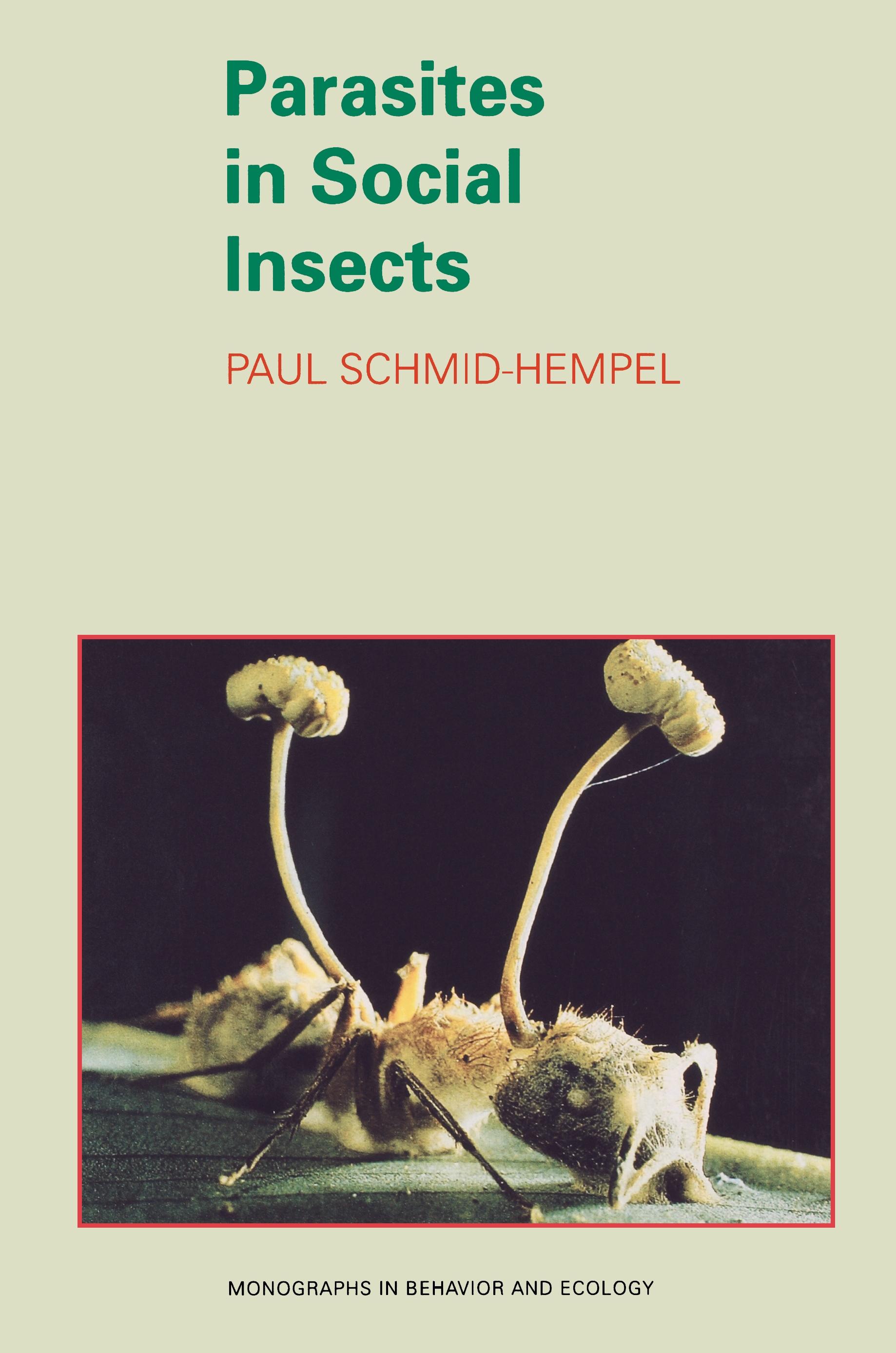
This book analyzes for the first time how parasites shape the biology of social insects: the ants, wasps, bees, and termites. Paul Schmid-Hempel provides an overview of the existing knowledge of parasites in social insects. Current ideas are evaluated using a broad database, and the role of parasites for the evolution and maintenance of the social organization and biology of insects is carefully scrutinized. In addition, the author develops new insights, especially in his examination of the intricate relationships between parasites and their social hosts through the rigorous use of evolutionary and ecological concepts.
Schmid-Hempel identifies gaps in our knowledge about parasites in social insects and uses models to develop new questions for future research. In addition, issues that are usually considered separately--such as division of labor, genetics, immunology, and epidemiology--are placed in a common framework to analyze two of the most successful adaptations of life: parasitism and sociality. This work will appeal not only to practitioners in the fields of behavioral ecology and sociobiology, but also to others interested in host-parasite relationships or in social organisms, such as apiculturists struggling to overcome the problems arising from mite infestations of honeybee colonies.
Płać wygodnie kartą, Klarną, Apple Pay lub Google Pay. Nie jesteś zadowolony? Zawsze masz 14-dniową gwarancję zwrotu pieniędzy. Więcej przeczytasz w naszych warunkach. Masz pytania? Napisz do nas na hello@memmo.org.
Memmo ułatwia naukę – gdziekolwiek jesteś na świecie. U nas znajdziesz podręczniki i sprytne narzędzia do nauki w jednym miejscu: streszczenia, quizy, podcasty i fiszki. A do tego Ted, Twój kumpel do nauki, który odpowie na wszystko, co Cię nurtuje. Ponad 50 000 studentów już tu się uczy – stworzone, byś uczył się szybciej i mniej stresował.