
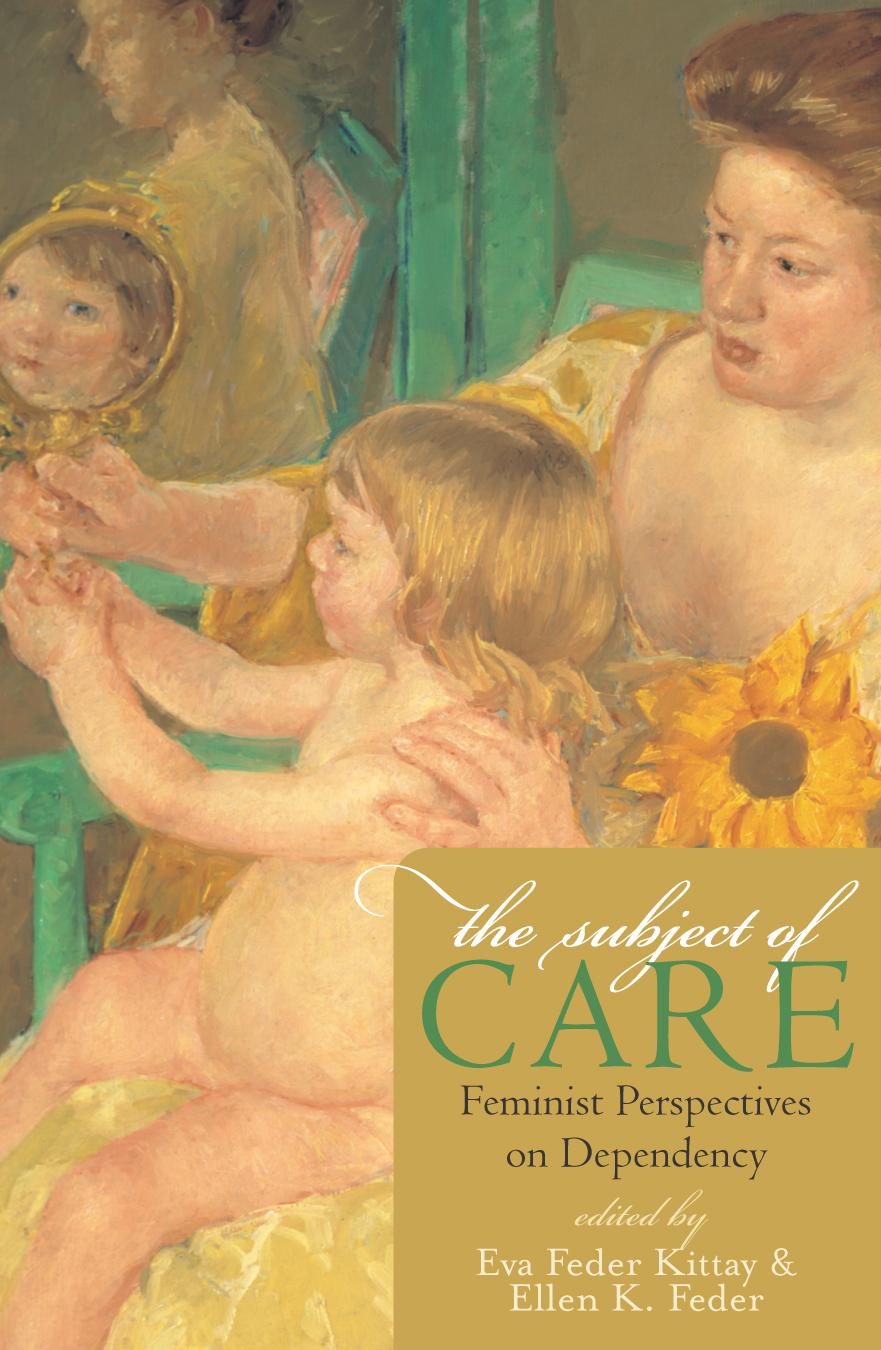
All people spend a considerable portion of their lives either as dependents or the caretakers of dependents. The fact of human dependency-a function of youth, severe illness, disability, or frail old age-marks our lives, not only as those who are cared for, but as those who engage in the work of caring. In spite of the time, energy and resources-material and emotional, social and individual-that dependency care requires, these concerns rarely enter into philosophical, legal, and political discussions.
In The Subject of Care, feminist scholars consider how acknowledgement of the fact of dependency changes our conceptions of law, political theory, and morality, as well as our very conceptions of self. Contributors develop feminist understandings of dependency, reassessing the place dependency occupies in our lives and in a just social order.
In The Subject of Care, feminist scholars consider how acknowledgement of the fact of dependency changes our conceptions of law, political theory, and morality, as well as our very conceptions of self. Contributors develop feminist understandings of dependency, reassessing the place dependency occupies in our lives and in a just social order.
Płać wygodnie kartą, Klarną, Apple Pay lub Google Pay. Nie jesteś zadowolony? Zawsze masz 14-dniową gwarancję zwrotu pieniędzy. Więcej przeczytasz w naszych warunkach. Masz pytania? Napisz do nas na hello@memmo.org.
Memmo ułatwia naukę – gdziekolwiek jesteś na świecie. U nas znajdziesz podręczniki i sprytne narzędzia do nauki w jednym miejscu: streszczenia, quizy, podcasty i fiszki. A do tego Ted, Twój kumpel do nauki, który odpowie na wszystko, co Cię nurtuje. Ponad 50 000 studentów już tu się uczy – stworzone, byś uczył się szybciej i mniej stresował.