
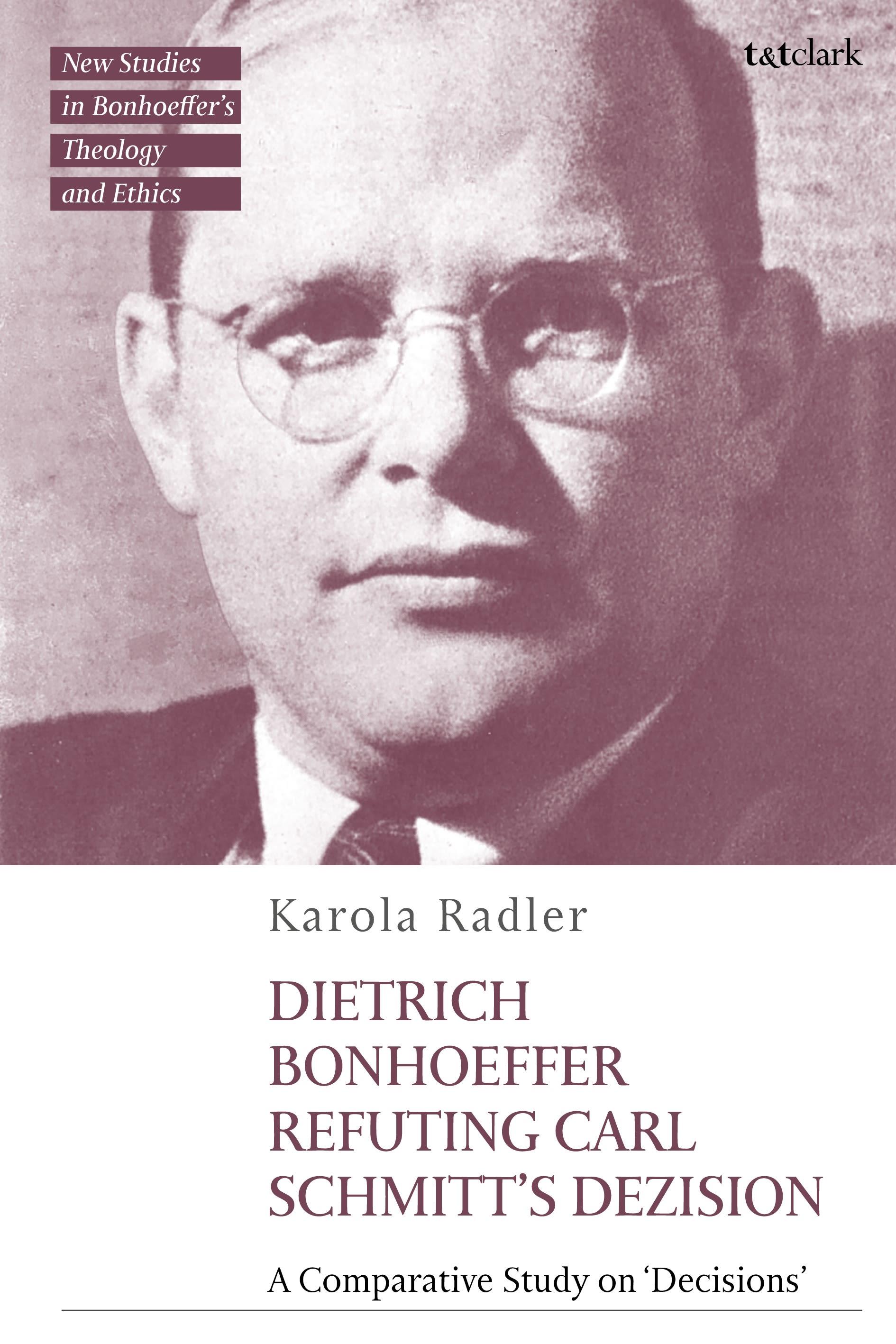
Radler examines Bonhoeffer's and Schmitt's intellectual paradigms of thought of theology and jurisprudence. Whilst both thinkers encounter constitutional institutional models, they arrive at opposing conclusions and actions. This book tackles how they approach the indicators for a decision of choices between alternatives, the urgency of resolving the problems at hand, the intended goal, and the following active manifestation in Christ.
Radler reveals how Schmitt's form of Dezision, resting on a linear model of history, abstracts metaphysical content from objective normative evaluation and, in support of a human personality representing the idea of Christ, elevates the significance of the self over content and subject in structural analogy to theological dogma. On the other hand, Bonhoeffer's theology repudiates Schmitt's political-jurisprudential position, contesting that history ultimately focuses on leading to human wholeness through reconciliation.
Radler reveals how Schmitt's form of Dezision, resting on a linear model of history, abstracts metaphysical content from objective normative evaluation and, in support of a human personality representing the idea of Christ, elevates the significance of the self over content and subject in structural analogy to theological dogma. On the other hand, Bonhoeffer's theology repudiates Schmitt's political-jurisprudential position, contesting that history ultimately focuses on leading to human wholeness through reconciliation.
Płać wygodnie kartą, Klarną, Apple Pay lub Google Pay. Nie jesteś zadowolony? Zawsze masz 14-dniową gwarancję zwrotu pieniędzy. Więcej przeczytasz w naszych warunkach. Masz pytania? Napisz do nas na hello@memmo.org.
Memmo ułatwia naukę – gdziekolwiek jesteś na świecie. U nas znajdziesz podręczniki i sprytne narzędzia do nauki w jednym miejscu: streszczenia, quizy, podcasty i fiszki. A do tego Ted, Twój kumpel do nauki, który odpowie na wszystko, co Cię nurtuje. Ponad 50 000 studentów już tu się uczy – stworzone, byś uczył się szybciej i mniej stresował.