
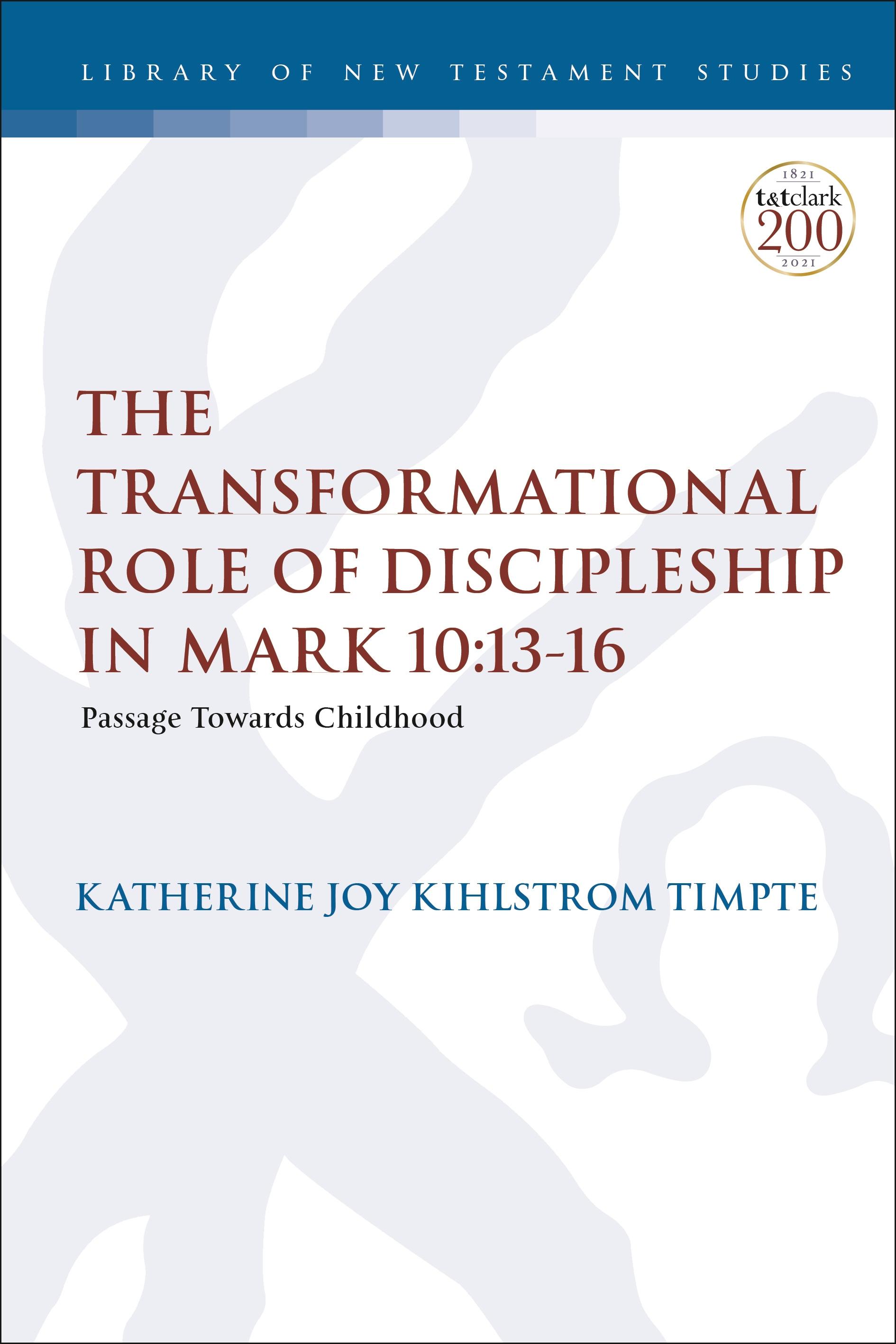
Katherine Joy Kihlstrom Timpte addresses a gap in scholarship by answering the question: “how is a child supposed to be the model recipient of the kingdom of God?” While most scholarship on Mark 10:13-16 agrees that children are metaphorically employed because of their qualities of dependence, Timpte argues that it is more specifically an image of the disciple's radical transformation, which both mirrors and reverses the traditional rites of passage by which a child became an adult.
Timpte suggests that Jesus, by insisting that one must enter the Kingdom of God as a child, invokes two interlacing images. First, to enter the Kingdom of God, one must be fundamentally transformed and changed. Second, this transformation reverses the rite by which a child would have become an adult, removing the adult's superior status. Beginning with a summary of the scholarship surrounding children in the Bible, Timpte explores the perception of children in the ancient world, their rites of passage and entrance into adulthood, and contrasting this with the processing of entering the kingdom of God, while also highlighting childish characters in Mark. Timpte concludes that to enter into the kingdom as a child means that one must strip off those things one gained by leaving childhood behind: wealth, respect, family, much like Jesus, who throughout Mark's Gospel moves from powerful to powerless, respected to despised, and accepted by all to rejected even (seemingly) by God. Jesus models transformation to childhood in an emphasis on what the Kingdom of God is like.
Timpte suggests that Jesus, by insisting that one must enter the Kingdom of God as a child, invokes two interlacing images. First, to enter the Kingdom of God, one must be fundamentally transformed and changed. Second, this transformation reverses the rite by which a child would have become an adult, removing the adult's superior status. Beginning with a summary of the scholarship surrounding children in the Bible, Timpte explores the perception of children in the ancient world, their rites of passage and entrance into adulthood, and contrasting this with the processing of entering the kingdom of God, while also highlighting childish characters in Mark. Timpte concludes that to enter into the kingdom as a child means that one must strip off those things one gained by leaving childhood behind: wealth, respect, family, much like Jesus, who throughout Mark's Gospel moves from powerful to powerless, respected to despised, and accepted by all to rejected even (seemingly) by God. Jesus models transformation to childhood in an emphasis on what the Kingdom of God is like.
Strony: 176
Kategoria: Religion & Teologi
e-ISBN: 9780567699732
Waga przesyłki: 1.2 kg
Wysyłka w ciągu: 1-2 dni
Płać wygodnie kartą, Klarną, Apple Pay lub Google Pay. Nie jesteś zadowolony? Zawsze masz 14-dniową gwarancję zwrotu pieniędzy. Więcej przeczytasz w naszych warunkach. Masz pytania? Napisz do nas na hello@memmo.org.
Memmo ułatwia naukę – gdziekolwiek jesteś na świecie. U nas znajdziesz podręczniki i sprytne narzędzia do nauki w jednym miejscu: streszczenia, quizy, podcasty i fiszki. A do tego Ted, Twój kumpel do nauki, który odpowie na wszystko, co Cię nurtuje. Ponad 50 000 studentów już tu się uczy – stworzone, byś uczył się szybciej i mniej stresował.