
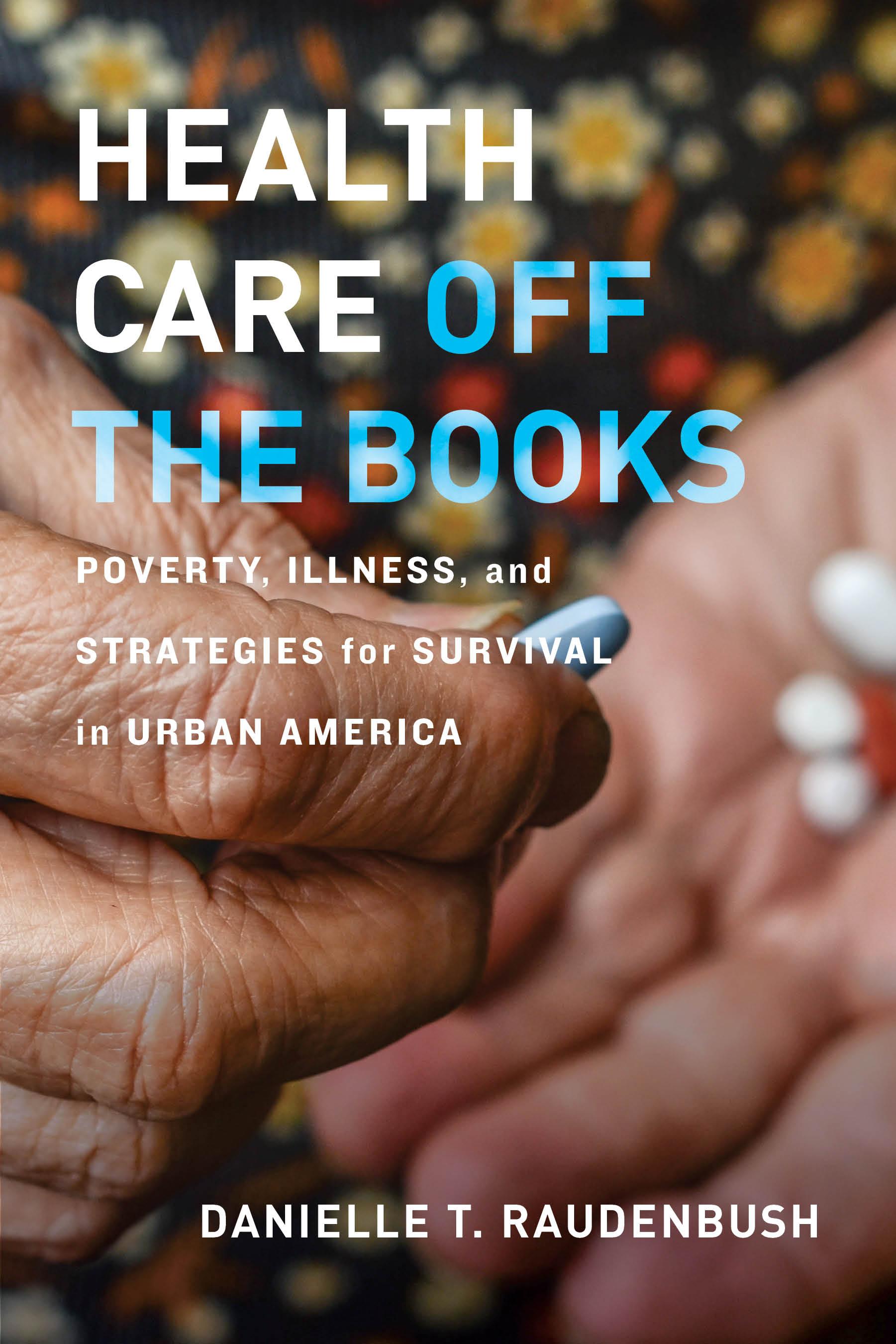
Millions of low-income African Americans in the United States lack access to health care. How do they treat their health care problems? In Health Care Off the Books, Danielle T. Raudenbush provides an answer that challenges public perceptions and prior scholarly work. Informed by three and a half years of fieldwork in a public housing development, Raudenbush shows how residents who face obstacles to health care gain access to pharmaceutical drugs, medical equipment, physician reference manuals, and insurance cards by mobilizing social networks that include not only their neighbors but also local physicians. However, membership in these social networks is not universal, and some residents are forced to turn to a robust street market to obtain medicine. For others, health problems simply go untreated.
Raudenbush reconceptualizes U.S. health care as a formal-informal hybrid system and explains why many residents who do have access to health services also turn to informal strategies to treat their health problems. While the practices described in the book may at times be beneficial to people’s health, they also have the potential to do serious harm. By understanding this hybrid system, we can evaluate its effects and gain new insight into the sources of social and racial disparities in health outcomes.
Płać wygodnie kartą, Klarną, Apple Pay lub Google Pay. Nie jesteś zadowolony? Zawsze masz 14-dniową gwarancję zwrotu pieniędzy. Więcej przeczytasz w naszych warunkach. Masz pytania? Napisz do nas na hello@memmo.org.
Memmo ułatwia naukę – gdziekolwiek jesteś na świecie. U nas znajdziesz podręczniki i sprytne narzędzia do nauki w jednym miejscu: streszczenia, quizy, podcasty i fiszki. A do tego Ted, Twój kumpel do nauki, który odpowie na wszystko, co Cię nurtuje. Ponad 50 000 studentów już tu się uczy – stworzone, byś uczył się szybciej i mniej stresował.