
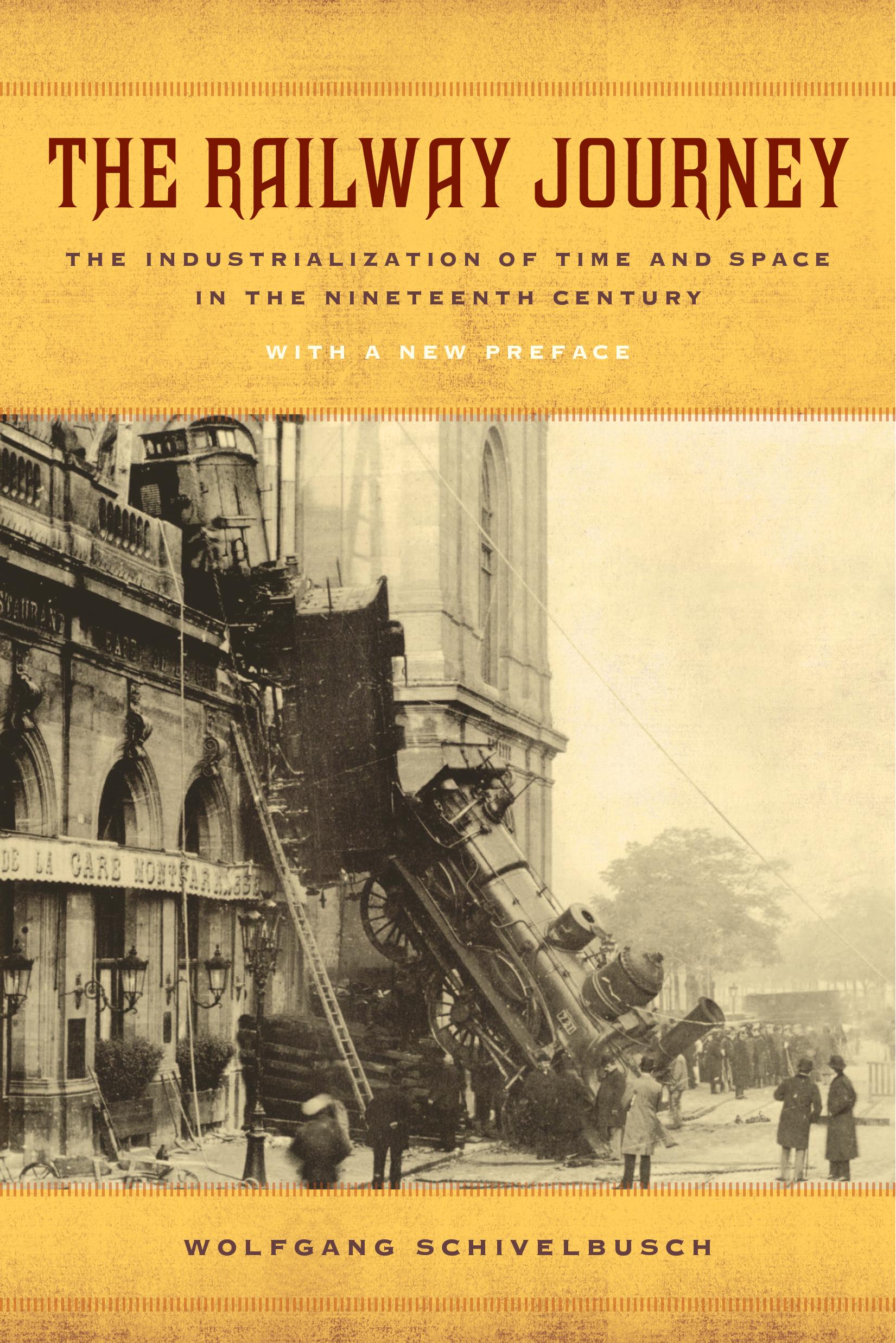
The impact of constant technological change upon our perception of the world is so pervasive as to have become a commonplace of modern society. But this was not always the case; as Wolfgang Schivelbusch points out in this fascinating study, our adaptation to technological change—the development of our modern, industrialized consciousness—was very much a learned behavior. In The Railway Journey, Schivelbusch examines the origins of this industrialized consciousness by exploring the reaction in the nineteenth century to the first dramatic avatar of technological change, the railroad.
In a highly original and engaging fashion, Schivelbusch discusses the ways in which our perceptions of distance, time, autonomy, speed, and risk were altered by railway travel. As a history of the surprising ways in which technology and culture interact, this book covers a wide range of topics, including the changing perception of landscapes, the death of conversation while traveling, the problematic nature of the railway compartment, the space of glass architecture, the pathology of the railway journey, industrial fatigue and the history of shock, and the railroad and the city.
Belonging to a distinguished European tradition of critical sociology best exemplified by the work of Georg Simmel and Walter Benjamin, The Railway Journey is anchored in rich empirical data and full of striking insights about railway travel, the industrial revolution, and technological change. Now updated with a new preface, The Railway Journey is an invaluable resource for readers interested in nineteenth-century culture and technology and the prehistory of modern media and digitalization.
In a highly original and engaging fashion, Schivelbusch discusses the ways in which our perceptions of distance, time, autonomy, speed, and risk were altered by railway travel. As a history of the surprising ways in which technology and culture interact, this book covers a wide range of topics, including the changing perception of landscapes, the death of conversation while traveling, the problematic nature of the railway compartment, the space of glass architecture, the pathology of the railway journey, industrial fatigue and the history of shock, and the railroad and the city.
Belonging to a distinguished European tradition of critical sociology best exemplified by the work of Georg Simmel and Walter Benjamin, The Railway Journey is anchored in rich empirical data and full of striking insights about railway travel, the industrial revolution, and technological change. Now updated with a new preface, The Railway Journey is an invaluable resource for readers interested in nineteenth-century culture and technology and the prehistory of modern media and digitalization.
Płać wygodnie kartą, Klarną, Apple Pay lub Google Pay. Nie jesteś zadowolony? Zawsze masz 14-dniową gwarancję zwrotu pieniędzy. Więcej przeczytasz w naszych warunkach. Masz pytania? Napisz do nas na hello@memmo.org.
Memmo ułatwia naukę – gdziekolwiek jesteś na świecie. U nas znajdziesz podręczniki i sprytne narzędzia do nauki w jednym miejscu: streszczenia, quizy, podcasty i fiszki. A do tego Ted, Twój kumpel do nauki, który odpowie na wszystko, co Cię nurtuje. Ponad 50 000 studentów już tu się uczy – stworzone, byś uczył się szybciej i mniej stresował.
Może Ci się spodobać
Kup książkę0