
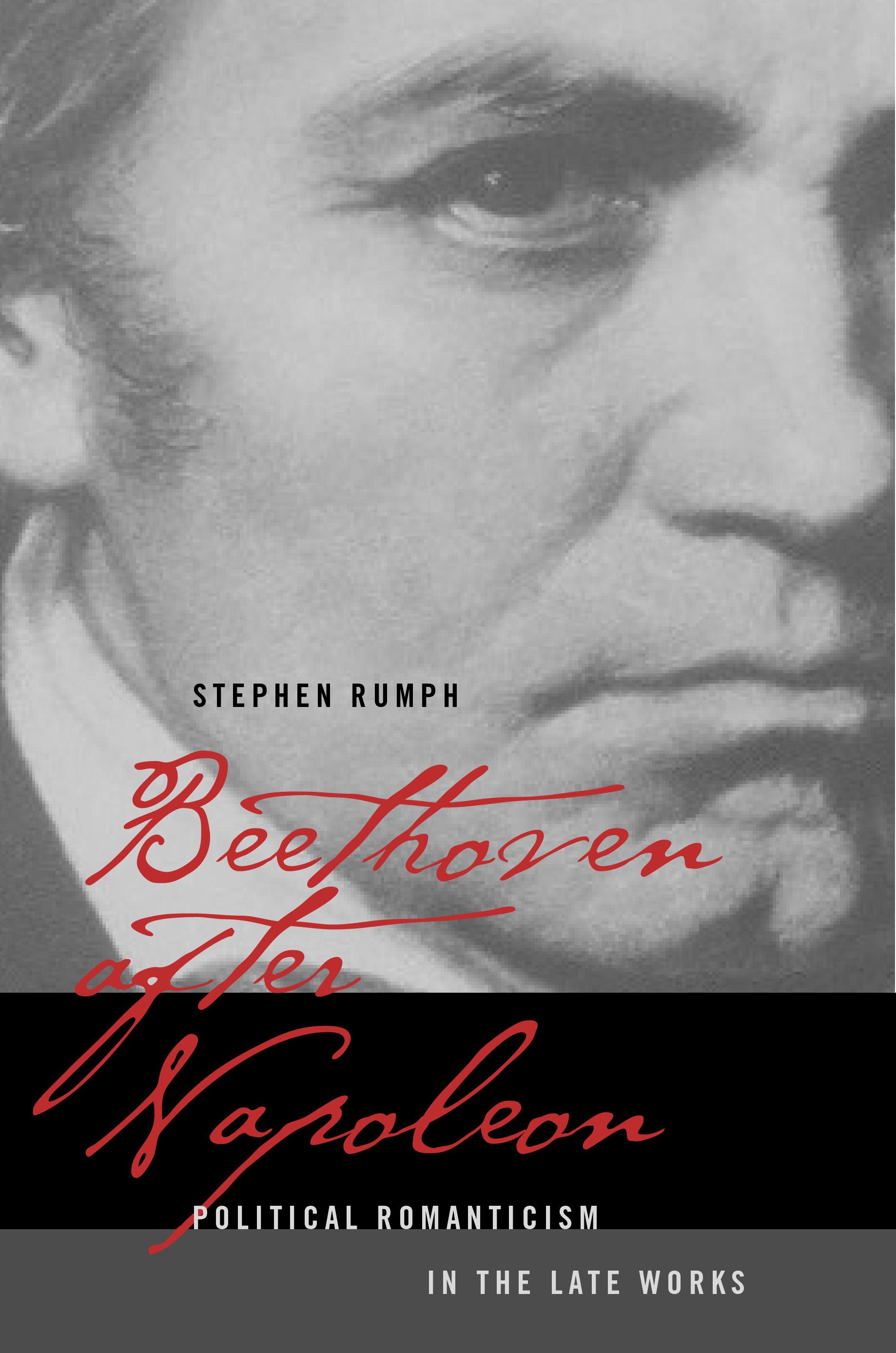
In this provocative analysis of Beethoven's late style, Stephen Rumph demonstrates how deeply political events shaped the composer's music, from his early enthusiasm for the French Revolution to his later entrenchment during the Napoleonic era. Impressive in its breadth of research as well as for its devotion to interdisciplinary work in music history, Beethoven after Napoleon challenges accepted views by illustrating the influence of German Romantic political thought in the formation of the artist's mature style. Beethoven's political views, Rumph argues, were not quite as liberal as many have assumed. While scholars agree that the works of the Napoleonic era such as the Eroica Symphony or Fidelio embody enlightened, revolutionary ideals of progress, freedom, and humanism, Beethoven's later works have attracted less political commentary. Rumph contends that the later works show clear affinities with a native German ideology that exalted history, religion, and the organic totality of state and society. He claims that as the Napoleonic Wars plunged Europe into political and economic turmoil, Beethoven's growing antipathy to the French mirrored the experience of his Romantic contemporaries. Rumph maintains that Beethoven's turn inward is no pessimistic retreat but a positive affirmation of new conservative ideals.
Strony: 304
Kategoria: Musikvetenskap
e-ISBN: 9780520930124
Waga przesyłki: 1.2 kg
Wysyłka w ciągu: 1-2 dni
Płać wygodnie kartą, Klarną, Apple Pay lub Google Pay. Nie jesteś zadowolony? Zawsze masz 14-dniową gwarancję zwrotu pieniędzy. Więcej przeczytasz w naszych warunkach. Masz pytania? Napisz do nas na hello@memmo.org.
Memmo ułatwia naukę – gdziekolwiek jesteś na świecie. U nas znajdziesz podręczniki i sprytne narzędzia do nauki w jednym miejscu: streszczenia, quizy, podcasty i fiszki. A do tego Ted, Twój kumpel do nauki, który odpowie na wszystko, co Cię nurtuje. Ponad 50 000 studentów już tu się uczy – stworzone, byś uczył się szybciej i mniej stresował.
Może Ci się spodobać
Kup książkę0