
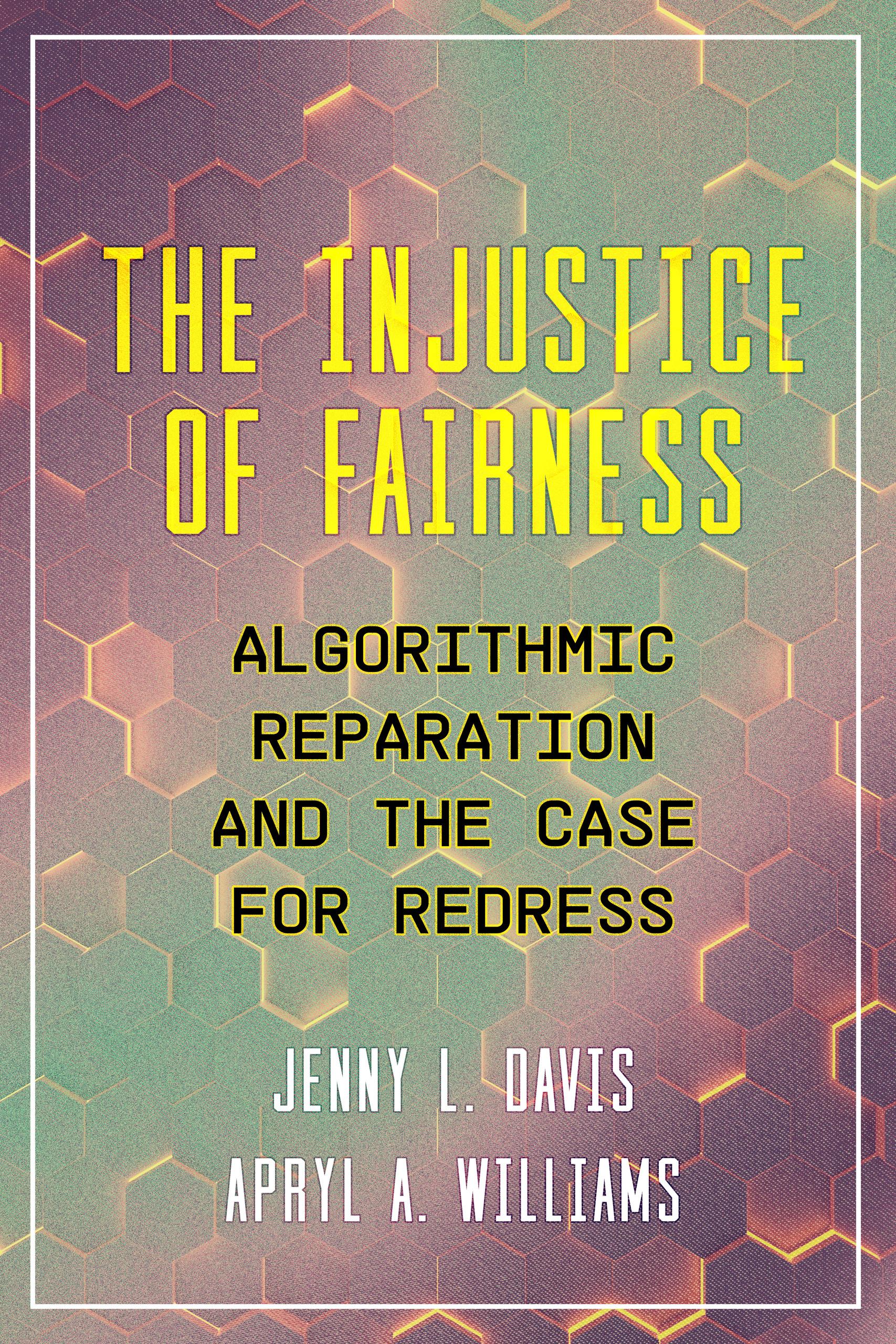
The Injustice of Fairness shifts the foundation of algorithmic ethics, displacing "fairness" with repair and redress. A substantial and growing field, algorithmic ethics aims to mitigate harms and realize social good. The fairness paradigm dominates this field across AI, machine learning, and other data-driven domains. So far, efforts toward fairness have been unsuccessful, with algorithmic harms that propagate and persist. Jenny L. Davis and Apryl A. Williams explain why algorithmic fairness perpetually fails and present "algorithmic reparation" in its place.
The stakes are high because algorithms are everywhere—from law to love, healthcare to housing, education to media, and beyond. More than lines of code or mathematical operations, algorithms carry history, configure the present, and are actively shaping the future. Set against a backdrop of societal instability and technological transformation, The Injustice of Fairness offers a careful critique, original framework, and blueprint for social change with algorithms as entry points and levers.
Płać wygodnie kartą, Klarną, Apple Pay lub Google Pay. Nie jesteś zadowolony? Zawsze masz 14-dniową gwarancję zwrotu pieniędzy. Więcej przeczytasz w naszych warunkach. Masz pytania? Napisz do nas na hello@memmo.org.
Memmo ułatwia naukę – gdziekolwiek jesteś na świecie. U nas znajdziesz podręczniki i sprytne narzędzia do nauki w jednym miejscu: streszczenia, quizy, podcasty i fiszki. A do tego Ted, Twój kumpel do nauki, który odpowie na wszystko, co Cię nurtuje. Ponad 50 000 studentów już tu się uczy – stworzone, byś uczył się szybciej i mniej stresował.