
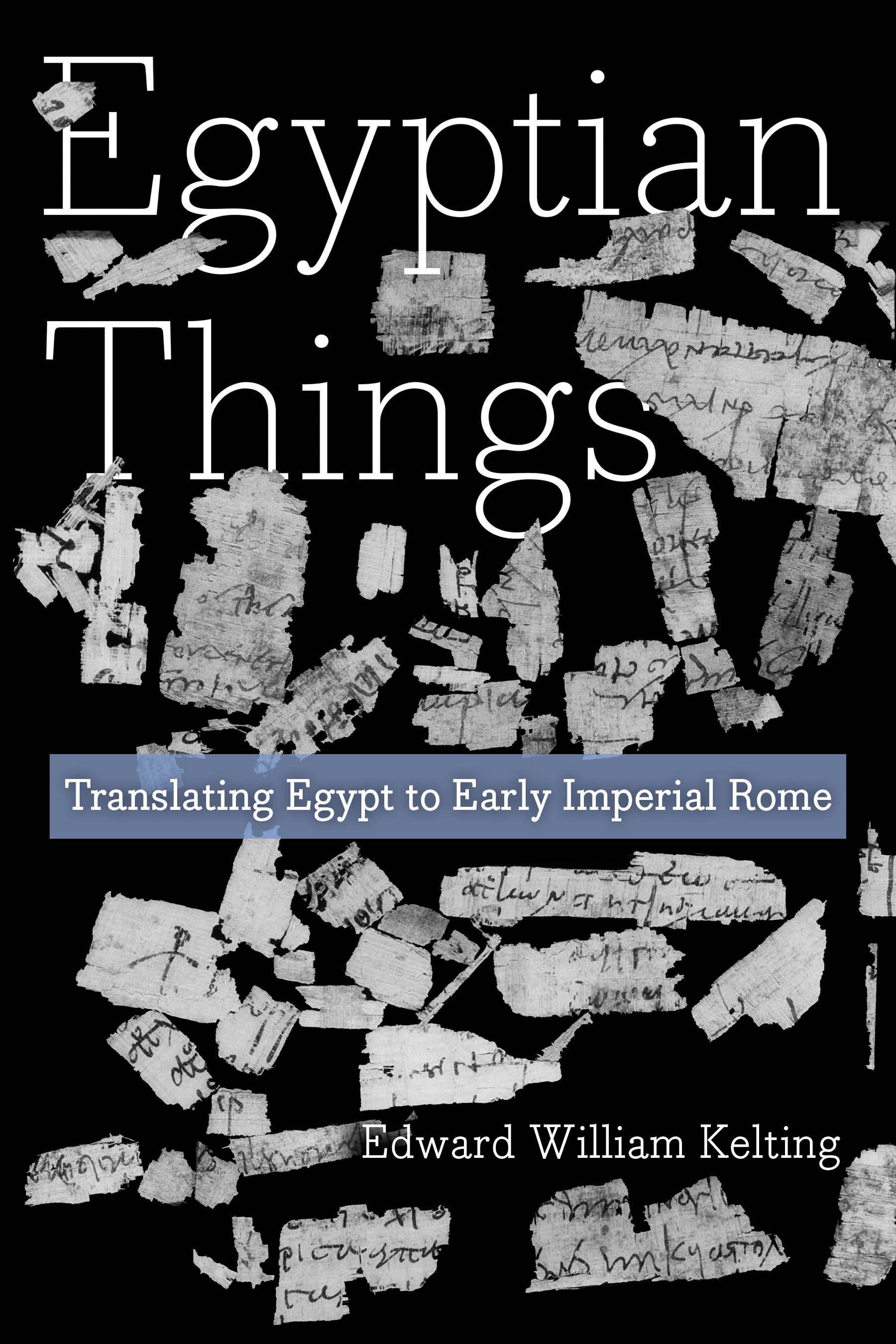
A free book version of this title is available through Luminos, University of California Press’s Open Access publishing program. Visit www.luminosoa.org to learn more.
After the deaths of Antony and Cleopatra, Rome finally took control of Egypt. This occupation simultaneously facilitated and circumscribed the exchange of goods, people, and ideas along the paths carved across Rome’s burgeoning empire. In this book, Edward Kelting sets out to recapture one of these systems of exchange: the vibrant literary tradition known as Aegyptiaca—or “Egyptian things”—in which culturally mixed authors wrote about Egypt for a Greek and Roman audience. These authors have been dismissed as not really “Egyptian,” and their contemporary popularity has been ignored. But as Kelting powerfully argues, this genre in fact constitutes a vibrant intellectual tradition, developed from heterogeneous influences but deeply engaged with Egypt’s pharaonic past. In contrast to usual narratives of Roman domination, Kelting uncovers a complex project of political engagement and cultural translation in which Egyptians, Greeks, and Romans all participated.
After the deaths of Antony and Cleopatra, Rome finally took control of Egypt. This occupation simultaneously facilitated and circumscribed the exchange of goods, people, and ideas along the paths carved across Rome’s burgeoning empire. In this book, Edward Kelting sets out to recapture one of these systems of exchange: the vibrant literary tradition known as Aegyptiaca—or “Egyptian things”—in which culturally mixed authors wrote about Egypt for a Greek and Roman audience. These authors have been dismissed as not really “Egyptian,” and their contemporary popularity has been ignored. But as Kelting powerfully argues, this genre in fact constitutes a vibrant intellectual tradition, developed from heterogeneous influences but deeply engaged with Egypt’s pharaonic past. In contrast to usual narratives of Roman domination, Kelting uncovers a complex project of political engagement and cultural translation in which Egyptians, Greeks, and Romans all participated.
Płać wygodnie kartą, Klarną, Apple Pay lub Google Pay. Nie jesteś zadowolony? Zawsze masz 14-dniową gwarancję zwrotu pieniędzy. Więcej przeczytasz w naszych warunkach. Masz pytania? Napisz do nas na hello@memmo.org.
Memmo ułatwia naukę – gdziekolwiek jesteś na świecie. U nas znajdziesz podręczniki i sprytne narzędzia do nauki w jednym miejscu: streszczenia, quizy, podcasty i fiszki. A do tego Ted, Twój kumpel do nauki, który odpowie na wszystko, co Cię nurtuje. Ponad 50 000 studentów już tu się uczy – stworzone, byś uczył się szybciej i mniej stresował.
Może Ci się spodobać
Kup książkę0