
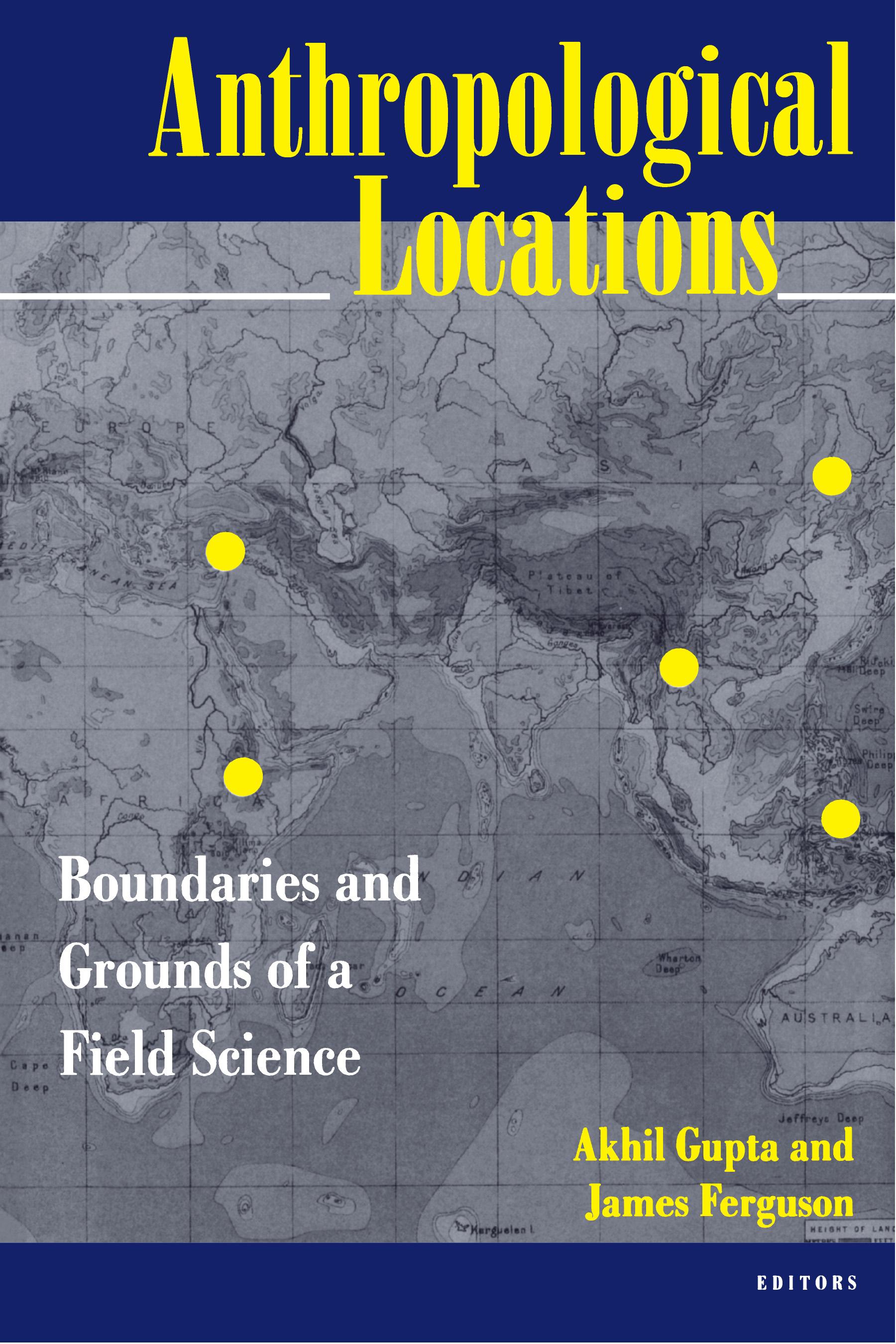
Among the social sciences, anthropology relies most fundamentally on "fieldwork"—the long-term immersion in another way of life as the basis for knowledge. In an era when anthropologists are studying topics that resist geographical localization, this book initiates a long-overdue discussion of the political and epistemological implications of the disciplinary commitment to fieldwork.
These innovative, stimulating essays—carefully chosen to form a coherent whole—interrogate the notion of "the field," showing how the concept is historically constructed and exploring the consequences of its dominance. The essays discuss anthropological work done in places (in refugee camps, on television) or among populations (gays and lesbians, homeless people in the United States) that challenge the traditional boundaries of "the field." The contributors suggest alternative methodologies appropriate for contemporary problems and ultimately propose a reformation of the discipline of anthropology.
Among the social sciences, anthropology relies most fundamentally on "fieldwork"—the long-term immersion in another way of life as the basis for knowledge. In an era when anthropologists are studying topics that resist geographical localization, this book
These innovative, stimulating essays—carefully chosen to form a coherent whole—interrogate the notion of "the field," showing how the concept is historically constructed and exploring the consequences of its dominance. The essays discuss anthropological work done in places (in refugee camps, on television) or among populations (gays and lesbians, homeless people in the United States) that challenge the traditional boundaries of "the field." The contributors suggest alternative methodologies appropriate for contemporary problems and ultimately propose a reformation of the discipline of anthropology.
Among the social sciences, anthropology relies most fundamentally on "fieldwork"—the long-term immersion in another way of life as the basis for knowledge. In an era when anthropologists are studying topics that resist geographical localization, this book
Płać wygodnie kartą, Klarną, Apple Pay lub Google Pay. Nie jesteś zadowolony? Zawsze masz 14-dniową gwarancję zwrotu pieniędzy. Więcej przeczytasz w naszych warunkach. Masz pytania? Napisz do nas na hello@memmo.org.
Memmo ułatwia naukę – gdziekolwiek jesteś na świecie. U nas znajdziesz podręczniki i sprytne narzędzia do nauki w jednym miejscu: streszczenia, quizy, podcasty i fiszki. A do tego Ted, Twój kumpel do nauki, który odpowie na wszystko, co Cię nurtuje. Ponad 50 000 studentów już tu się uczy – stworzone, byś uczył się szybciej i mniej stresował.
Może Ci się spodobać
Kup książkę0