
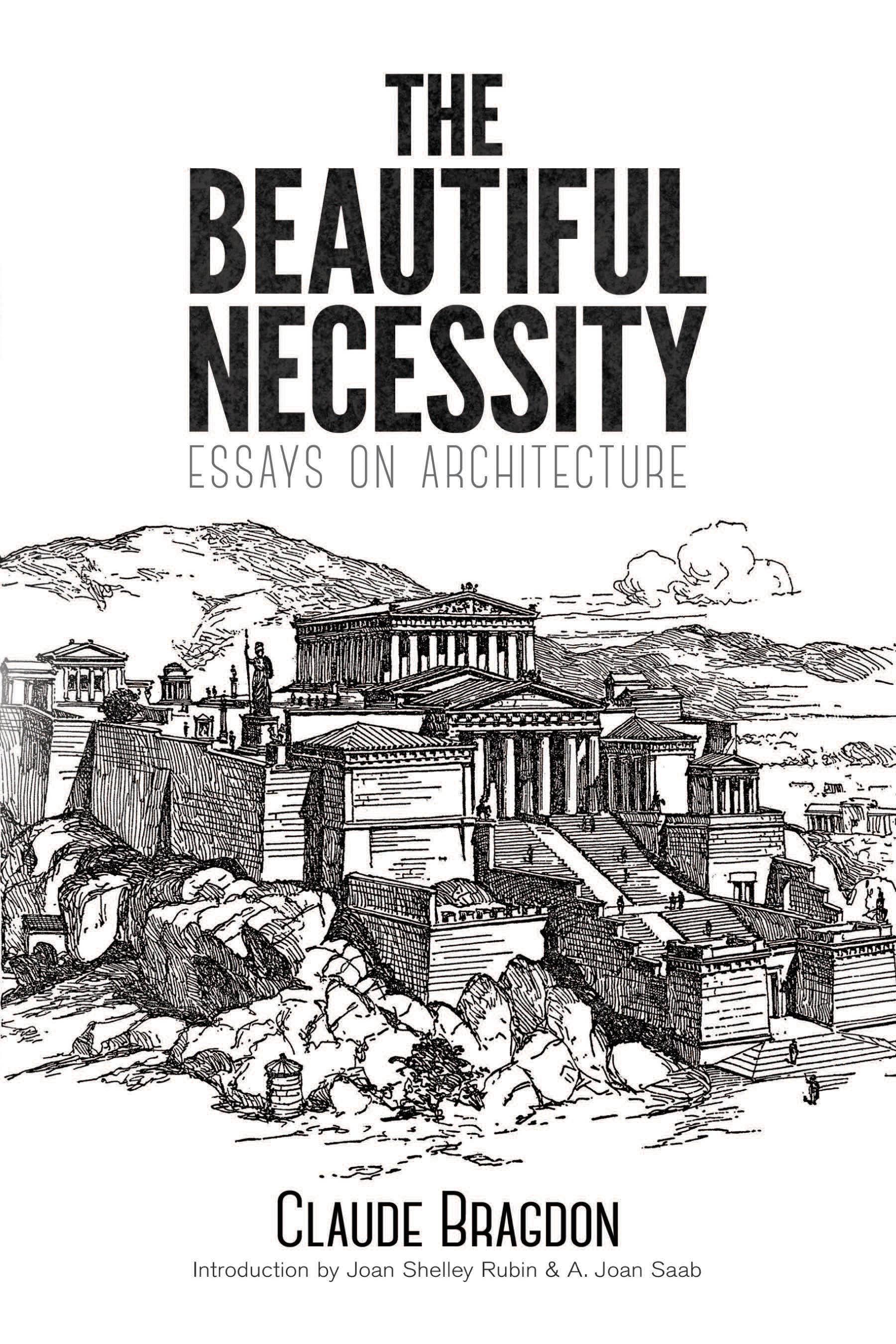
A noted American architect of the early twentieth century discusses universal principles behind the harmonious forms and proportions of ancient and modern buildings. Seven essays by Claude Bragdon offer a master class in the architectural union of art, beauty, and science. His observations and analyses encompass a tremendous variety of buildings, from Gothic cathedrals to Giotto's Campanile to the Taj Mahal, and his examples extend far beyond architecture to the natural symmetry found in the feathers of a peacock's tail, snowflakes, plants, and the human face.
"Art in all its manifestations is an expression of the cosmic life," notes the author, "and its symbols constitute a language by means of which this life is published and represented. Art is at all times subject to the 'Beautiful Necessity' of proclaiming the 'world order'." Bragdon's theories are illuminated by his graceful black-and-white line drawings, which portray the essentials of line and proportion as expressed in many well-known buildings and paintings.
"Art in all its manifestations is an expression of the cosmic life," notes the author, "and its symbols constitute a language by means of which this life is published and represented. Art is at all times subject to the 'Beautiful Necessity' of proclaiming the 'world order'." Bragdon's theories are illuminated by his graceful black-and-white line drawings, which portray the essentials of line and proportion as expressed in many well-known buildings and paintings.
Płać wygodnie kartą, Klarną, Apple Pay lub Google Pay. Nie jesteś zadowolony? Zawsze masz 14-dniową gwarancję zwrotu pieniędzy. Więcej przeczytasz w naszych warunkach. Masz pytania? Napisz do nas na hello@memmo.org.
Memmo ułatwia naukę – gdziekolwiek jesteś na świecie. U nas znajdziesz podręczniki i sprytne narzędzia do nauki w jednym miejscu: streszczenia, quizy, podcasty i fiszki. A do tego Ted, Twój kumpel do nauki, który odpowie na wszystko, co Cię nurtuje. Ponad 50 000 studentów już tu się uczy – stworzone, byś uczył się szybciej i mniej stresował.
Może Ci się spodobać
Kup książkę0