
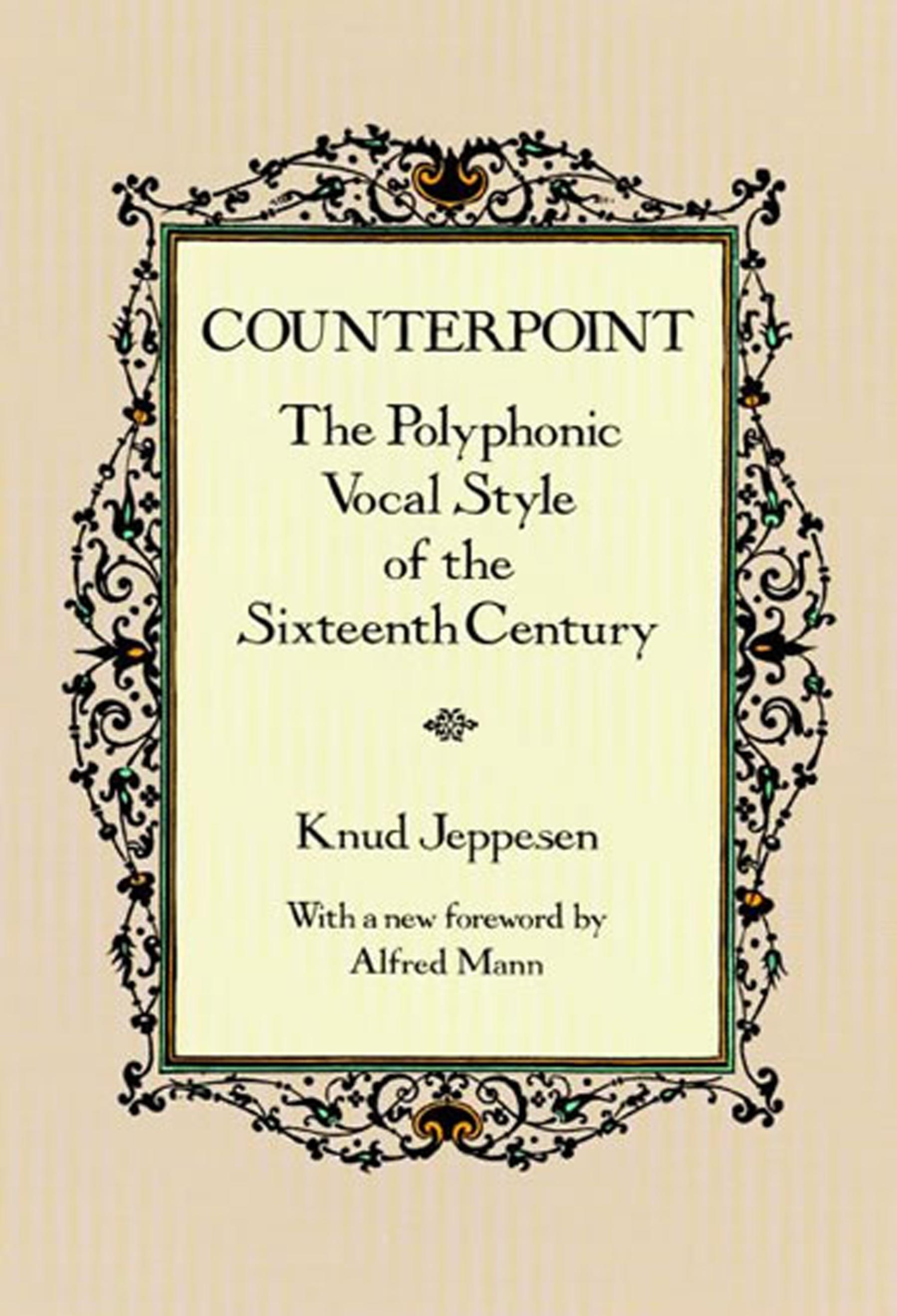
This classic introductory text focuses on the polyphonic vocal style perfected by Palestrina. Unlike many other texts, it maintains a careful balance between theoretical and practical problems, between historical and systematic methodology. The result is an exceptionally useful resource, ideal for classroom use in teaching modal counterpoint.
In Part One, Knud Jeppesen (1892–1974), the world-renowned musicologist and leading authority on Palestrina, offers a superb outline history of contrapuntal theory. He begins by exploring the beginnings of contrapuntal theory from the ninth to the fourteenth centuries. This is followed by separate discussions of each succeeding century, the styles of Palestrina and Bach, the "Palestrina Movement" after Fux, and more. The section ends with illuminating coverage of notation, the ecclesiastical modes, melody, and harmony.
The second part of the book contains an extended treatment of "species" counterpoint in two, three, and four parts, as well as counterpoint in more than four parts, and specific discussions of the canon, the motet, and the Mass. Throughout, the text is generously supplied with musical examples―exercises, solutions, and illustrations, including many by the great composers. For this edition, the distinguished scholar Alfred Mann has contributed a new foreword to Jeppesen's classic study. Now available in paperback for the first time, it will be welcomed by musicians, composers, theorists, musicologists―any student of counterpoint and the Western musical tradition.
In Part One, Knud Jeppesen (1892–1974), the world-renowned musicologist and leading authority on Palestrina, offers a superb outline history of contrapuntal theory. He begins by exploring the beginnings of contrapuntal theory from the ninth to the fourteenth centuries. This is followed by separate discussions of each succeeding century, the styles of Palestrina and Bach, the "Palestrina Movement" after Fux, and more. The section ends with illuminating coverage of notation, the ecclesiastical modes, melody, and harmony.
The second part of the book contains an extended treatment of "species" counterpoint in two, three, and four parts, as well as counterpoint in more than four parts, and specific discussions of the canon, the motet, and the Mass. Throughout, the text is generously supplied with musical examples―exercises, solutions, and illustrations, including many by the great composers. For this edition, the distinguished scholar Alfred Mann has contributed a new foreword to Jeppesen's classic study. Now available in paperback for the first time, it will be welcomed by musicians, composers, theorists, musicologists―any student of counterpoint and the Western musical tradition.
Strony: 320
Kategoria: Musikvetenskap
e-ISBN: 9780486318875
Waga przesyłki: 1.2 kg
Wysyłka w ciągu: 1-2 dni
Płać wygodnie kartą, Klarną, Apple Pay lub Google Pay. Nie jesteś zadowolony? Zawsze masz 14-dniową gwarancję zwrotu pieniędzy. Więcej przeczytasz w naszych warunkach. Masz pytania? Napisz do nas na hello@memmo.org.
Memmo ułatwia naukę – gdziekolwiek jesteś na świecie. U nas znajdziesz podręczniki i sprytne narzędzia do nauki w jednym miejscu: streszczenia, quizy, podcasty i fiszki. A do tego Ted, Twój kumpel do nauki, który odpowie na wszystko, co Cię nurtuje. Ponad 50 000 studentów już tu się uczy – stworzone, byś uczył się szybciej i mniej stresował.
Może Ci się spodobać
Kup książkę0