
"Has a many-sided appeal …. This stimulating book is one of the few that really deserve the over-worked term, a human document." — Publishers Weekly.
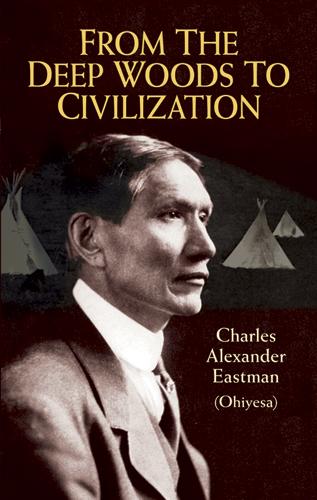
In the first of his memoirs, the popular Indian Boyhood, Charles Alexander Eastman recounted his traditional upbringing among the Santee Sioux. From the Deep Woods to Civilization resumes his story, recounting his abrupt departure from tribal life at age 15 to pursue his education among whites — a path that led him to certification as a medical doctor, the publication of many successful books, and a lifetime of tireless efforts to benefit his native culture. Through his social work and his writings, Eastman became one of the best-known Indians of the early twentieth century and an important force in interpreting and relating the spiritual depth and greatness of the Native American traditions.
Eastman became a physician in hopes of serving the Native American community; he received a Bachelor of Science degree from Dartmouth in 1887 and a medical degree from Boston University in 1890. He began college just a few months after the Battle of Little Bighorn, and his first job as a physician at Pine Ridge Reservation coincided with the Ghost Dance uprisings that culminated in the U. S. Army's attack at Wounded Knee. The only doctor available to assist the massacre's victims, Eastman writes movingly of the event's appalling inhumanity and injustice. Afterward, he lobbied Capitol Hill on behalf of the Sioux and devoted the rest of his life, both in and out of government service, to helping Indians adapt to the white world while retaining the best of their own culture. His autobiography resonates with the impassioned thoughts and experiences of a profound contributor to the richness of American culture.
In the first of his memoirs, the popular Indian Boyhood, Charles Alexander Eastman recounted his traditional upbringing among the Santee Sioux. From the Deep Woods to Civilization resumes his story, recounting his abrupt departure from tribal life at age 15 to pursue his education among whites — a path that led him to certification as a medical doctor, the publication of many successful books, and a lifetime of tireless efforts to benefit his native culture. Through his social work and his writings, Eastman became one of the best-known Indians of the early twentieth century and an important force in interpreting and relating the spiritual depth and greatness of the Native American traditions.
Eastman became a physician in hopes of serving the Native American community; he received a Bachelor of Science degree from Dartmouth in 1887 and a medical degree from Boston University in 1890. He began college just a few months after the Battle of Little Bighorn, and his first job as a physician at Pine Ridge Reservation coincided with the Ghost Dance uprisings that culminated in the U. S. Army's attack at Wounded Knee. The only doctor available to assist the massacre's victims, Eastman writes movingly of the event's appalling inhumanity and injustice. Afterward, he lobbied Capitol Hill on behalf of the Sioux and devoted the rest of his life, both in and out of government service, to helping Indians adapt to the white world while retaining the best of their own culture. His autobiography resonates with the impassioned thoughts and experiences of a profound contributor to the richness of American culture.
Płać wygodnie kartą, Klarną, Apple Pay lub Google Pay. Nie jesteś zadowolony? Zawsze masz 14-dniową gwarancję zwrotu pieniędzy. Więcej przeczytasz w naszych warunkach. Masz pytania? Napisz do nas na hello@memmo.org.
Memmo ułatwia naukę – gdziekolwiek jesteś na świecie. U nas znajdziesz podręczniki i sprytne narzędzia do nauki w jednym miejscu: streszczenia, quizy, podcasty i fiszki. A do tego Ted, Twój kumpel do nauki, który odpowie na wszystko, co Cię nurtuje. Ponad 50 000 studentów już tu się uczy – stworzone, byś uczył się szybciej i mniej stresował.
Może Ci się spodobać
Kup książkę0