
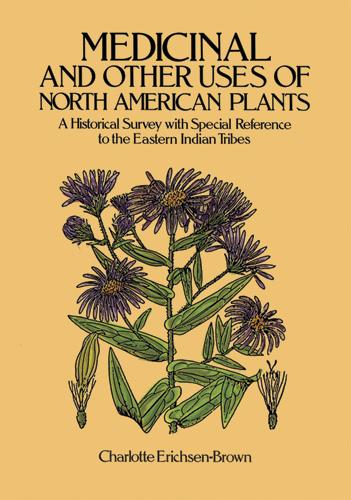
Spanning the last 500 years, this exceptionally detailed and well-researched guide focuses primarily on the ways North American Indians have used plants, trees, and shrubs for medicine, food, clothing, shelter, and other necessities. The plants considered are native to eastern Canada and the northeastern United States, although some are also found as far south as Florida and Texas and as far west as the Pacific coast.
In addition to extensive chronological historical citations dealing with documented usages of plants as far back as the fourteenth century, this book also provides data to enable even amateur botanists to identify plants in the field. Thus, accounts of herbalists, explorers, botanists, doctors, and scientists are accompanied by useful information about the plant’s range, common and scientific names, nontechnical physical description and more. To make the book especially easy to use, plants are grouped according to habitat: wet open places, woods and thickets, and dry open places. Moreover, a detailed line drawing of the plant’s leaves, buds, twigs, seeds, and other characteristic features accompanies the textual descriptions.
Scholarly, yet readable, exceptionally thorough but never dull, this classic reference belongs in the library of botanists, naturalists, herbalists, ethnologists, archaeologists — anyone interested in the long and fascinating story of how plants have served humanity.
“Charlotte Erichsen-Brown is a noted and inspired student of the ethnobotany of eastern North America. She has completed a study of great imagination and energy. Whether on a library’s reference shelf or in a backpack along the trail, her work will inform and educate, and often amaze.” — J. L. Riley, Botany Department, Royal Ontario Museum, Toronto, Canada.
In addition to extensive chronological historical citations dealing with documented usages of plants as far back as the fourteenth century, this book also provides data to enable even amateur botanists to identify plants in the field. Thus, accounts of herbalists, explorers, botanists, doctors, and scientists are accompanied by useful information about the plant’s range, common and scientific names, nontechnical physical description and more. To make the book especially easy to use, plants are grouped according to habitat: wet open places, woods and thickets, and dry open places. Moreover, a detailed line drawing of the plant’s leaves, buds, twigs, seeds, and other characteristic features accompanies the textual descriptions.
Scholarly, yet readable, exceptionally thorough but never dull, this classic reference belongs in the library of botanists, naturalists, herbalists, ethnologists, archaeologists — anyone interested in the long and fascinating story of how plants have served humanity.
“Charlotte Erichsen-Brown is a noted and inspired student of the ethnobotany of eastern North America. She has completed a study of great imagination and energy. Whether on a library’s reference shelf or in a backpack along the trail, her work will inform and educate, and often amaze.” — J. L. Riley, Botany Department, Royal Ontario Museum, Toronto, Canada.
Płać wygodnie kartą, Klarną, Apple Pay lub Google Pay. Nie jesteś zadowolony? Zawsze masz 14-dniową gwarancję zwrotu pieniędzy. Więcej przeczytasz w naszych warunkach. Masz pytania? Napisz do nas na hello@memmo.org.
Memmo ułatwia naukę – gdziekolwiek jesteś na świecie. U nas znajdziesz podręczniki i sprytne narzędzia do nauki w jednym miejscu: streszczenia, quizy, podcasty i fiszki. A do tego Ted, Twój kumpel do nauki, który odpowie na wszystko, co Cię nurtuje. Ponad 50 000 studentów już tu się uczy – stworzone, byś uczył się szybciej i mniej stresował.
Może Ci się spodobać
Kup książkę0