
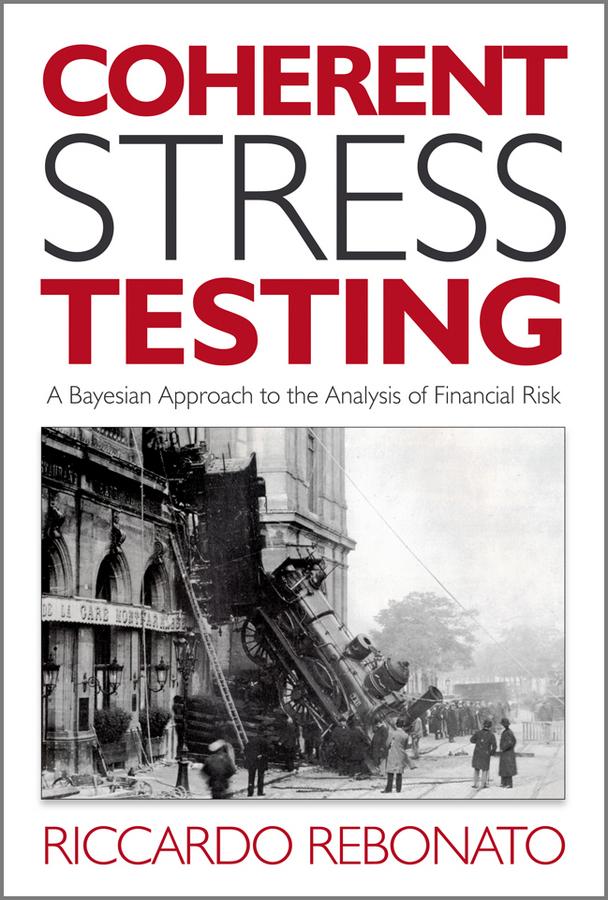
Based on the author's extensive work, research and presentations in the area, the book fills a gap in quantitative risk management by introducing a new and very intuitively appealing approach to stress testing based on expert judgement and Bayesian networks. It constitutes a radical departure from the traditional statistical methodologies based on Economic Capital or Extreme-Value-Theory approaches.
The book is split into four parts. Part I looks at stress testing and at its role in modern risk management. It discusses the distinctions between risk and uncertainty, the different types of probability that are used in risk management today and for which tasks they are best used. Stress testing is positioned as a bridge between the statistical areas where VaR can be effective and the domain of total Keynesian uncertainty. Part II lays down the quantitative foundations for the concepts described in the rest of the book. Part III takes readers through the application of the tools discussed in part II, and introduces two different systematic approaches to obtaining a coherent stress testing output that can satisfy the needs of industry users and regulators. In part IV the author addresses more practical questions such as embedding the suggestions of the book into a viable governance structure.
Płać wygodnie kartą, Klarną, Apple Pay lub Google Pay. Nie jesteś zadowolony? Zawsze masz 14-dniową gwarancję zwrotu pieniędzy. Więcej przeczytasz w naszych warunkach. Masz pytania? Napisz do nas na hello@memmo.org.
Memmo ułatwia naukę – gdziekolwiek jesteś na świecie. U nas znajdziesz podręczniki i sprytne narzędzia do nauki w jednym miejscu: streszczenia, quizy, podcasty i fiszki. A do tego Ted, Twój kumpel do nauki, który odpowie na wszystko, co Cię nurtuje. Ponad 50 000 studentów już tu się uczy – stworzone, byś uczył się szybciej i mniej stresował.