
Zanim poznałem Memmo, moje notatki były rozrzucone po PDF-ach. Teraz obszar roboczy zbiera wszystko w jednym miejscu — widzę dokładnie, co jeszcze muszę powtórzyć.
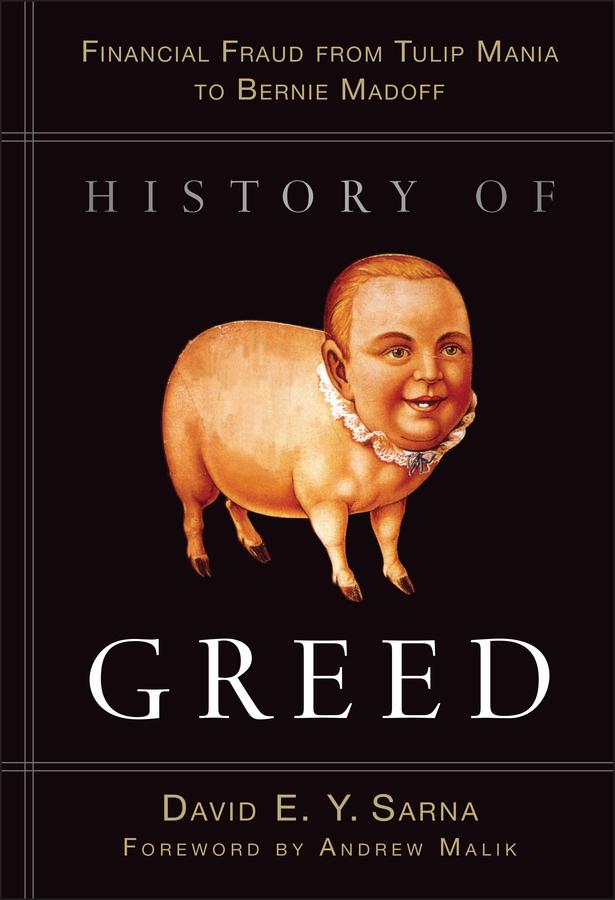
The “greater fool” theory of economics states that it’s possible to make money by buying paper (securities), whether overvalued or not, and later, selling it at a profit because there will always be an even greater fool willing to pay the higher price. Many described in this book profited by peddling such worthless junk to foolish investors. But for some people—Bernie Madoff, Norman Hsu, Sholam Weiss, and “Crazie Eddie” Antar, aka the “Darth Vader of Capitalism”—overvalued securities were not enough. Outright fraud was their way of life. History of Greed is the compelling inside story of the names you know—Charles Ponzi, Baron Rothschild, Lou Pearlman—and the names you don’t—Isaac Le Maire, the world’s first “naked” short-seller. It’s also our story—why we ignore the lessons of the past and fall prey, most every time, to the promise of easy money.
For thousands of years, alchemists unsuccessfully tried to turn worthless base metals into gold. Where science failed at turning nothing into something, business succeeded. Sometimes we praise the creators of derivatives, collateral debt obligations, subprime mortgages, credit default swaps, or auction rate securities as Wall Street’s new financial wizards, the creators of “magic paper.” Other times, we vilify and prosecute them as scam artists. Sometimes, it’s hard to tell who is who. History of Greed reveals the inside secrets of how the markets really work, and how scam artists abuse them to gain an unfair edge or to outright steal. It describes how luftgescheft (“air business”), wizardry, dishonesty, and fraud are used to swindle people. Along with a comprehensive bibliography, History of Greed also details:
If it’s too good to be true, it probably is. If they say you can’t lose, you probably will. History of Greed shows that there really is no such thing as a free lunch, while also detailing how not to become the “greater fool.”
Zanim poznałem Memmo, moje notatki były rozrzucone po PDF-ach. Teraz obszar roboczy zbiera wszystko w jednym miejscu — widzę dokładnie, co jeszcze muszę powtórzyć.
Podsumowania Memmo to złoto przed egzaminami. Nie muszę czytać 800 stron dwa tygodnie wcześniej — tylko to, co najważniejsze.
Czat AI uratował mnie niejeden raz w noc przed egzaminem. Pytam, dopóki nie zrozumiem — i nie muszę czekać na odpowiedź od grupy studyjnej.
Quizy trafiają w punkt, jeśli chodzi o to, co muszę wiedzieć. Memmo śledzi, na czym się zacinam — więc ćwiczę tylko to, co naprawdę się liczy.
Fiszki z powtórkami rozłożonymi w czasie to magia. Memmo wie, kiedy mam coś zapomnieć i przypomina mi o tym.
Podcasty AI to mój faworyt. Słucham w drodze do szkoły i powtarzam materiał, nie siedząc przed komputerem.

Handbok i kvalitativa metoder
281 kr

Hållbar utveckling: en introduktion för ingenjörer och andra problemlösare
334 kr

Brymans Samhällsvetenskapliga metoder
390 kr

Projektledning
491 kr

Den orättvisa hälsan: om socioekonomiska skillnader i hälsa och livslängd
326 kr

Organizational Leadership
429 kr

Vetenskapsteori för nybörjare
196 kr

På väg mot läraryrket
172 kr

Det sociala livet i skolan: Socialpsykologiska perspektiv
253 kr

Betygsättningens didaktik
151 kr

Personality
402 kr

Studying Leadership
404 kr

Managing Innovation
477 kr

Introduktion till samhällsvetenskaplig metod
347 kr

The Psychology of Sex and Gender
698 kr

Evidens och kunskap för socialt arbete
207 kr

Introduction to Leadership
605 kr