
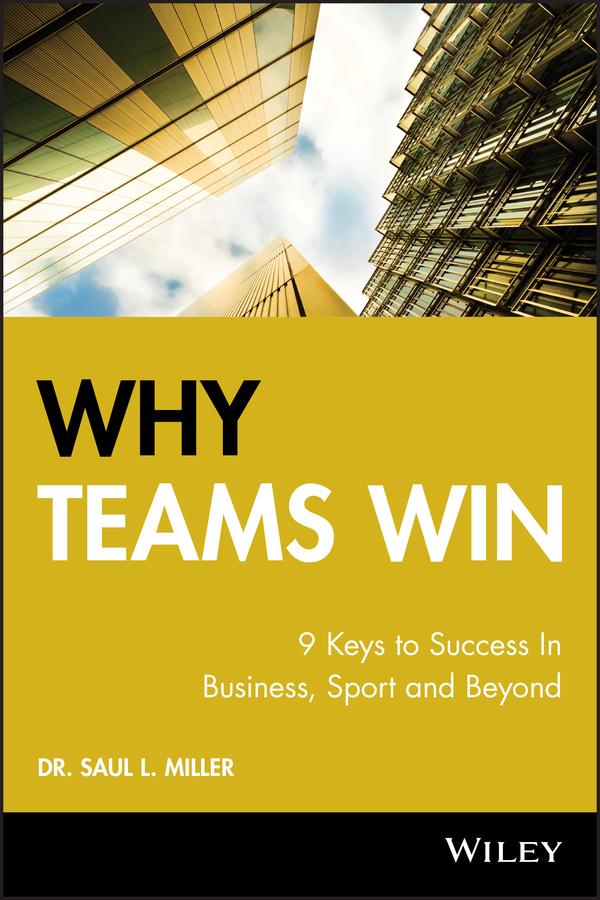
Winning isn't easy. The world is becoming more and more competitive, with a greater need than ever for people to work together effectively in teams to make organizations successful.
There is no better model for success in business than the world of sport, with its bottom-line performance culture and its relentless focus on creating winning teams. In Why Teams Win, renowned sports psychologist Dr. Saul L. Miller-the man who teaches elite athletes and top sports teams how to be successful-uses sport as a powerful metaphor for the world of business.
Why Teams Win distills Dr. Miller's work with hundreds of high-performance teams-in the worlds of sport, business, healthcare, and the arts-into lessons to help business teams perform. Why Teams Win:
- Identified the 9 key characteristics of successful teams.
- Describes how to improve personal, organizational, and team performance in each of these 9 areas.
- Explains how and why to apply different strategies to different types of teams.
- Outlines how to balance the needs of the individual with the needs of the team.
- Helps people work together and perform to the best of their abilities.
- Shows how to get the maximum potential out of a group of individuals.
- Features advice, quotes, and interviews from high-profile athletes and coaches, as well as from business leaders.
- Includes self-evaluation and team-building exercises.
Why Teams Win offers anyone wanting to improve their personal and team performance a proven and accessible formula for success.
Płać wygodnie kartą, Klarną, Apple Pay lub Google Pay. Nie jesteś zadowolony? Zawsze masz 14-dniową gwarancję zwrotu pieniędzy. Więcej przeczytasz w naszych warunkach. Masz pytania? Napisz do nas na hello@memmo.org.
Memmo ułatwia naukę – gdziekolwiek jesteś na świecie. U nas znajdziesz podręczniki i sprytne narzędzia do nauki w jednym miejscu: streszczenia, quizy, podcasty i fiszki. A do tego Ted, Twój kumpel do nauki, który odpowie na wszystko, co Cię nurtuje. Ponad 50 000 studentów już tu się uczy – stworzone, byś uczył się szybciej i mniej stresował.