
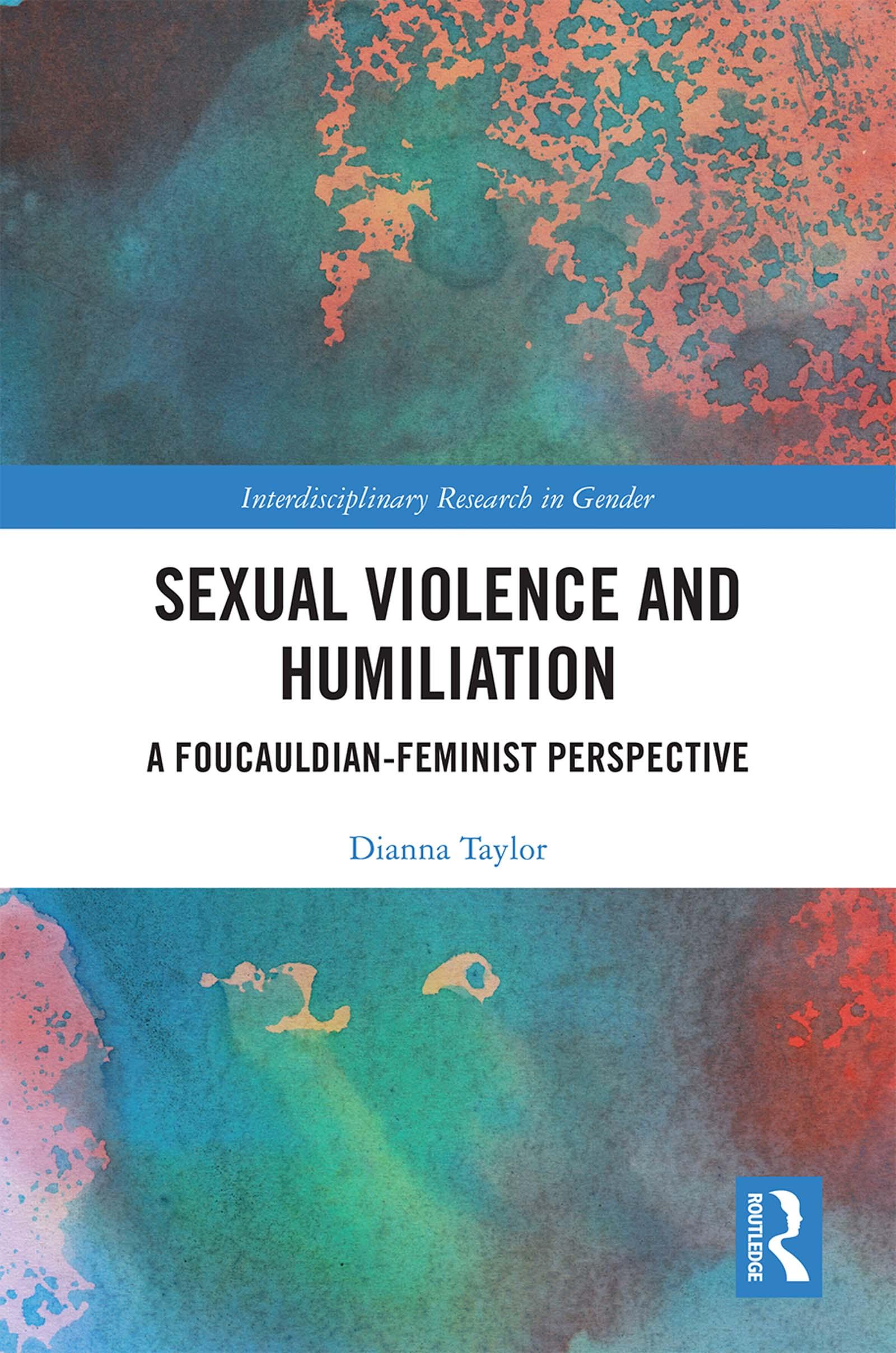
This book presents humiliation as a key harm of sexual violence against women, showing that humiliation manifests within the relation of self to itself, and that Foucault’s critique of subjectivity provides resources for feminist conceptualization and countering of sexual violence and humiliation.
Within feminist philosophy and theory, rape and sexual assault are often described as humiliating to victims, yet relatively few in-depth feminist philosophical accounts and analyses exist of humiliation as a harm of sexual violence against women. This book provides such an account and analysis of both humiliation generally and sexual humiliation resulting from sexual violence more specifically. The book’s elucidation of possibilities for countering sexual violence and humiliation, moreover, breaks with standard feminist approaches by critiquing rather than appealing to subjectivity. Through analysing specific instances of anti-sexual violence protest, it shows that cultivation of alternative modes of self-relation furthers rather than undermines feminist efforts to combat sexual violence. Throughout, the book draws upon concrete, recent and contemporary instances of sexual violence against women and feminist anti-sexual violence protest to illustrate and support its arguments.
This will become a key text for feminist scholars and Foucault scholars in the humanities and social sciences, and for graduate and advanced undergraduate students. It will also be of interest to feminist anti-sexual violence activists.
Płać wygodnie kartą, Klarną, Apple Pay lub Google Pay. Nie jesteś zadowolony? Zawsze masz 14-dniową gwarancję zwrotu pieniędzy. Więcej przeczytasz w naszych warunkach. Masz pytania? Napisz do nas na hello@memmo.org.
Memmo ułatwia naukę – gdziekolwiek jesteś na świecie. U nas znajdziesz podręczniki i sprytne narzędzia do nauki w jednym miejscu: streszczenia, quizy, podcasty i fiszki. A do tego Ted, Twój kumpel do nauki, który odpowie na wszystko, co Cię nurtuje. Ponad 50 000 studentów już tu się uczy – stworzone, byś uczył się szybciej i mniej stresował.