
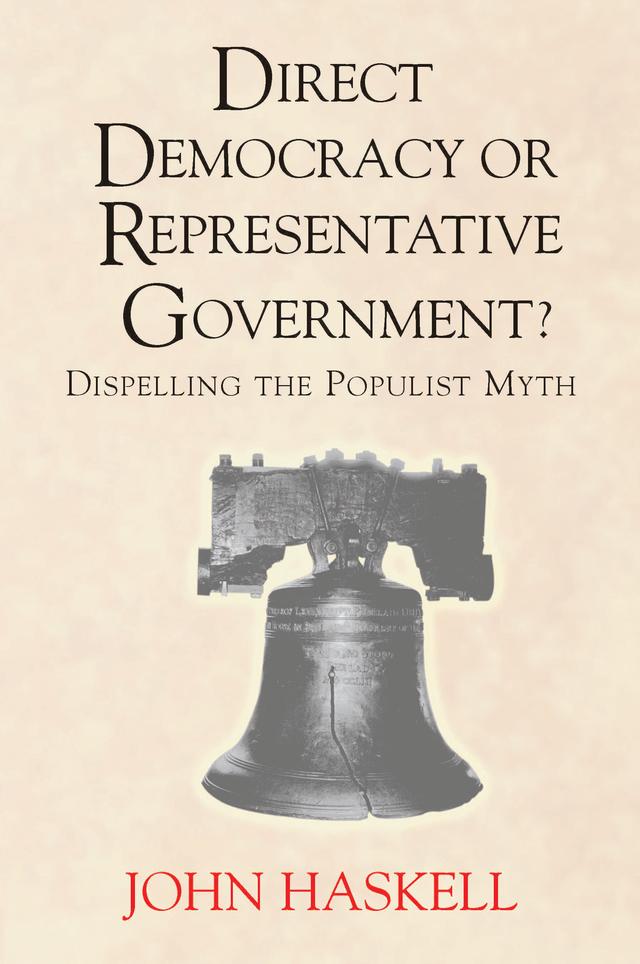
In Direct Democracy or Representative Government? John Haskell develops a devastating critique of direct democracy by exposing the central flaw in populist thinking. Contrary to the beliefs of populist advocates of direct democracy, the popular will cannot be interpreted from the results of the plebiscite. John Haskell presents a defense of representative institutions that brings to bear, in an understandable way, the findings of public choice scholars. Haskell covers the clash of ideas between populists and constitutionalists throughout American history. He follows the development of direct democracy during the twentieth century, especially the dramatically increased use of initiatives and referenda in the last decade. As Americans become increasingly frustrated with the workings of the institutions of government at the state and national levels, and as populist ideas gain greater currency, new forms of direct and participatory democracy making use of the latest computer technology appeal to more people. Haskell speculates as to the likely future direction of direct democracy in the U.S. He describes in clear language the fundamental problem with the premise of populist thinking and explains why direct democracy presents a threat to minority rights and only promises irresponsible and unaccountable governance.
Płać wygodnie kartą, Klarną, Apple Pay lub Google Pay. Nie jesteś zadowolony? Zawsze masz 14-dniową gwarancję zwrotu pieniędzy. Więcej przeczytasz w naszych warunkach. Masz pytania? Napisz do nas na hello@memmo.org.
Memmo ułatwia naukę – gdziekolwiek jesteś na świecie. U nas znajdziesz podręczniki i sprytne narzędzia do nauki w jednym miejscu: streszczenia, quizy, podcasty i fiszki. A do tego Ted, Twój kumpel do nauki, który odpowie na wszystko, co Cię nurtuje. Ponad 50 000 studentów już tu się uczy – stworzone, byś uczył się szybciej i mniej stresował.
Może Ci się spodobać
Kup książkę0