
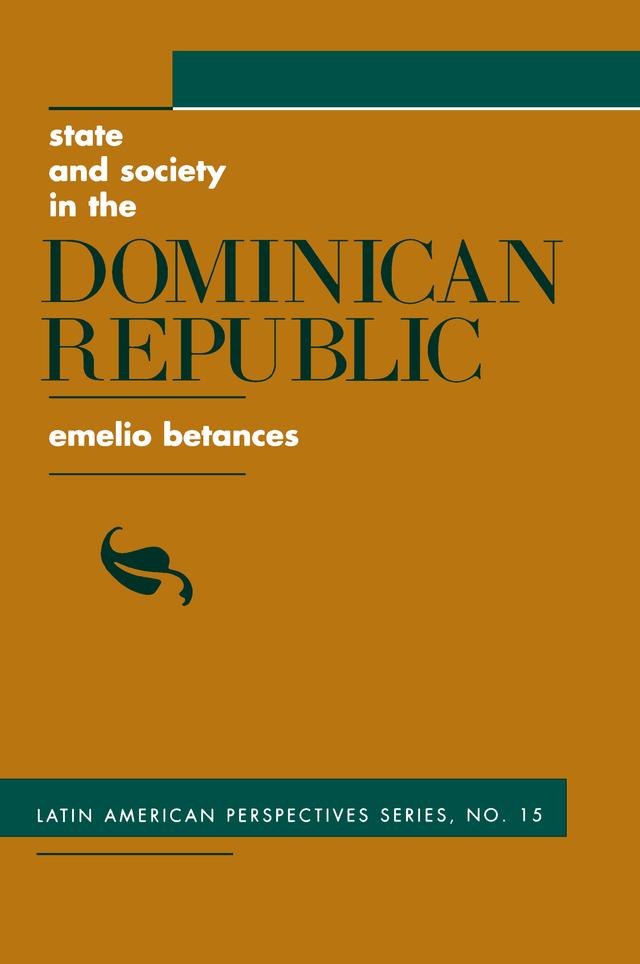
This book offers an analysis of the formation of the Dominican state and explores the development of state-society relations since the late nineteenth century. Emelio Betances argues that the groundwork for the establishment of a modern state was laid during the regimes of Ulises Heureaux and Ram��res. The U.S. military government that followed later expanded and strengthened political and administrative centralization. Between 1886 and 1924, these administrations opened the sugar industry to foreign capital investment, integrated Dominican finance into the international credit system, and expanded the role of the military. State expansion, however, was not accompanied by a strengthening of the social and economic base of national elites. Betances suggests that the imbalance between a strong state and a weak civil society provided the structural framework for the emergence in 1930 of the long-lived Trujillo dictatorship.Examining the links between Trujillo and current caudillo Joaqu�Balaguer, the author traces continuities and discontinuities in economic and political development through a study of import substitution programs, the reemergence of new economic groups, and the use of the military to counter threats to the status quo. Finally, he explores the impact of foreign intervention and socioeconomic change on the process of state and class formation since 1961.
Płać wygodnie kartą, Klarną, Apple Pay lub Google Pay. Nie jesteś zadowolony? Zawsze masz 14-dniową gwarancję zwrotu pieniędzy. Więcej przeczytasz w naszych warunkach. Masz pytania? Napisz do nas na hello@memmo.org.
Memmo ułatwia naukę – gdziekolwiek jesteś na świecie. U nas znajdziesz podręczniki i sprytne narzędzia do nauki w jednym miejscu: streszczenia, quizy, podcasty i fiszki. A do tego Ted, Twój kumpel do nauki, który odpowie na wszystko, co Cię nurtuje. Ponad 50 000 studentów już tu się uczy – stworzone, byś uczył się szybciej i mniej stresował.
Może Ci się spodobać
Kup książkę0