
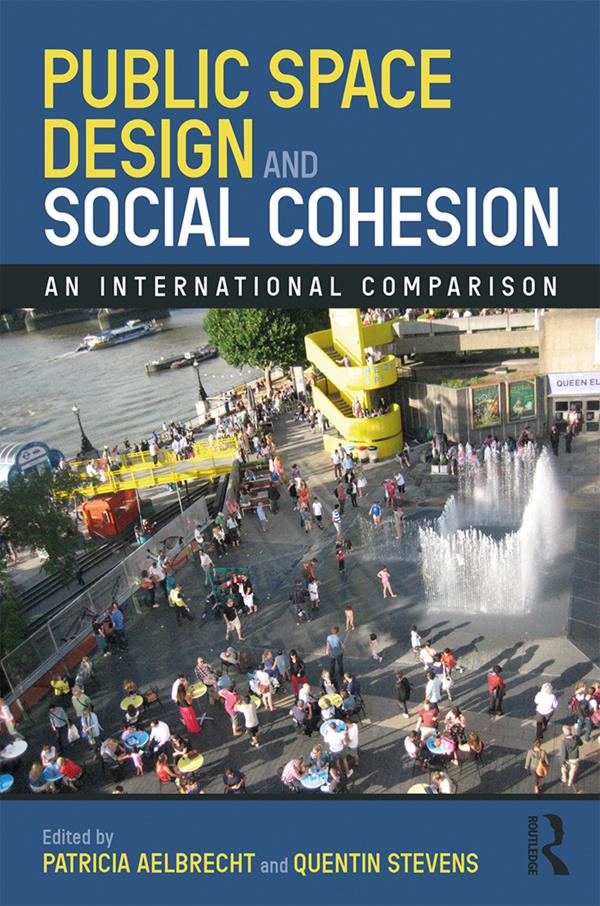
Social cohesion is often perceived as being under threat from the increasing cultural and economic differences in contemporary cities and the increasing intensity of urban life. Public space, in its role as the main stage for social interactions between strangers, clearly plays a role in facilitating or limiting opportunities for social cohesion. But what exactly is social cohesion, how is it experienced in the public realm, and what role can the design of city spaces have in supporting or promoting it? There are significant knowledge gaps between the social sciences and design disciplines and between academia and practice, and thus a dispersed knowledge base that currently lacks nuanced insight into how urban design contributes to social integration or segregation.
This book brings together scholarly knowledge at the intersection of public space design and social cohesion. It is based on original scholarly research and a depth of urban design practice, and analyses case studies from a variety of cities and cultures across the Global North and Global South. Its interdisciplinary, cross-cultural analysis will be of interest to academics, students, policymakers and practitioners engaged with a range of subject areas, including urban design, urban planning, architecture, landscape, cultural studies, human geography, social policy, sociology and anthropology. It will also have significant appeal to a wider non-academic readership, given its topical subject matter.
Płać wygodnie kartą, Klarną, Apple Pay lub Google Pay. Nie jesteś zadowolony? Zawsze masz 14-dniową gwarancję zwrotu pieniędzy. Więcej przeczytasz w naszych warunkach. Masz pytania? Napisz do nas na hello@memmo.org.
Memmo ułatwia naukę – gdziekolwiek jesteś na świecie. U nas znajdziesz podręczniki i sprytne narzędzia do nauki w jednym miejscu: streszczenia, quizy, podcasty i fiszki. A do tego Ted, Twój kumpel do nauki, który odpowie na wszystko, co Cię nurtuje. Ponad 50 000 studentów już tu się uczy – stworzone, byś uczył się szybciej i mniej stresował.