
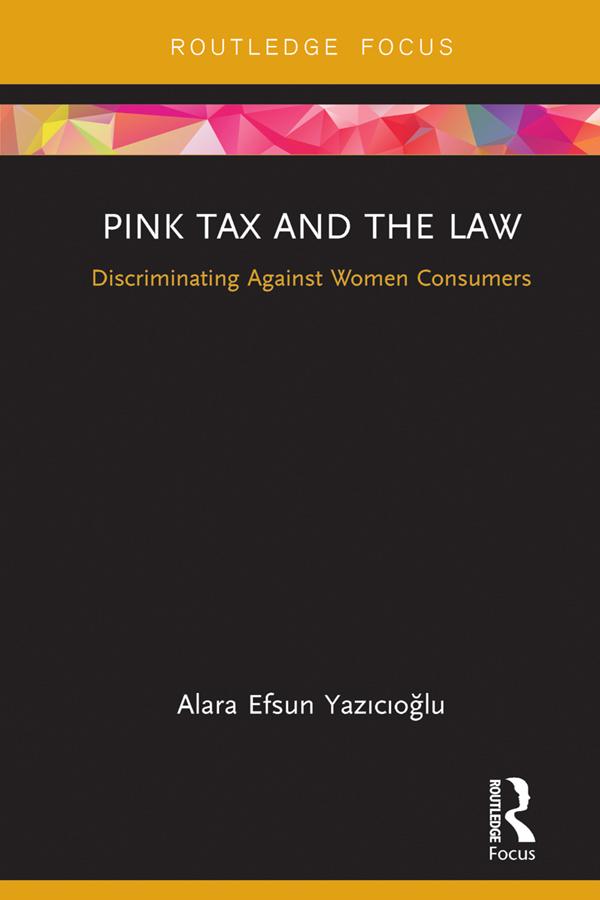
The emergence of the terms ‘pink tax’ and ‘tampon tax’ in everyday language suggests that women, who already suffer from an economic disadvantage due to the gender wage gap, are put in an even more detrimental position by means of ‘discriminatory consumption taxes’. This book is the first conducting a legal analysis to establish to what extent this public perception is accurate.
Does the practice of ‘pink tax’ effectively amount to a tax in the legal sense? Does the so-called ‘tampon tax’ genuinely constitute an anomaly within the general consumption tax system? Most importantly, can these two ‘taxes’ be legally qualified as discriminatory?
This book provides scientific answers to these questions. It first cuts through the existent information clutter by elucidating the pertinent economic, sociological and psychological components of the practices referred to as ‘pink tax’ and ‘tampon tax’. It then proceeds with a thorough legal analysis of all relevant aspects to determine whether women are indeed subject to discriminatory consumption taxes.
It is well-established that women earn less than men. This book investigates if they simultaneously pay more due to ‘discriminatory consumption taxes’.
Płać wygodnie kartą, Klarną, Apple Pay lub Google Pay. Nie jesteś zadowolony? Zawsze masz 14-dniową gwarancję zwrotu pieniędzy. Więcej przeczytasz w naszych warunkach. Masz pytania? Napisz do nas na hello@memmo.org.
Memmo ułatwia naukę – gdziekolwiek jesteś na świecie. U nas znajdziesz podręczniki i sprytne narzędzia do nauki w jednym miejscu: streszczenia, quizy, podcasty i fiszki. A do tego Ted, Twój kumpel do nauki, który odpowie na wszystko, co Cię nurtuje. Ponad 50 000 studentów już tu się uczy – stworzone, byś uczył się szybciej i mniej stresował.