
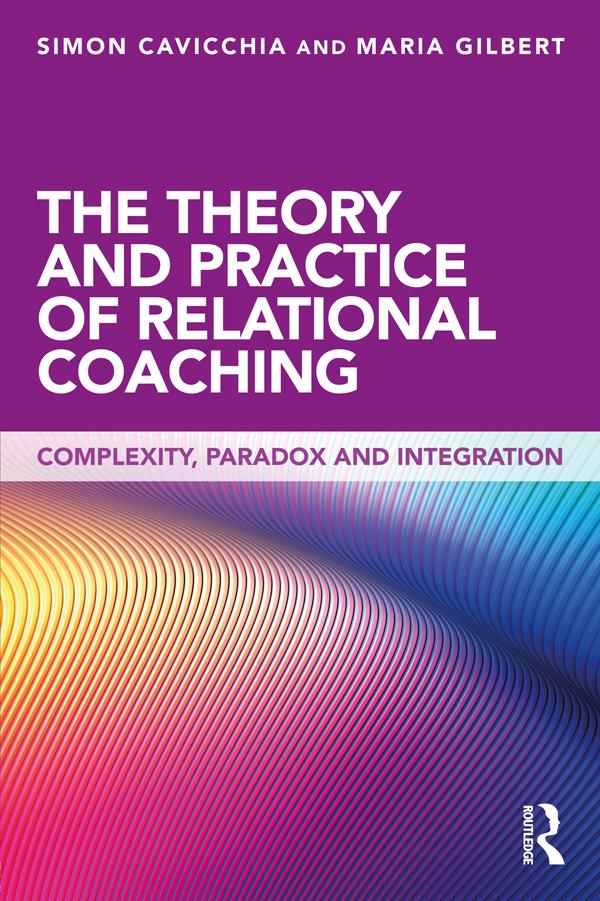
The 'relational turn' is a movement affecting a range of disciplines including neuroscience, psychoanalysis, psychotherapy, organisational consulting and, more recently, coaching. Its primary focus is on the centrality of human relating in determining how individuals develop, make meaning and function individually and collectively.
In The Theory and Practice of Relational Coaching: Complexity, Paradox and Integration, Simon Cavicchia and Maria Gilbert expand existing coaching theory and practice to focus on the implications of the relational turn for how coaches and clients think about the nature of identity, the self, change, learning, and individual and organisational development. Drawing on perspectives as varied as relational neuroscience, the relational foundations of personality development, psychoanalysis, psychotherapy, shame, vulnerability, complexity and systems ideas, the authors shed light on many of the paradoxes and challenges facing coaches and their clients in today’s fast-paced, volatile and uncertain organisational environments. These include holding tensions such as the uniqueness of individual needs with the requirements of organisational contexts, managing multiple stakeholder expectations and networks and balancing linear approaches to change with adjusting to emerging and unpredictable events.
Given the ever-increasing volatility, complexity and uncertainty that coaches and their clients face, The Theory and Practice of Relational Coaching guides the reader through a series of illuminating perspectives, examples and practical suggestions. These will enable coaches to integrate a more relational orientation in their work and extend their range and that of their clients for responding creatively to the challenges of modern organisational life. The book will appeal to coaches and coaching psychologists in practice and training, as well as counsellors and psychotherapists retraining as coaches.
Płać wygodnie kartą, Klarną, Apple Pay lub Google Pay. Nie jesteś zadowolony? Zawsze masz 14-dniową gwarancję zwrotu pieniędzy. Więcej przeczytasz w naszych warunkach. Masz pytania? Napisz do nas na hello@memmo.org.
Memmo ułatwia naukę – gdziekolwiek jesteś na świecie. U nas znajdziesz podręczniki i sprytne narzędzia do nauki w jednym miejscu: streszczenia, quizy, podcasty i fiszki. A do tego Ted, Twój kumpel do nauki, który odpowie na wszystko, co Cię nurtuje. Ponad 50 000 studentów już tu się uczy – stworzone, byś uczył się szybciej i mniej stresował.