
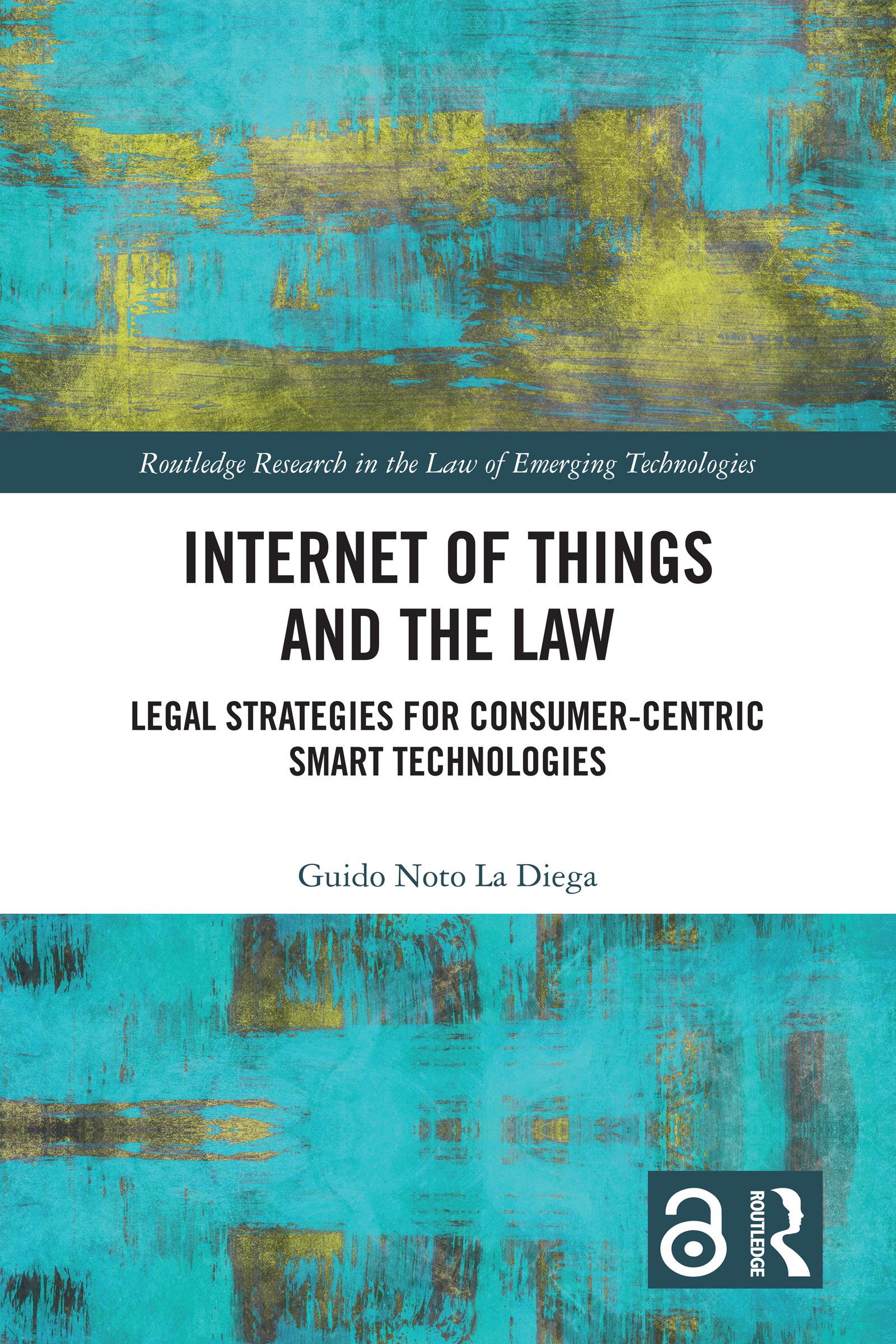
Internet of Things and the Law: Legal Strategies for Consumer-Centric Smart Technologies is the most comprehensive and up-to-date analysis of the legal issues in the Internet of Things (IoT). For decades, the decreasing importance of tangible wealth and power – and the increasing significance of their disembodied counterparts – has been the subject of much legal research. For some time now, legal scholars have grappled with how laws drafted for tangible property and predigital ‘offline’ technologies can cope with dematerialisation, digitalisation, and the internet. As dematerialisation continues, this book aims to illuminate the opposite movement: rematerialisation, namely, the return of data, knowledge, and power within a physical ‘smart’ world. This development frames the book’s central question: can the law steer rematerialisation in a human-centric and socially just direction? To answer it, the book focuses on the IoT, the sociotechnological phenomenon that is primarily responsible for this shift. After a thorough analysis of how existing laws can be interpreted to empower IoT end users, Noto La Diega leaves us with the fundamental question of what happens when the law fails us and concludes with a call for collective resistance against ‘smart’ capitalism.
The Open Access version of this book, available at http://www.taylorfrancis.com, has been made available under a Creative Commons Attribution (CC-BY) 4.0 license.
Płać wygodnie kartą, Klarną, Apple Pay lub Google Pay. Nie jesteś zadowolony? Zawsze masz 14-dniową gwarancję zwrotu pieniędzy. Więcej przeczytasz w naszych warunkach. Masz pytania? Napisz do nas na hello@memmo.org.
Memmo ułatwia naukę – gdziekolwiek jesteś na świecie. U nas znajdziesz podręczniki i sprytne narzędzia do nauki w jednym miejscu: streszczenia, quizy, podcasty i fiszki. A do tego Ted, Twój kumpel do nauki, który odpowie na wszystko, co Cię nurtuje. Ponad 50 000 studentów już tu się uczy – stworzone, byś uczył się szybciej i mniej stresował.