
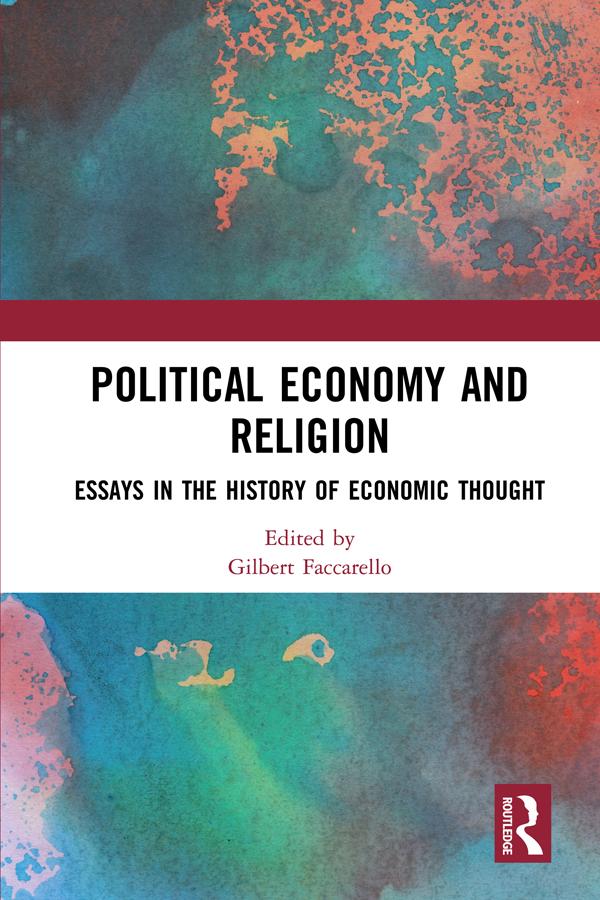
Ever since Antiquity, reflections about economic problems have always been intertwined with questions relating to politics, ethics and religion. From the 18th century onwards, economic thought seemed to have been gradually disentangled from any other field, and to have gained the status of an autonomous scientific discipline, especially with the later use of mathematics. In fact, the growth of economic knowledge never broke off any ties with these other fields, and, especially with religion and ethics, even though the links with them became less obvious, they only changed shape. This is what this book illustrates, each chapter dealing with different periods and authors from the Middle Ages to the present times. Focusing in turn on the thought of the Scholastics, Ibn Rushd (Averroes), John Calvin, the French liberal Jansenists, Dugald Stewart, David Ricardo, Henri de Saint-Simon, Charles de Coux and French Christian Political Economy, Auguste Comte and Émile Durkheim, Henry Sidgwick, Arthur Cecil Pigou, and finally John Maynard Keynes, the studies collected here show how religious themes played an important role in the development of economic thought. This book was originally published as a Special Issue of The European Journal of the History of Economic Thought.
Płać wygodnie kartą, Klarną, Apple Pay lub Google Pay. Nie jesteś zadowolony? Zawsze masz 14-dniową gwarancję zwrotu pieniędzy. Więcej przeczytasz w naszych warunkach. Masz pytania? Napisz do nas na hello@memmo.org.
Memmo ułatwia naukę – gdziekolwiek jesteś na świecie. U nas znajdziesz podręczniki i sprytne narzędzia do nauki w jednym miejscu: streszczenia, quizy, podcasty i fiszki. A do tego Ted, Twój kumpel do nauki, który odpowie na wszystko, co Cię nurtuje. Ponad 50 000 studentów już tu się uczy – stworzone, byś uczył się szybciej i mniej stresował.