
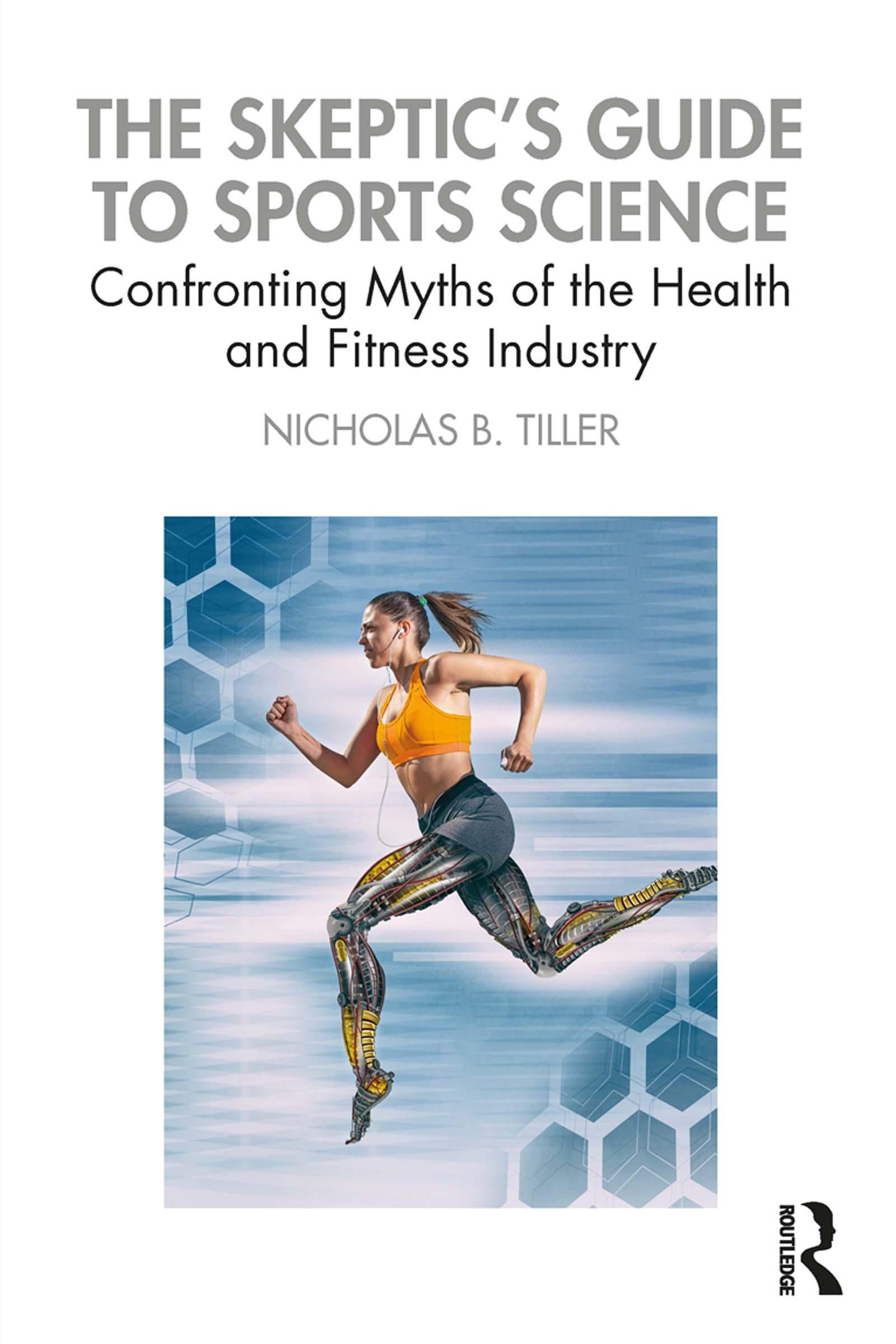
The global health and fitness industry is worth an estimated $4 trillion. We spend $90 billion each year on health club memberships and $100 billion each year on dietary supplements. In such an industrial climate, lax regulations on the products we are sold (supplements, fad-diets, training programs, gadgets, and garments) result in marketing campaigns underpinned by strong claims and weak evidence. Moreover, our critical faculties are ill-suited to a culture characterized by fake news, social media, misinformation, and bad science. We have become walking, talking prey to 21st-Century Snake Oil salesmen.
In The Skeptic’s Guide to Sports Science, Nicholas B. Tiller confronts the claims behind the products and the evidence behind the claims. The author discusses what might be wrong with the sales pitch, the glossy magazine advert, and the celebrity endorsements that our heuristically-wired brains find so innately attractive. Tiller also explores the appeal of the one quick fix, the fallacious arguments that are a mainstay of product advertising, and the critical steps we must take in retraining our minds to navigate the pitfalls of the modern consumerist culture.
This informative and accessible volume pulls no punches in scrutinizing the plausibility of, and evidence for, the most popular sports products and practices on the market. Readers are encouraged to confront their conceptualizations of the industry and, by the book’s end, they will have acquired the skills necessary to independently judge the effectiveness of sports-related products. This treatise on the commercialization of science in sport and exercise is a must-read for exercisers, athletes, students, and practitioners who hope to retain their intellectual integrity in a lucrative health and fitness industry that is spiraling out-of-control.
Płać wygodnie kartą, Klarną, Apple Pay lub Google Pay. Nie jesteś zadowolony? Zawsze masz 14-dniową gwarancję zwrotu pieniędzy. Więcej przeczytasz w naszych warunkach. Masz pytania? Napisz do nas na hello@memmo.org.
Memmo ułatwia naukę – gdziekolwiek jesteś na świecie. U nas znajdziesz podręczniki i sprytne narzędzia do nauki w jednym miejscu: streszczenia, quizy, podcasty i fiszki. A do tego Ted, Twój kumpel do nauki, który odpowie na wszystko, co Cię nurtuje. Ponad 50 000 studentów już tu się uczy – stworzone, byś uczył się szybciej i mniej stresował.