
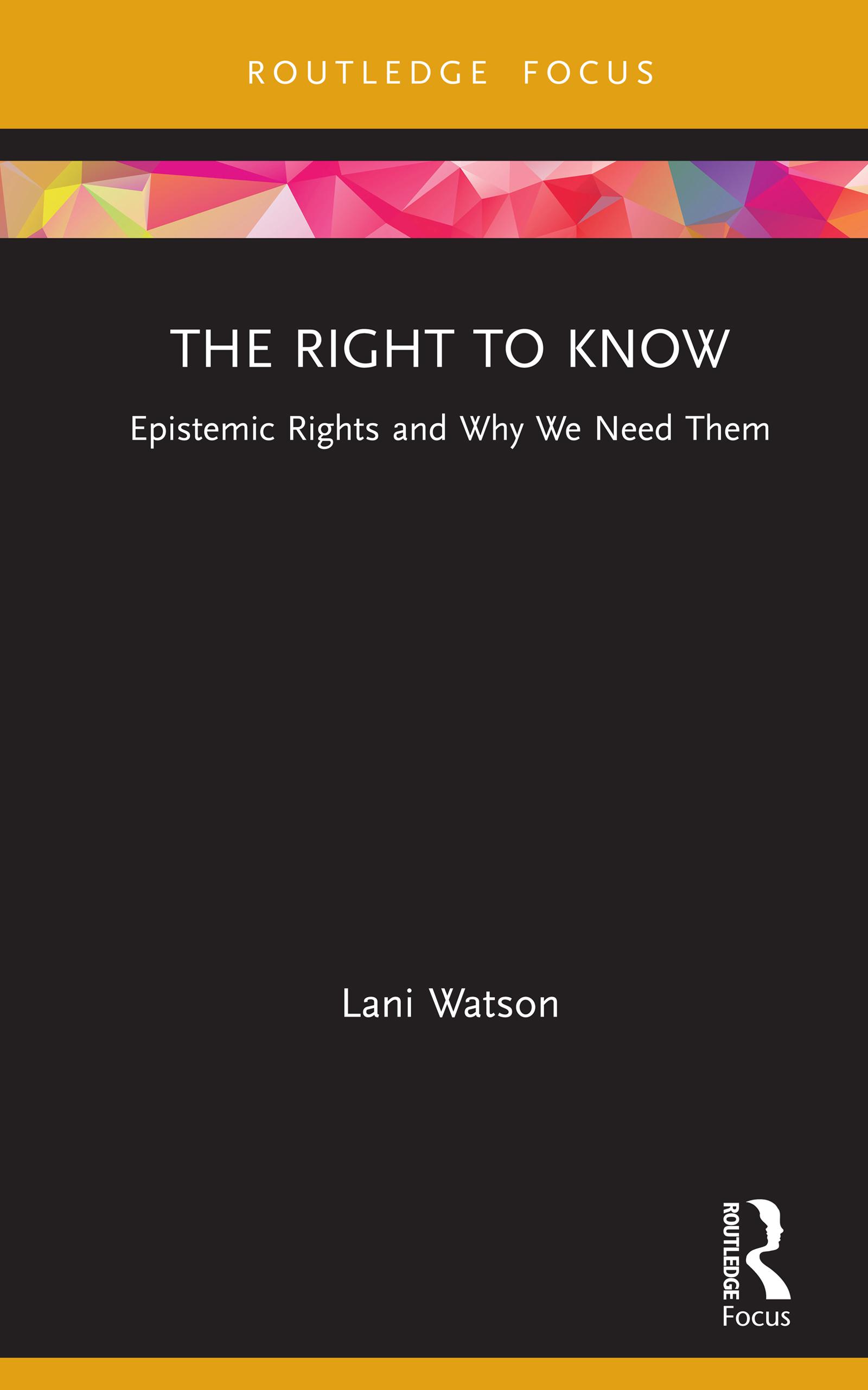
We speak of the right to know with relative ease. You have the right to know the results of a medical test or to be informed about the collection and use of personal data. But what exactly is the right to know, and who should we trust to safeguard it?
This book provides the first comprehensive examination of the right to know and other epistemic rights: rights to goods such as information, knowledge and truth. These rights play a prominent role in our information-centric society and yet they often go unnoticed, disregarded and unprotected. As such, those who control what we know, or think we know, exert an influence on our lives that is often as dangerous as it is imperceptible.
Beginning with a rigorous but accessible philosophical account of epistemic rights, Lani Watson examines the harms caused by epistemic rights violations, drawing on case studies across medical, political and legal contexts. She investigates who has the right to what information, who is responsible for the quality and circulation of information and what epistemic duties we have towards each other. This book is essential reading for philosophers, legal theorists and anyone concerned with the protection and promotion of information, knowledge and truth.
.
Płać wygodnie kartą, Klarną, Apple Pay lub Google Pay. Nie jesteś zadowolony? Zawsze masz 14-dniową gwarancję zwrotu pieniędzy. Więcej przeczytasz w naszych warunkach. Masz pytania? Napisz do nas na hello@memmo.org.
Memmo ułatwia naukę – gdziekolwiek jesteś na świecie. U nas znajdziesz podręczniki i sprytne narzędzia do nauki w jednym miejscu: streszczenia, quizy, podcasty i fiszki. A do tego Ted, Twój kumpel do nauki, który odpowie na wszystko, co Cię nurtuje. Ponad 50 000 studentów już tu się uczy – stworzone, byś uczył się szybciej i mniej stresował.