
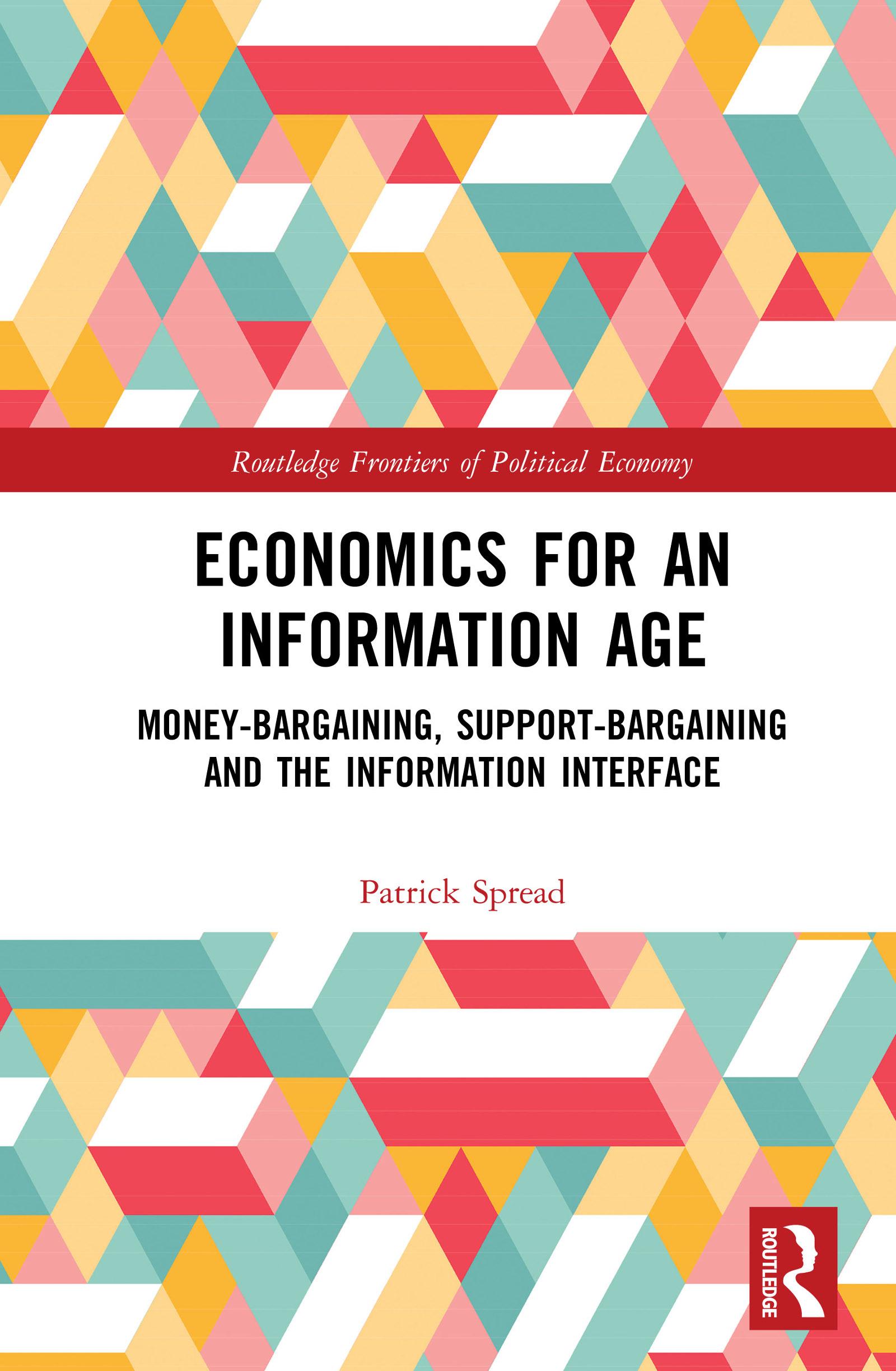
Economics for an Information Age examines the central role of information within economics and society. The neoclassical economic model, taught as ‘mainstream economics’ in universities around the world, relies on a mathematical model of ‘resource allocation’ in which private advantage gives rise to public advantage in the shape of an optimal allocation of resources. However, this model assumes ‘perfect information’. In the present ‘information age’ such an assumption is even farther from the reality than it was in the past. People disseminate and manipulate information to further their interests.
This book explains economic behaviour in terms of a theory of ‘money-bargaining’ and political and intellectual ‘support-bargaining’, in which the dissemination of information plays a central role. It uses this lens to explain how information is created, manipulated, disseminated, organised, understood, interpreted, used, bought and sold.
This book will be of interest to mainstream and heterodox economists alike, as well as historians of economic thought, and anyone who seeks to better understand the impact of the information age on economic behaviour.
Płać wygodnie kartą, Klarną, Apple Pay lub Google Pay. Nie jesteś zadowolony? Zawsze masz 14-dniową gwarancję zwrotu pieniędzy. Więcej przeczytasz w naszych warunkach. Masz pytania? Napisz do nas na hello@memmo.org.
Memmo ułatwia naukę – gdziekolwiek jesteś na świecie. U nas znajdziesz podręczniki i sprytne narzędzia do nauki w jednym miejscu: streszczenia, quizy, podcasty i fiszki. A do tego Ted, Twój kumpel do nauki, który odpowie na wszystko, co Cię nurtuje. Ponad 50 000 studentów już tu się uczy – stworzone, byś uczył się szybciej i mniej stresował.