
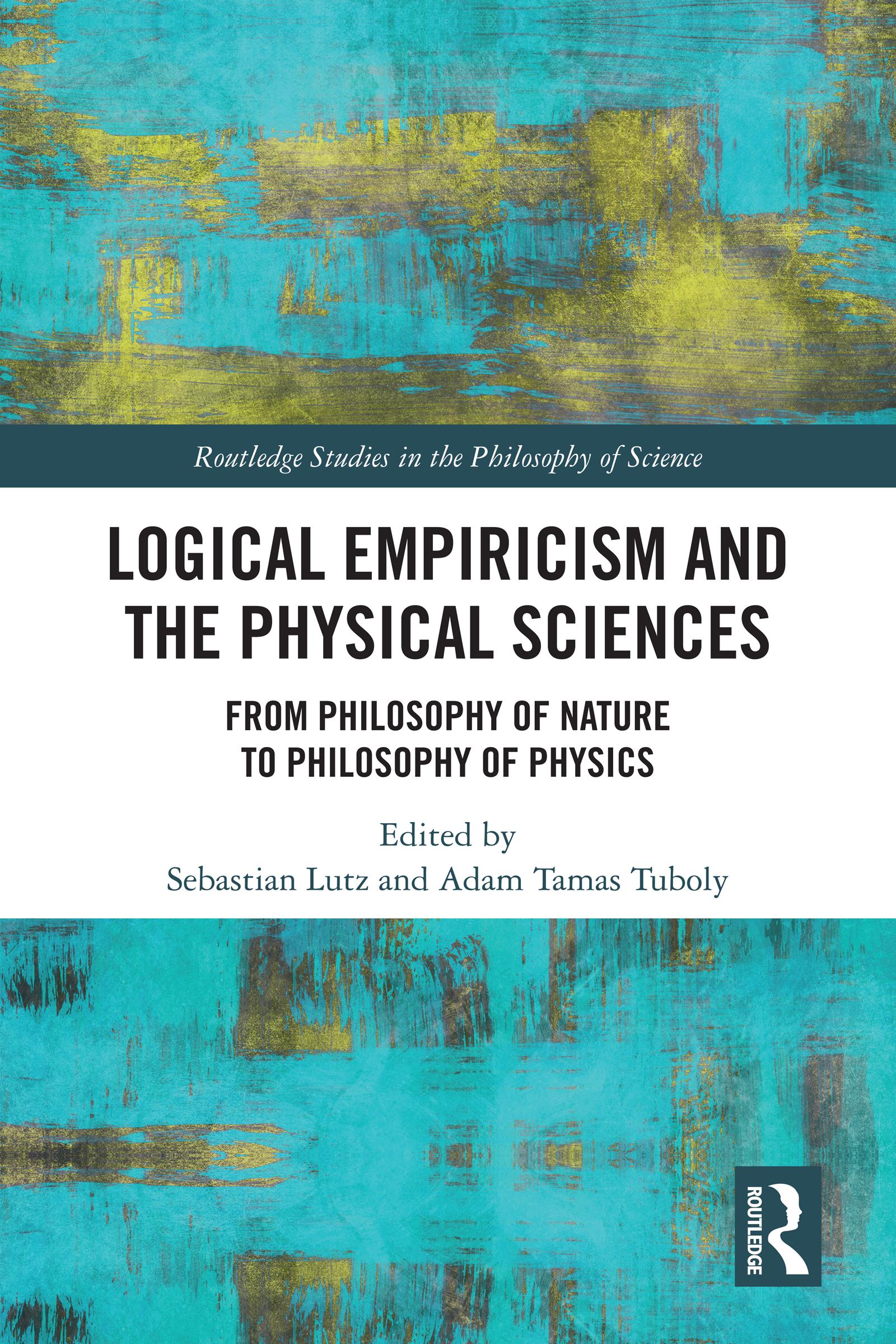
This volume has two primary aims: to trace the traditions and changes in methods, concepts, and ideas that brought forth the logical empiricists’ philosophy of physics and to present and analyze the logical empiricists’ various and occasionally contrary ideas about the physical sciences and their philosophical relevance. These original chapters discuss these developments in their original contexts and social and institutional environments, thus showing the various fruitful conceptions and philosophies behind the history of 20th-century philosophy of science.
Logical Empiricism and the Natural Sciences is divided into three thematic sections. Part I surveys the influences on logical empiricism’s philosophy of science and physics. It features chapters on Maxwell’s role in the worldview of logical empiricism, on Reichenbach’s account of objectivity, on the impact of Poincaré on Neurath’s early views on scientific method, Frank’s exchanges with Einstein about philosophy of physics, and on the forgotten role of Kurt Grelling. Part II focuses on specific physical theories, including Carnap’s and Reichenbach’s positions on Einstein’s theory of general relativity, Reichenbach’s critique of unified field theory, and the logical empiricists’ reactions to quantum mechanics. The third and final group of chapters widens the scope to philosophy of science and physics in general. It includes contributions on von Mises’ frequentism; Frank’s account of concept formation and confirmation; and the interrelations between Nagel’s, Feigl’s, and Hempel’s versions of logical empiricism.
This book offers a comprehensive account of the logical empiricists’ philosophy of physics. It is a valuable resource for researchers interested in the history and philosophy of science, philosophy of physics, and the history of analytic philosophy.
Płać wygodnie kartą, Klarną, Apple Pay lub Google Pay. Nie jesteś zadowolony? Zawsze masz 14-dniową gwarancję zwrotu pieniędzy. Więcej przeczytasz w naszych warunkach. Masz pytania? Napisz do nas na hello@memmo.org.
Memmo ułatwia naukę – gdziekolwiek jesteś na świecie. U nas znajdziesz podręczniki i sprytne narzędzia do nauki w jednym miejscu: streszczenia, quizy, podcasty i fiszki. A do tego Ted, Twój kumpel do nauki, który odpowie na wszystko, co Cię nurtuje. Ponad 50 000 studentów już tu się uczy – stworzone, byś uczył się szybciej i mniej stresował.