
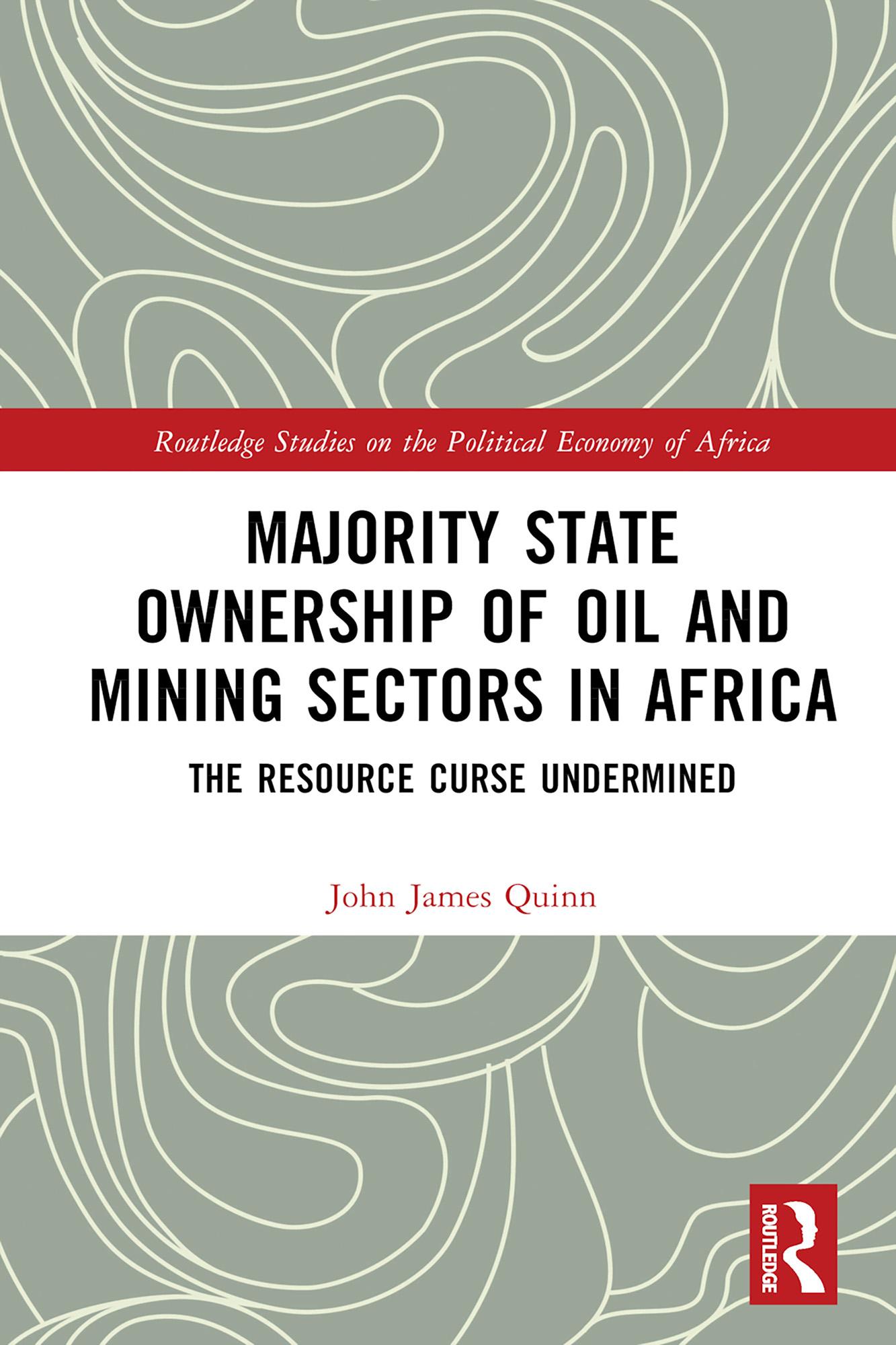
Majority State Ownership of Oil and Mining Sectors in Africa: The Resource Curse Undermined shows that countries in sub-Saharan Africa with majority state ownership of their major oil or mineral export sectors suffered from more severe versions of the natural resource curse than other similar countries.
Examining natural resource exporting nations in sub-Saharan Africa between 1966 to 2000, Quinn shows that on average, states with majority state ownership of these sectors featured lower growth, lower incomes, declining alternative export sectors, more debt, lower levels of investment, lower levels of political and civil rights, and more domestic conflict than other similar countries. These results remained fairly consistent across both cross-country data, as well as in paired case studies. One surprise finding is that these countries either had depreciating currencies, or did not feature high levels of currency appreciation, on average, which is inconsistent with resource curse literature predictions. Rather, most countries with majority state ownership had high levels of currency overvaluation – which operated in a similar manner as currency appreciation.
This work should appeal to students and faculty interested in the political economy of development, the natural resource curse, and African development, as well as politicians, policy makers, and NGO workers working in these areas. The strong recommendation of the book is that governments should control 50% or less of these sectors.
Płać wygodnie kartą, Klarną, Apple Pay lub Google Pay. Nie jesteś zadowolony? Zawsze masz 14-dniową gwarancję zwrotu pieniędzy. Więcej przeczytasz w naszych warunkach. Masz pytania? Napisz do nas na hello@memmo.org.
Memmo ułatwia naukę – gdziekolwiek jesteś na świecie. U nas znajdziesz podręczniki i sprytne narzędzia do nauki w jednym miejscu: streszczenia, quizy, podcasty i fiszki. A do tego Ted, Twój kumpel do nauki, który odpowie na wszystko, co Cię nurtuje. Ponad 50 000 studentów już tu się uczy – stworzone, byś uczył się szybciej i mniej stresował.