
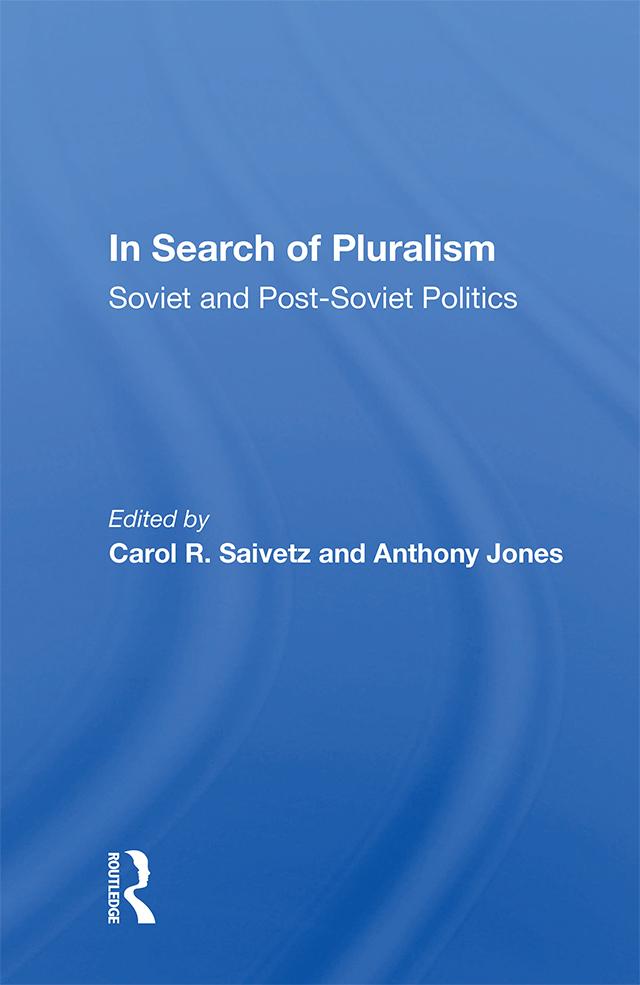
Building innovatively on Western social-science theory and on older models of Soviet politics, the authors review recent changes in the former USSR in order to assess the prospects there for democratic pluralism. Chapters focus on the first competitive elections, the new legislative bodies at state and local levels, and the newly freed press, exploring the extent to which these institutions can be described as democratic or pluralistic. Other chapters trace the complex linkages between a plurality of political-economic interests—explaining why Russian labor, government, and business may be moving toward a corporatist coalition and how political activists' sharply divergent attitudes toward the state and property keep them from forming a broad-based party. Although it is difficult in this period of dramatic flux to predict the future, these thought-provoking analyses will provide a deeper understanding of the transformations under way and will stimulate further exploration.
Płać wygodnie kartą, Klarną, Apple Pay lub Google Pay. Nie jesteś zadowolony? Zawsze masz 14-dniową gwarancję zwrotu pieniędzy. Więcej przeczytasz w naszych warunkach. Masz pytania? Napisz do nas na hello@memmo.org.
Memmo ułatwia naukę – gdziekolwiek jesteś na świecie. U nas znajdziesz podręczniki i sprytne narzędzia do nauki w jednym miejscu: streszczenia, quizy, podcasty i fiszki. A do tego Ted, Twój kumpel do nauki, który odpowie na wszystko, co Cię nurtuje. Ponad 50 000 studentów już tu się uczy – stworzone, byś uczył się szybciej i mniej stresował.
Może Ci się spodobać
Kup książkę0