
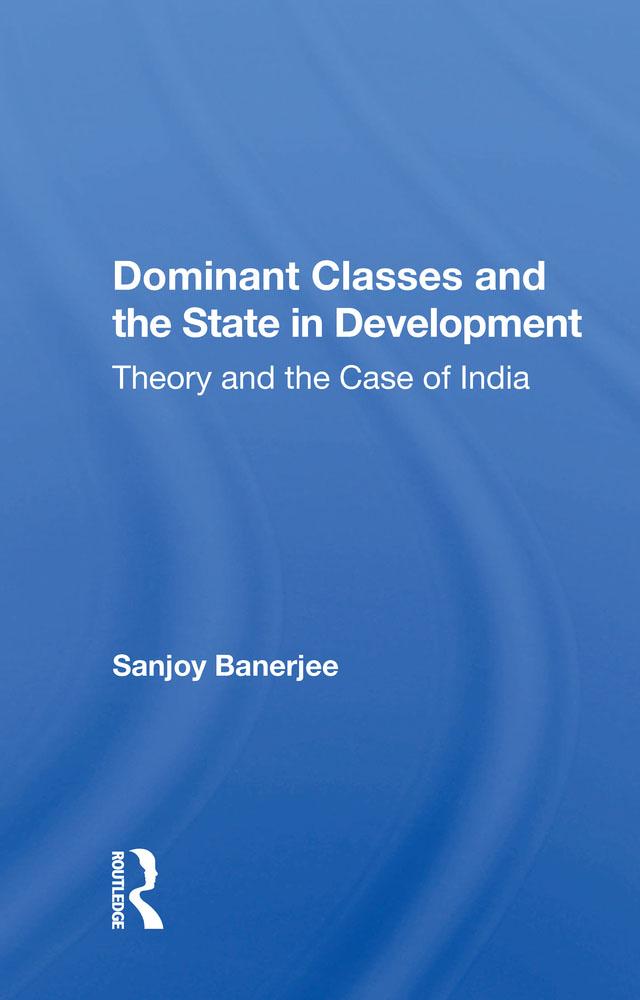
Why does capitalist development give rise to political alliances between the state and certain economically dominant classes? Addressing this question, Professor Banerjee uses an evolutionary approach to social structure to develop a theory of the interaction within and among business and manufacturing firms--a theory that highlights those aspects of market processes that promote the formation of dominant economic classes. Structural-evolutionary conceptions of property relations and of state planning and regulation are developed and combined with the market model. According to Professor Banerjee, the market, property relations, and state administration form a self-sustaining structure that simultaneously develops the economy in an uneven and clustered fashion and gives rise to a "dominant alliance" between a segment of the state and the fastest-accumulating classes in the economy. He applies his model to India during the 1956-1975 period, examining the industrialization process of the Second and Third plans, the crisis of the mid-1960s, and the Green Revolution.
Płać wygodnie kartą, Klarną, Apple Pay lub Google Pay. Nie jesteś zadowolony? Zawsze masz 14-dniową gwarancję zwrotu pieniędzy. Więcej przeczytasz w naszych warunkach. Masz pytania? Napisz do nas na hello@memmo.org.
Memmo ułatwia naukę – gdziekolwiek jesteś na świecie. U nas znajdziesz podręczniki i sprytne narzędzia do nauki w jednym miejscu: streszczenia, quizy, podcasty i fiszki. A do tego Ted, Twój kumpel do nauki, który odpowie na wszystko, co Cię nurtuje. Ponad 50 000 studentów już tu się uczy – stworzone, byś uczył się szybciej i mniej stresował.
Może Ci się spodobać
Kup książkę0