
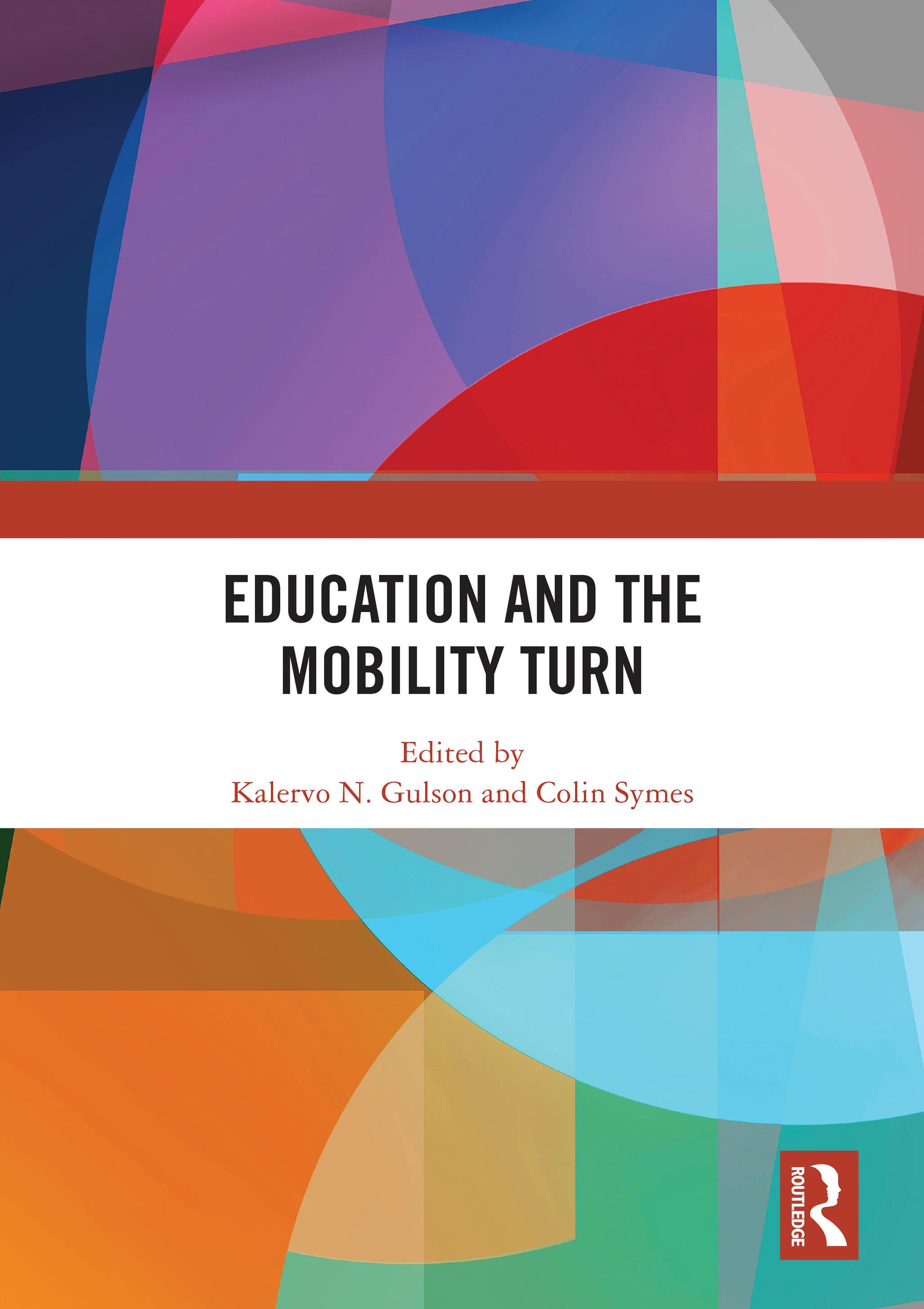
The ‘mobile turn’ in human geography, sociology and cultural studies has resulted in a hitherto unparalleled focus on the critical role that mobility plays in conserving and regenerating society and culture. In this instance, ‘mobility’ refers not just to the physical movement of goods and peoples, ideas and symbols; it can also be analytically applied to the technologies used to facilitate their movement.
One such technology is education, which has yet to fall the under the purview of the mobility lens – something that this collection endeavours to redress. Its contributing authors, drawn from Canada, Australia, the United States and the United Kingdom, explore salient issues relating to education and mobility. These include studies of the career implications for academics of moving across borders; the impact of university study on prison populations; policy mobility and the charter school movement; affect theory and policy development in Canada; educational advertising on Sydney trains and stations; and the employment mobile approaches to track policy development and implementation.
One notable feature of the mobility turn is the willingness of its adoptees to explore innovative research methods. Variously demonstrating the efficacy and cogency of autoethnography, affect theory, textual ethnography and human geography for a mobility-empowered education analytics, this collection is no exception. This book was originally published as a special issue of Critical Studies in Education.
Płać wygodnie kartą, Klarną, Apple Pay lub Google Pay. Nie jesteś zadowolony? Zawsze masz 14-dniową gwarancję zwrotu pieniędzy. Więcej przeczytasz w naszych warunkach. Masz pytania? Napisz do nas na hello@memmo.org.
Memmo ułatwia naukę – gdziekolwiek jesteś na świecie. U nas znajdziesz podręczniki i sprytne narzędzia do nauki w jednym miejscu: streszczenia, quizy, podcasty i fiszki. A do tego Ted, Twój kumpel do nauki, który odpowie na wszystko, co Cię nurtuje. Ponad 50 000 studentów już tu się uczy – stworzone, byś uczył się szybciej i mniej stresował.