
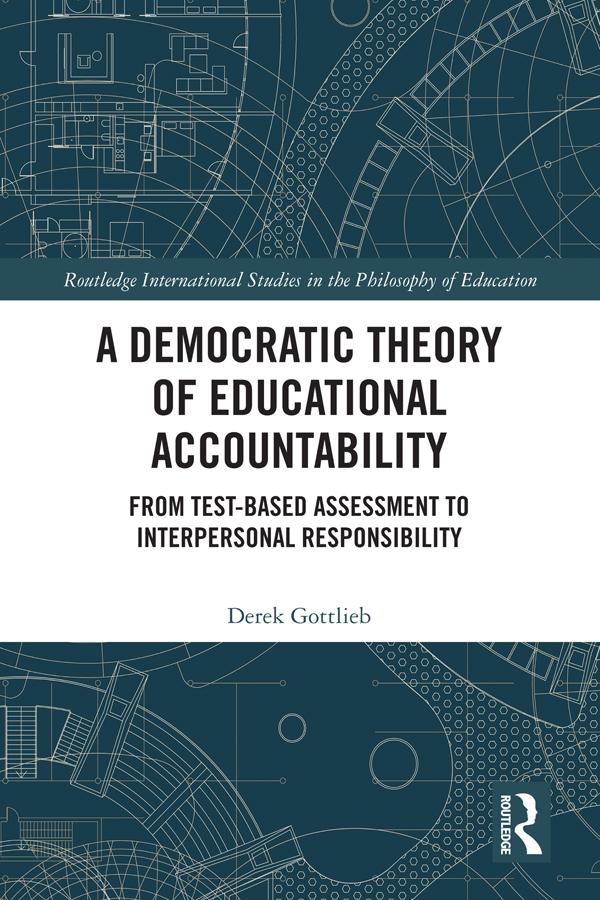
This insightful text offers a detailed account of the historical development of educational accountability in the US public education system. In doing so, it diagnoses the unforeseen consequences arising from a centralized, technocratic implementation of the concept, and calls for a radical re-thinking in how our democratic responsibilities translate into the provision, measurement, and conceptualization of education.
Drawing from the works of scholars including Stanley Cavell, Linda Zerilli, Daniel Koretz, and James Scott, A Democratic Theory of Educational Accountability illustrates the way in which "educational accountability" has foregrounded centralized measures of "success" to the point of perversity. Through nuanced political theory and philosophical arguments, the text demonstrates how test-based measures have rendered the holistic aims of education futile, resulting in an education system of "box-checking" and "rule-following". Ultimately calling for a new imagination of how our democratic responsibilities are enacted in schools and communities, Gottlieb illustrates how accountability can be used for good, to ensure that our schools nurture talent, cultivate social mobility, and engage with local needs.
This text will be of great interest to graduate and postgraduate students, researchers, academics, and libraries in the field of philosophy of education, educational policy, assessment & testing and democratic theory.
Płać wygodnie kartą, Klarną, Apple Pay lub Google Pay. Nie jesteś zadowolony? Zawsze masz 14-dniową gwarancję zwrotu pieniędzy. Więcej przeczytasz w naszych warunkach. Masz pytania? Napisz do nas na hello@memmo.org.
Memmo ułatwia naukę – gdziekolwiek jesteś na świecie. U nas znajdziesz podręczniki i sprytne narzędzia do nauki w jednym miejscu: streszczenia, quizy, podcasty i fiszki. A do tego Ted, Twój kumpel do nauki, który odpowie na wszystko, co Cię nurtuje. Ponad 50 000 studentów już tu się uczy – stworzone, byś uczył się szybciej i mniej stresował.