
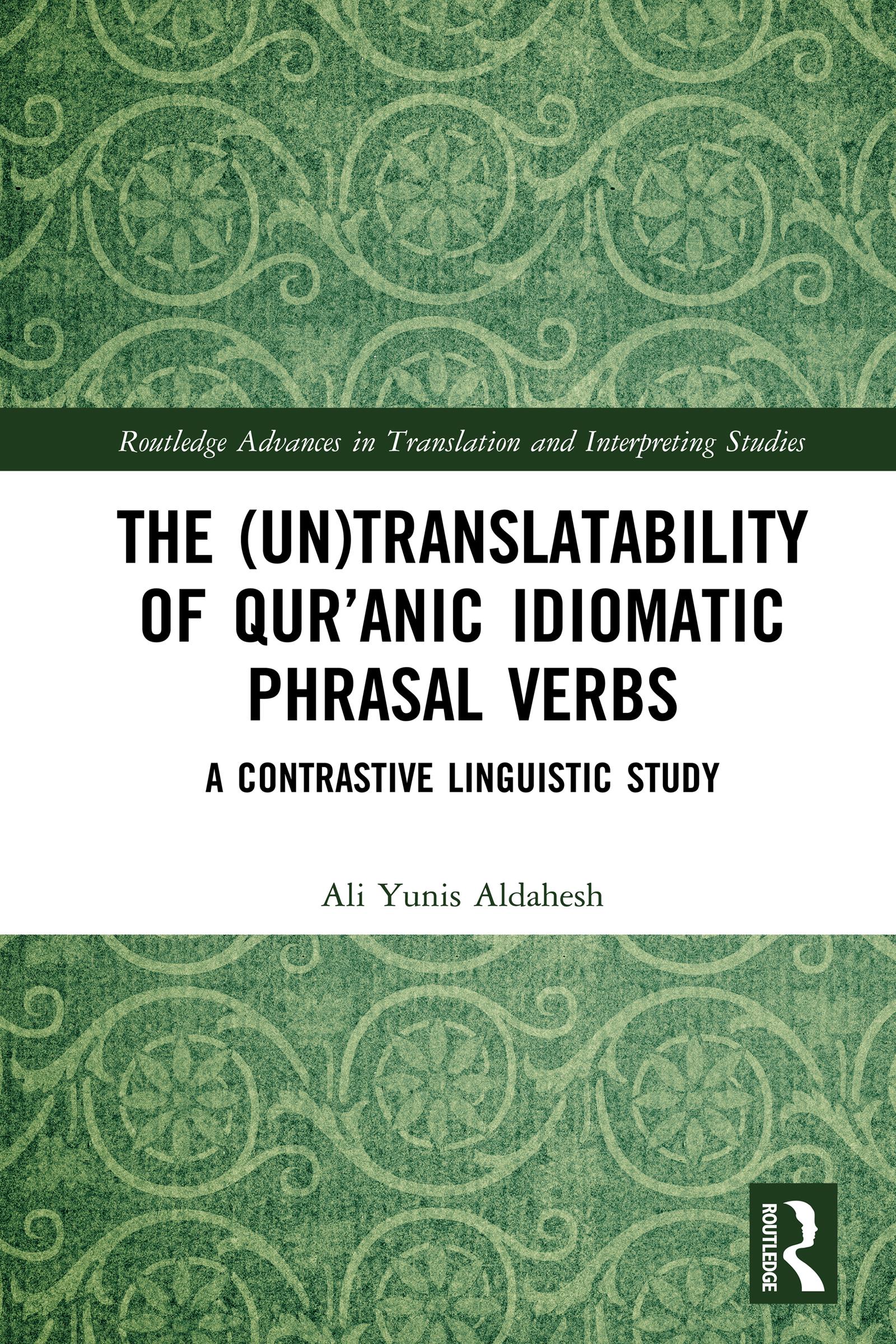
Qur’anic idiomaticity, in its all aspects, poses a great deal of challenge to Qur’an readers, learners, commentators, and translators. One of the most challenging aspects of Qur’anic idiomaticity is Qur’anic idiomatic phrasal verbs, where significances of proper Arabic verbs are entirely fused with significances of prepositions following them to produce new significances that have nothing to do with the basic significances of those verbs and prepositions.
By examining a corpus of ten of the most influential English translations of the Qur’an, this study scrutinizes how some translators of the Qur’an have dealt with the phenomenon of Qur’anic idiomatic phrasal verbs, the difficulties that they have encountered when translating them into English, and the strategies that they have employed in their attempts to overcome the inherent ambiguity of such expressions and provide their functional-pragmatic equivalents for English readership.
The study proposes a working model for analysing and assessing the translation of the Qur’anic idiomatic phrasal verbs and provides a number of theory-based recommendations for translators in general and Qur’an translators in particular.
Płać wygodnie kartą, Klarną, Apple Pay lub Google Pay. Nie jesteś zadowolony? Zawsze masz 14-dniową gwarancję zwrotu pieniędzy. Więcej przeczytasz w naszych warunkach. Masz pytania? Napisz do nas na hello@memmo.org.
Memmo ułatwia naukę – gdziekolwiek jesteś na świecie. U nas znajdziesz podręczniki i sprytne narzędzia do nauki w jednym miejscu: streszczenia, quizy, podcasty i fiszki. A do tego Ted, Twój kumpel do nauki, który odpowie na wszystko, co Cię nurtuje. Ponad 50 000 studentów już tu się uczy – stworzone, byś uczył się szybciej i mniej stresował.