
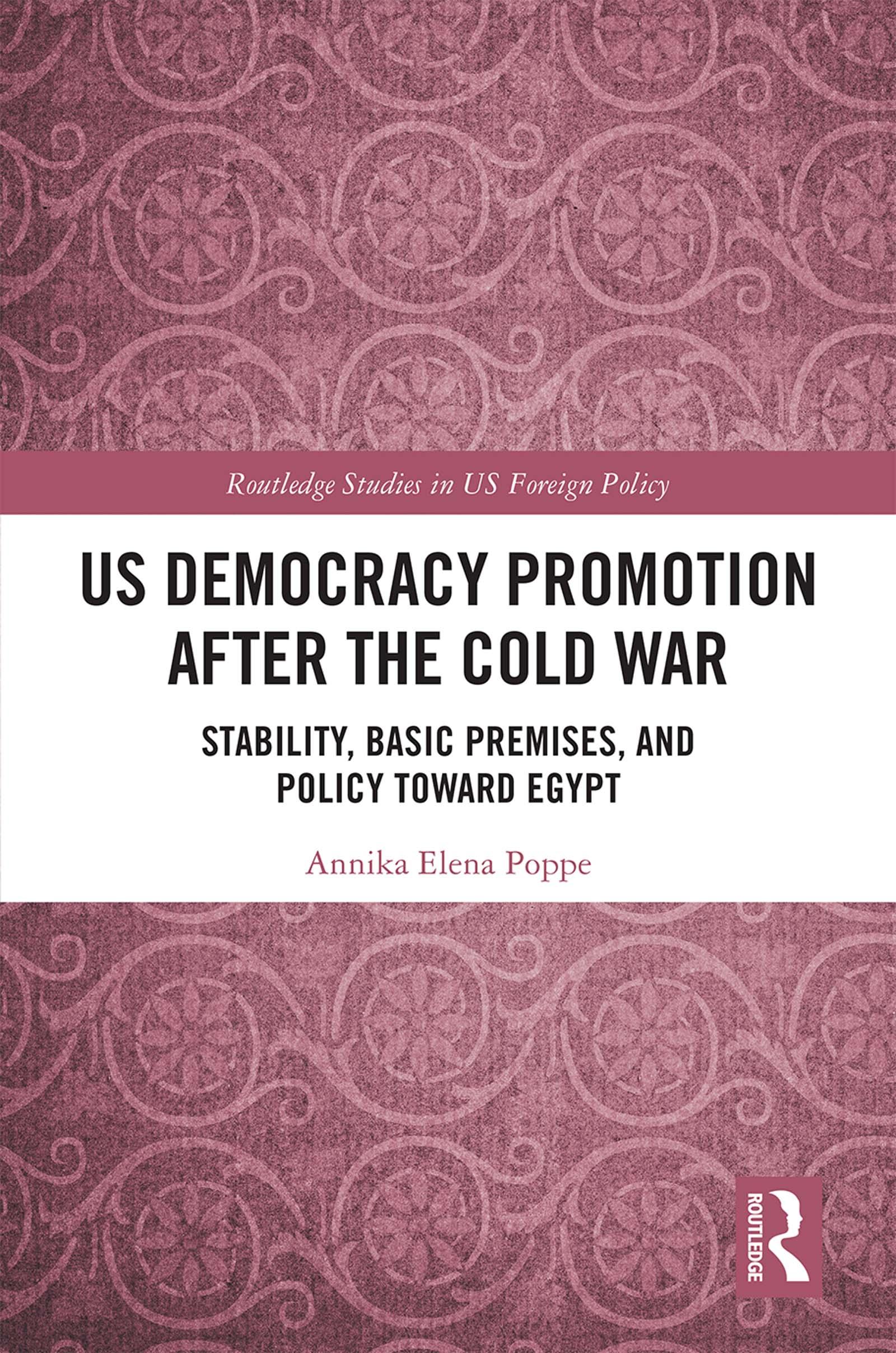
This book explores the often assumed but so far not examined proposition that a particular U.S. culture influences U.S. foreign policy behavior or, more concretely, that widely shared basic assumptions embraced by members of the U.S. administration have a notable impact on foreign policy-making.
Publicly professed beliefs regarding America’s role in the world and about democracy’s universal appeal – despite much contestation – go to the heart of U.S. national identity. Employing extensive foreign policy text analysis as well as using the case study of U.S.-Egyptian bilateral relations during the Clinton, Bush junior, and Obama administrations, it shows that basic assumptions matter in U.S. democracy promotion in general, and the book operationalizes them in detail as well as employs qualitative content analysis to assess their validity and variation.
The research presented lies at the intersection of International Relations, U.S. foreign policy, regional studies, and democracy promotion. The specific focus on the domestic ‘cultural’ angle for the study of foreign policy and this dimension’s operationalization makes it a creative crossover study and a unique contribution to these overlapping fields.
Płać wygodnie kartą, Klarną, Apple Pay lub Google Pay. Nie jesteś zadowolony? Zawsze masz 14-dniową gwarancję zwrotu pieniędzy. Więcej przeczytasz w naszych warunkach. Masz pytania? Napisz do nas na hello@memmo.org.
Memmo ułatwia naukę – gdziekolwiek jesteś na świecie. U nas znajdziesz podręczniki i sprytne narzędzia do nauki w jednym miejscu: streszczenia, quizy, podcasty i fiszki. A do tego Ted, Twój kumpel do nauki, który odpowie na wszystko, co Cię nurtuje. Ponad 50 000 studentów już tu się uczy – stworzone, byś uczył się szybciej i mniej stresował.