
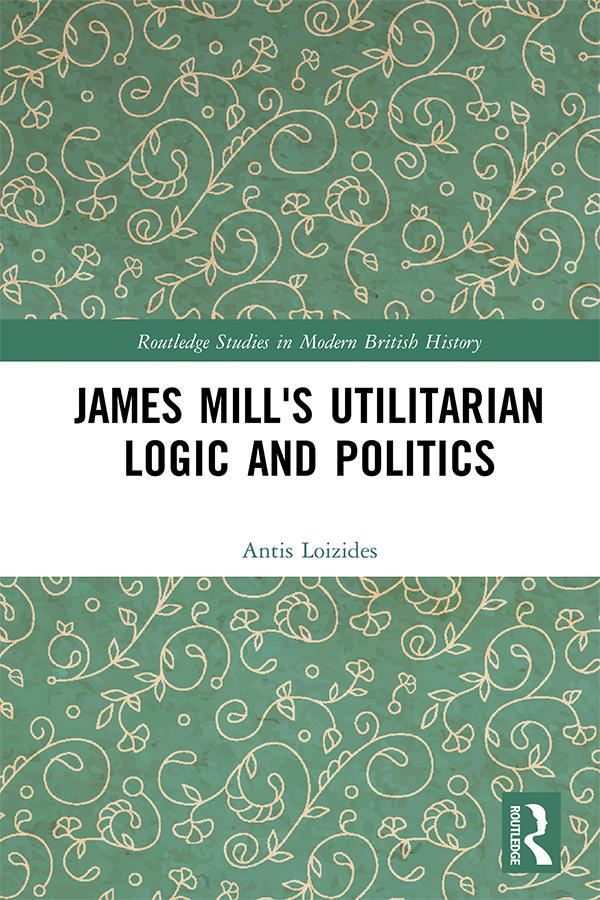
James Mill’s (1773–1836) role in the development of utilitarian thought in the nineteenth century has been overshadowed both by John Stuart Mill (1806–1873) and by Jeremy Bentham (1748–1832). Of the three, the elder Mill is considered to be the least original and with the least important, if any, contributions to utilitarian theory. True as this statement may be, even those who have tried to challenge some of its aspects take the common portrayal of Mill – "the rationalist, the maker of syllogisms, the geometrician" – as given. This book does not. Studying James Mill’s background has surprising results with reference to influences outside the Benthamite tradition as well as unexpected implications for his contributions to debates of his time. The book focuses on his political ideas, the ways in which he communicated them and the ways in which he formed them in an attempt to reveal a portrait of Mill unencumbered from the legacy of Thomas Babington Macaulay’s (1800–1859) brilliant essay "Utilitarian Logic and Politics".
Płać wygodnie kartą, Klarną, Apple Pay lub Google Pay. Nie jesteś zadowolony? Zawsze masz 14-dniową gwarancję zwrotu pieniędzy. Więcej przeczytasz w naszych warunkach. Masz pytania? Napisz do nas na hello@memmo.org.
Memmo ułatwia naukę – gdziekolwiek jesteś na świecie. U nas znajdziesz podręczniki i sprytne narzędzia do nauki w jednym miejscu: streszczenia, quizy, podcasty i fiszki. A do tego Ted, Twój kumpel do nauki, który odpowie na wszystko, co Cię nurtuje. Ponad 50 000 studentów już tu się uczy – stworzone, byś uczył się szybciej i mniej stresował.