
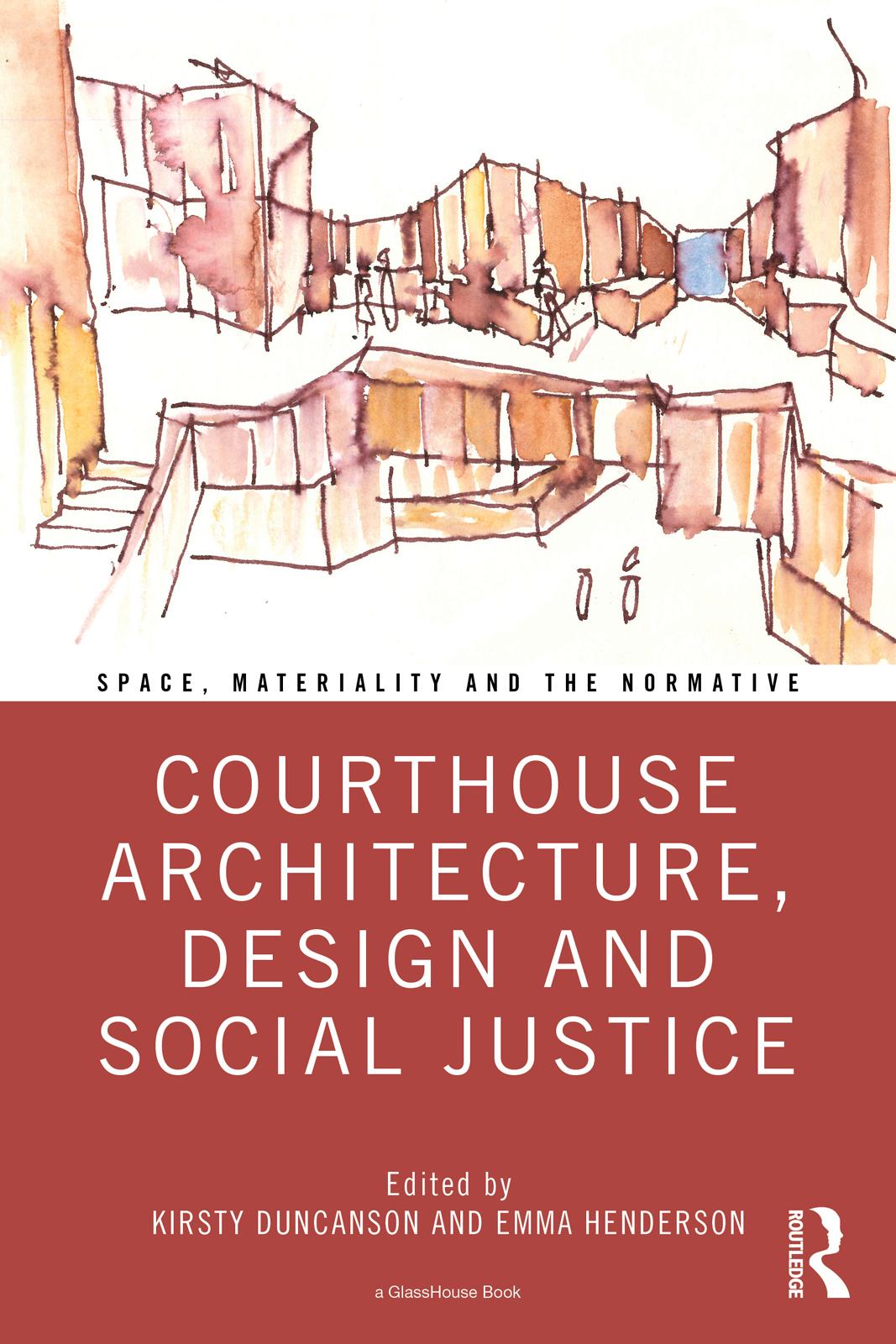
This collection interrogates relationships between court architecture and social justice, from consultation and design to the impact of material (and immaterial) forms on court users, through the lenses of architecture, law, socio-legal studies, criminology, anthropology, and a former senior federal judge.
International multidisciplinary collaborations and single-author contributions traverse a range of methodological approaches to present new insights into the relationship between architecture, design, and justice. These include praxis, photography, reflections on process and decolonising practice, postcolonial, feminist, and poststructural analysis, and theory from critical legal scholarship, political science, criminology, literature, sociology, and architecture. While the opening contributions reflect on establishing design principles and architectural methodologies for ethical consultation and collaboration with communities historically marginalised and exploited by law, the central chapters explore the textures and affects of built forms and the spaces between; examining the disjuncture between design intention and use; and investigating the impact of architecture and the design of space. The collection finishes with contemplations of the very real significance of material presence or absence in courtroom spaces and what this might mean for justice.
Courthouse Architecture, Design and Social Justice provides tools for those engaged in creating, and reflecting on, ethical design and building use, and deepens the dialogue across disciplinary boundaries towards further collaborative work in the field. It also exists as a new resource for research and teaching, facilitating undergraduate critical thought about the ways in which design enhances and restricts access to justice.
Płać wygodnie kartą, Klarną, Apple Pay lub Google Pay. Nie jesteś zadowolony? Zawsze masz 14-dniową gwarancję zwrotu pieniędzy. Więcej przeczytasz w naszych warunkach. Masz pytania? Napisz do nas na hello@memmo.org.
Memmo ułatwia naukę – gdziekolwiek jesteś na świecie. U nas znajdziesz podręczniki i sprytne narzędzia do nauki w jednym miejscu: streszczenia, quizy, podcasty i fiszki. A do tego Ted, Twój kumpel do nauki, który odpowie na wszystko, co Cię nurtuje. Ponad 50 000 studentów już tu się uczy – stworzone, byś uczył się szybciej i mniej stresował.