
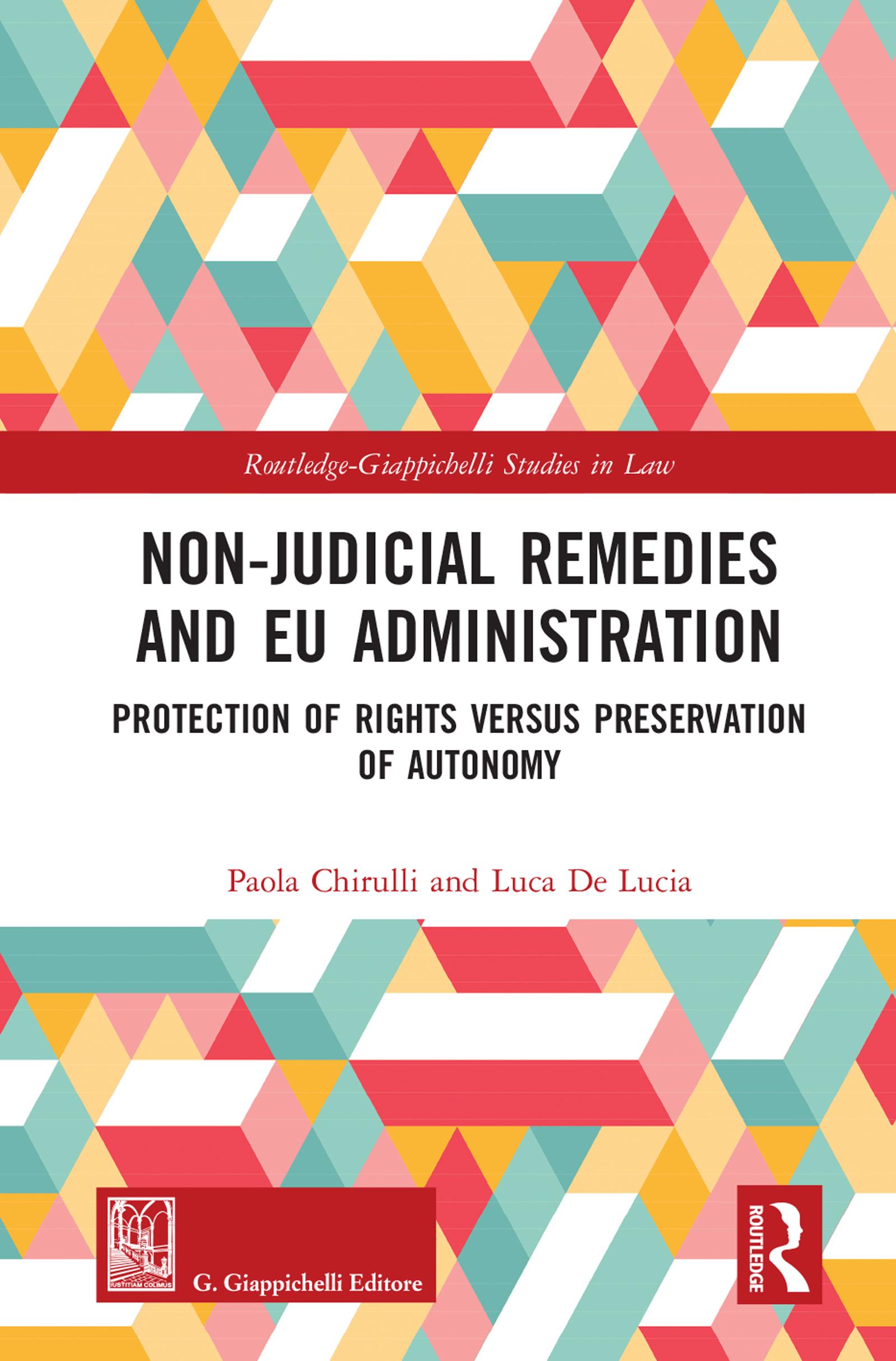
The increasing number of executive tasks assigned to EU institutions and agencies has resulted in a greater demand for justice that can no longer be satisfied by the courts alone. This has led to the development of a wide range of administrative remedies that have become a central part of the EU administrative justice system. This book examines the important theoretical and practical issues raised by this phenomenon.
The work focuses on five administrative remedies: internal review; administrative appeals to the Commission against decisions of executive and decentralised agencies; independent administrative review of decisions of decentralised agencies; complaints to the EU Ombudsman; and complaints to the EU Data Protection Supervisor. The research rests on the idea that there is a complex, and at times ambivalent, relationship between administrative remedies and the varying degrees of autonomy of EU institutions and bodies, offices and agencies. The work draws on legislation, internal rules of executive bodies, administrative practices and specific case law, data and statistics. This empirical approach helps to unveil the true dynamics present within these procedures and demonstrates that whilst administrative remedies may improve the relationship between individuals and the EU administration, their interplay with administrative autonomy might lead to a risk of fragmentation and incoherence in the EU administrative justice system.
Płać wygodnie kartą, Klarną, Apple Pay lub Google Pay. Nie jesteś zadowolony? Zawsze masz 14-dniową gwarancję zwrotu pieniędzy. Więcej przeczytasz w naszych warunkach. Masz pytania? Napisz do nas na hello@memmo.org.
Memmo ułatwia naukę – gdziekolwiek jesteś na świecie. U nas znajdziesz podręczniki i sprytne narzędzia do nauki w jednym miejscu: streszczenia, quizy, podcasty i fiszki. A do tego Ted, Twój kumpel do nauki, który odpowie na wszystko, co Cię nurtuje. Ponad 50 000 studentów już tu się uczy – stworzone, byś uczył się szybciej i mniej stresował.