
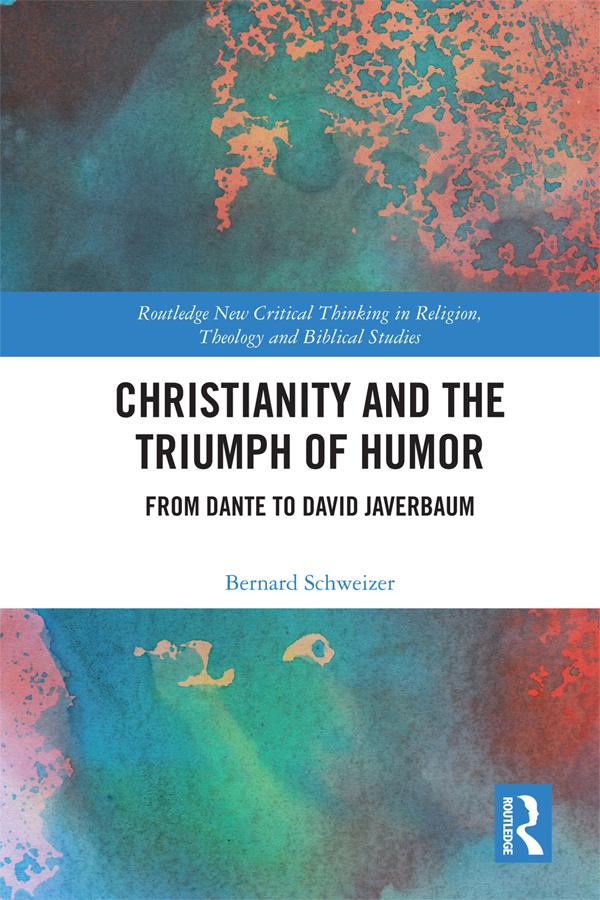
This book traces the development of religious comedy and leverages that history to justify today’s uses of religious humor in all of its manifestations, including irreverent jokes. It argues that regulating humor is futile and counterproductive, illustrating this point with a host of comedic examples. Humor is a powerful rhetorical tool for those who advocate and for those who satirize religious ideals.
The book presents a compelling argument about the centrality of humor to the story of Western Christianity’s cultural and artistic development since the Middle Ages, taking a multi-disciplinary approach that combines literary criticism, religious studies, philosophy, theology, and social science. After laying out the conceptual framework in Part 1, Part 2 analyzes key works of religious comedy across the ages from Dante to the present, and it samples the breadth of contemporary religious humor from Brad Stine to Robin Williams, and from Monty Python to South Park. Using critical, historical, and conceptual lenses, the book exposes and overturns past attempts by church authorities, scholars, and commentators to limit and control laughter based on religious, ideological, or moral criteria.
This is a unique look into the role of humor and comedy around religion. It will, therefore, appeal to readers interested in multiple fields of inquiry, including religious studies, humor studies, the history of ideas, and comparative literature.
Płać wygodnie kartą, Klarną, Apple Pay lub Google Pay. Nie jesteś zadowolony? Zawsze masz 14-dniową gwarancję zwrotu pieniędzy. Więcej przeczytasz w naszych warunkach. Masz pytania? Napisz do nas na hello@memmo.org.
Memmo ułatwia naukę – gdziekolwiek jesteś na świecie. U nas znajdziesz podręczniki i sprytne narzędzia do nauki w jednym miejscu: streszczenia, quizy, podcasty i fiszki. A do tego Ted, Twój kumpel do nauki, który odpowie na wszystko, co Cię nurtuje. Ponad 50 000 studentów już tu się uczy – stworzone, byś uczył się szybciej i mniej stresował.