
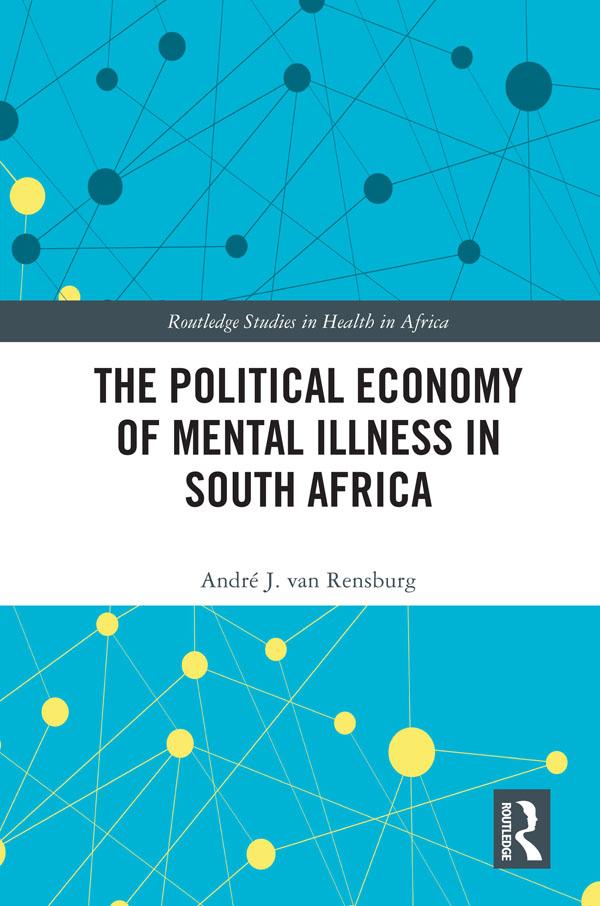
The book describes key socio-political reforms that helped shape post-apartheid South Africa’s mental health system.
The author interrogates how reforms shaped public, community-based services for people living with severe mental illness, and how features of this care has been determined, in part at least, by the relations between actors and structures in the state, private for-profit health care, and civil society spheres. A description of the development of South Africa’s post-apartheid health system, and the contentions that emerge therein, sets the stage for an analysis of the country’s most tragic human rights failure during its democratic period, namely the Life Esidimeni tragedy. The roots of the tragedy are not only framed as a loss of life and dignity as a result of political corruption and administrative mismanagement, but as a power differential that ultimately highlights an unjust system that relegates its most vulnerable citizens to commodities, without voice and without agency. The book concludes that the commodification of severe mental illness has been a product of neoliberal discourses that have shaped the economistic ways in which the post-apartheid South African state have governed poverty and severe mental illness.
This book will be of interest to scholars of health, social and economic policy in South Africa.
Płać wygodnie kartą, Klarną, Apple Pay lub Google Pay. Nie jesteś zadowolony? Zawsze masz 14-dniową gwarancję zwrotu pieniędzy. Więcej przeczytasz w naszych warunkach. Masz pytania? Napisz do nas na hello@memmo.org.
Memmo ułatwia naukę – gdziekolwiek jesteś na świecie. U nas znajdziesz podręczniki i sprytne narzędzia do nauki w jednym miejscu: streszczenia, quizy, podcasty i fiszki. A do tego Ted, Twój kumpel do nauki, który odpowie na wszystko, co Cię nurtuje. Ponad 50 000 studentów już tu się uczy – stworzone, byś uczył się szybciej i mniej stresował.