
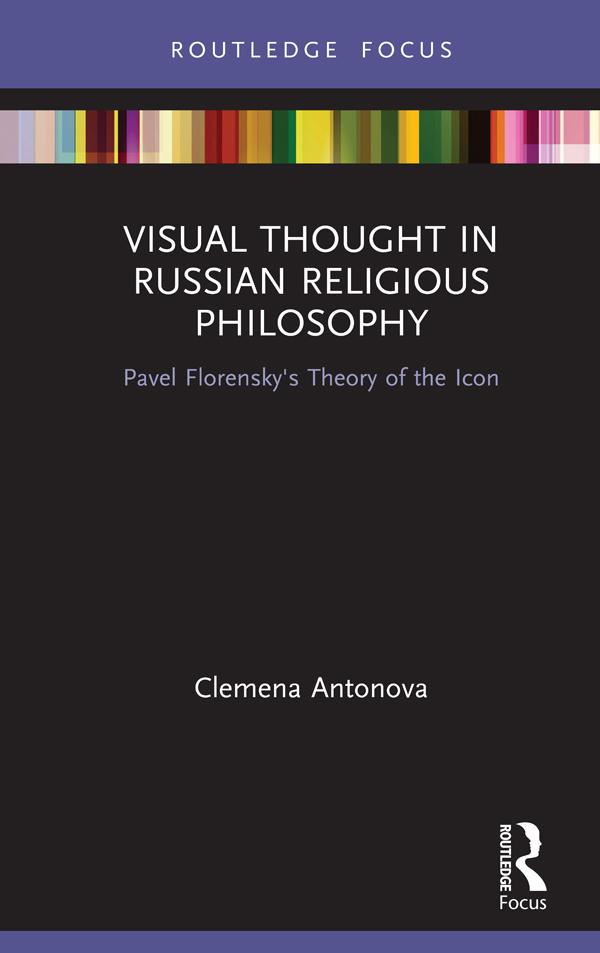
This book considers a movement within Russian religious philosophy known as "full unity" (vseedinstvo), with a focus on one of its main representatives, Pavel Florensky (1882–1937). Often referred to as "the Russian Leonardo," Florensky was an important figure of the Russian religious renaissance around the beginning of the twentieth century. This book shows that his philosophy, conceptualized in his theory of the icon, brings together the problem of the "religious turn" and the "pictorial turn" in modern culture, as well as contributing to contemporary debates on religion and secularism.
Organized around the themes of full unity and visuality, the book examines Florensky’s definition of the icon as "energetic symbol," drawing on St. Gregory Palamas, before offering a theological reading of Florensky’s theory of the pictorial space of the icon. It then turns to Florensky’s idea of space in the icon as Non-Euclidean. Finally, the icon is placed within wider debates provoked by Bolshevik cultural policy, which extend to current discussions concerning religion, modernity, and art.
Offering an important contribution from Russian religious philosophy to issues of contemporary modernity, this book will be of interest to scholars of religious philosophy, Russian studies, theology and the arts, and the medieval icon.
Płać wygodnie kartą, Klarną, Apple Pay lub Google Pay. Nie jesteś zadowolony? Zawsze masz 14-dniową gwarancję zwrotu pieniędzy. Więcej przeczytasz w naszych warunkach. Masz pytania? Napisz do nas na hello@memmo.org.
Memmo ułatwia naukę – gdziekolwiek jesteś na świecie. U nas znajdziesz podręczniki i sprytne narzędzia do nauki w jednym miejscu: streszczenia, quizy, podcasty i fiszki. A do tego Ted, Twój kumpel do nauki, który odpowie na wszystko, co Cię nurtuje. Ponad 50 000 studentów już tu się uczy – stworzone, byś uczył się szybciej i mniej stresował.