
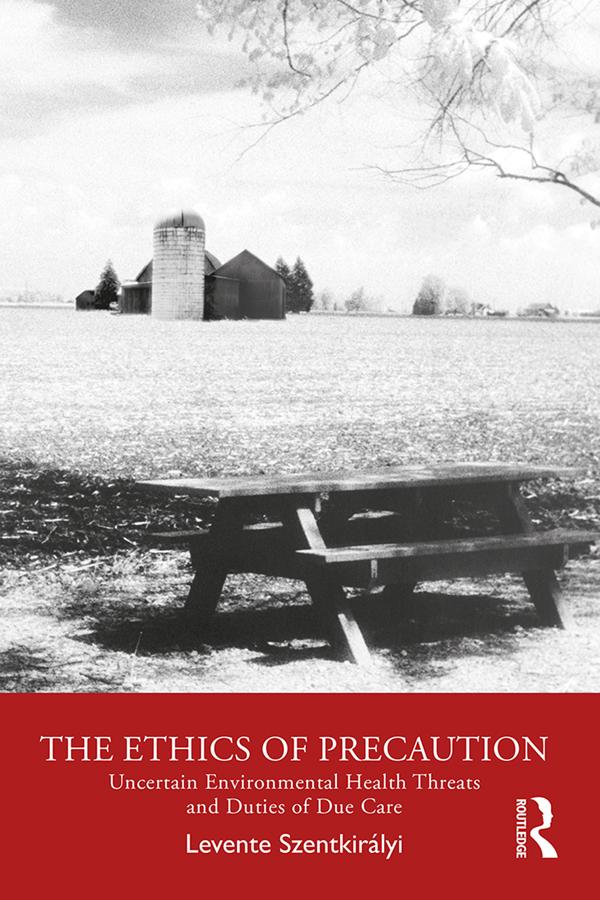
There are thousands of substances manufactured in the United States to which the public is routinely exposed and for which toxicity data are limited or absent. Some insist that uncertainty about the severity of potential harm justifies implementing precautionary regulations, while others claim that uncertainty justifies the absence of regulations until sufficient evidence confirms a strong probability of severe harm.
In this book, Levente Szentkirályi overcomes this impasse in his defense of precautionary environmental risk regulation by shifting the focus from how to manage uncertainty to what it is we owe each other morally. He argues that actions that create uncertain threats wrongfully gamble with the welfare of those who are exposed and neglect the reciprocity that our equal moral standing demands. If we take the moral equality and rights of others seriously, we have a duty to exercise due care to strive to prevent putting them in possible harm’s way.
The Ethics of Precaution will be of great interest to researchers, educators, advanced students, and practitioners working in the fields of environmental political theory, ethics of risk, and environmental policy.
Płać wygodnie kartą, Klarną, Apple Pay lub Google Pay. Nie jesteś zadowolony? Zawsze masz 14-dniową gwarancję zwrotu pieniędzy. Więcej przeczytasz w naszych warunkach. Masz pytania? Napisz do nas na hello@memmo.org.
Memmo ułatwia naukę – gdziekolwiek jesteś na świecie. U nas znajdziesz podręczniki i sprytne narzędzia do nauki w jednym miejscu: streszczenia, quizy, podcasty i fiszki. A do tego Ted, Twój kumpel do nauki, który odpowie na wszystko, co Cię nurtuje. Ponad 50 000 studentów już tu się uczy – stworzone, byś uczył się szybciej i mniej stresował.