
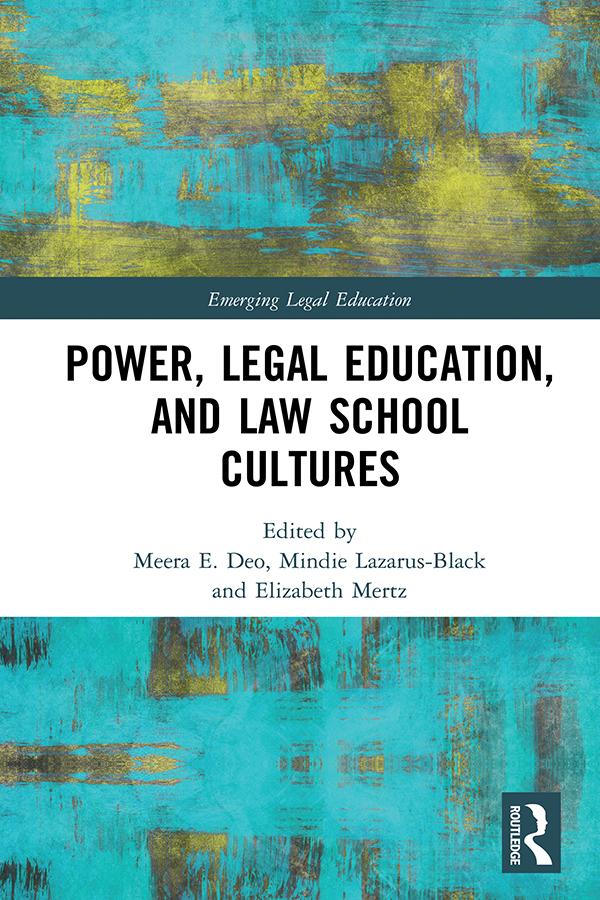
There is a myth that lingers around legal education in many democracies. That myth would have us believe that law students are admitted and then succeed based on raw merit, and that law schools are neutral settings in which professors (also selected and promoted based on merit) use their expertise to train those students to become lawyers. Based on original, empirical research, this book investigates this myth from myriad perspectives, diverse settings, and in different nations, revealing that hierarchies of power and cultural norms shape and maintain inequities in legal education.
Embedded within law school cultures are assumptions that also stymie efforts at reform. The book examines hidden pedagogical messages, showing how presumptions about theory’s relation to practice are refracted through the obfuscating lens of curricula. The contributors also tackle questions of class and market as they affect law training.
Finally, this collection examines how structural barriers replicate injustice even within institutions representing themselves as democratic and open, revealing common dynamics across cultural and institutional forms. The chapters speak to similar issues and to one another about the influence of context, images of law and lawyers, the political economy of legal education, and the agency of students and faculty.
Płać wygodnie kartą, Klarną, Apple Pay lub Google Pay. Nie jesteś zadowolony? Zawsze masz 14-dniową gwarancję zwrotu pieniędzy. Więcej przeczytasz w naszych warunkach. Masz pytania? Napisz do nas na hello@memmo.org.
Memmo ułatwia naukę – gdziekolwiek jesteś na świecie. U nas znajdziesz podręczniki i sprytne narzędzia do nauki w jednym miejscu: streszczenia, quizy, podcasty i fiszki. A do tego Ted, Twój kumpel do nauki, który odpowie na wszystko, co Cię nurtuje. Ponad 50 000 studentów już tu się uczy – stworzone, byś uczył się szybciej i mniej stresował.