
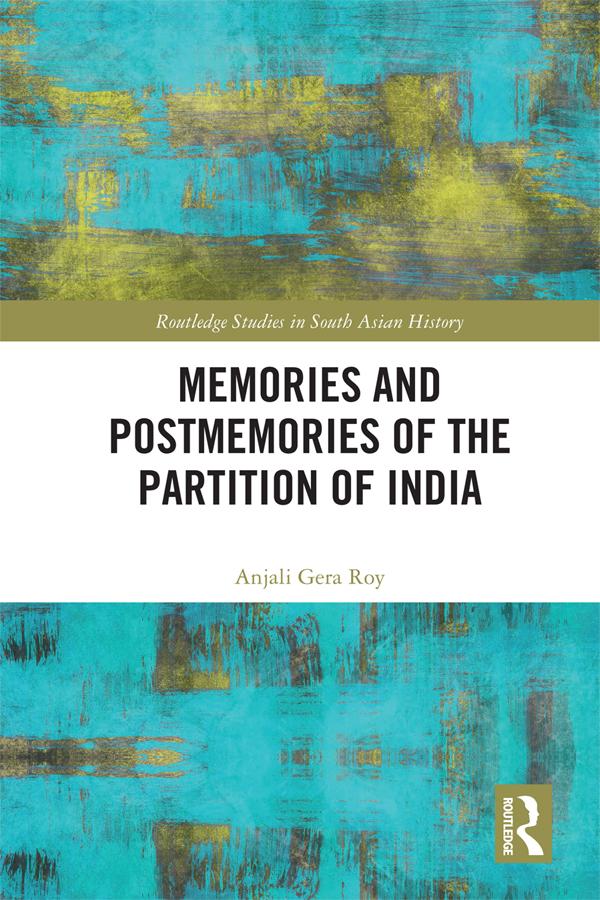
This book examines the afterlife of Partition as imprinted on the memories and postmemories of Hindu and Sikh survivors from West Punjab to foreground the intersection between history, memory and narrative. It shows how survivors script their life stories to reinscribe tragic tales of violence and abjection into triumphalist sagas of fortitude, resilience, industry, enterprise and success. At the same time, it reveals the silences, stutters and stammers that interrupt survivors’ narrations to bring attention to the untold stories repressed in their consensual narratives.
By drawing upon current research in history, memory, narrative, violence, trauma, affect, home, nation, borders, refugees and citizenship, the book analyzes the traumatizing effects of both the tangible and intangible violence of Partition by tracing the survivors’ journey from refugees to citizens as they struggle to make new homes and lives in an unhomely land. Moreover, arguing that the event of Partition radically transformed the notions of home, belonging, self and community, it shows that individuals affected by Partition produce a new ethics and aesthetic of displacement and embody new ways of being in the world.
An important contribution to the field of Partition studies, this book will be of interest to researchers on South Asian history, memory, partition and postcolonial studies.
Płać wygodnie kartą, Klarną, Apple Pay lub Google Pay. Nie jesteś zadowolony? Zawsze masz 14-dniową gwarancję zwrotu pieniędzy. Więcej przeczytasz w naszych warunkach. Masz pytania? Napisz do nas na hello@memmo.org.
Memmo ułatwia naukę – gdziekolwiek jesteś na świecie. U nas znajdziesz podręczniki i sprytne narzędzia do nauki w jednym miejscu: streszczenia, quizy, podcasty i fiszki. A do tego Ted, Twój kumpel do nauki, który odpowie na wszystko, co Cię nurtuje. Ponad 50 000 studentów już tu się uczy – stworzone, byś uczył się szybciej i mniej stresował.