
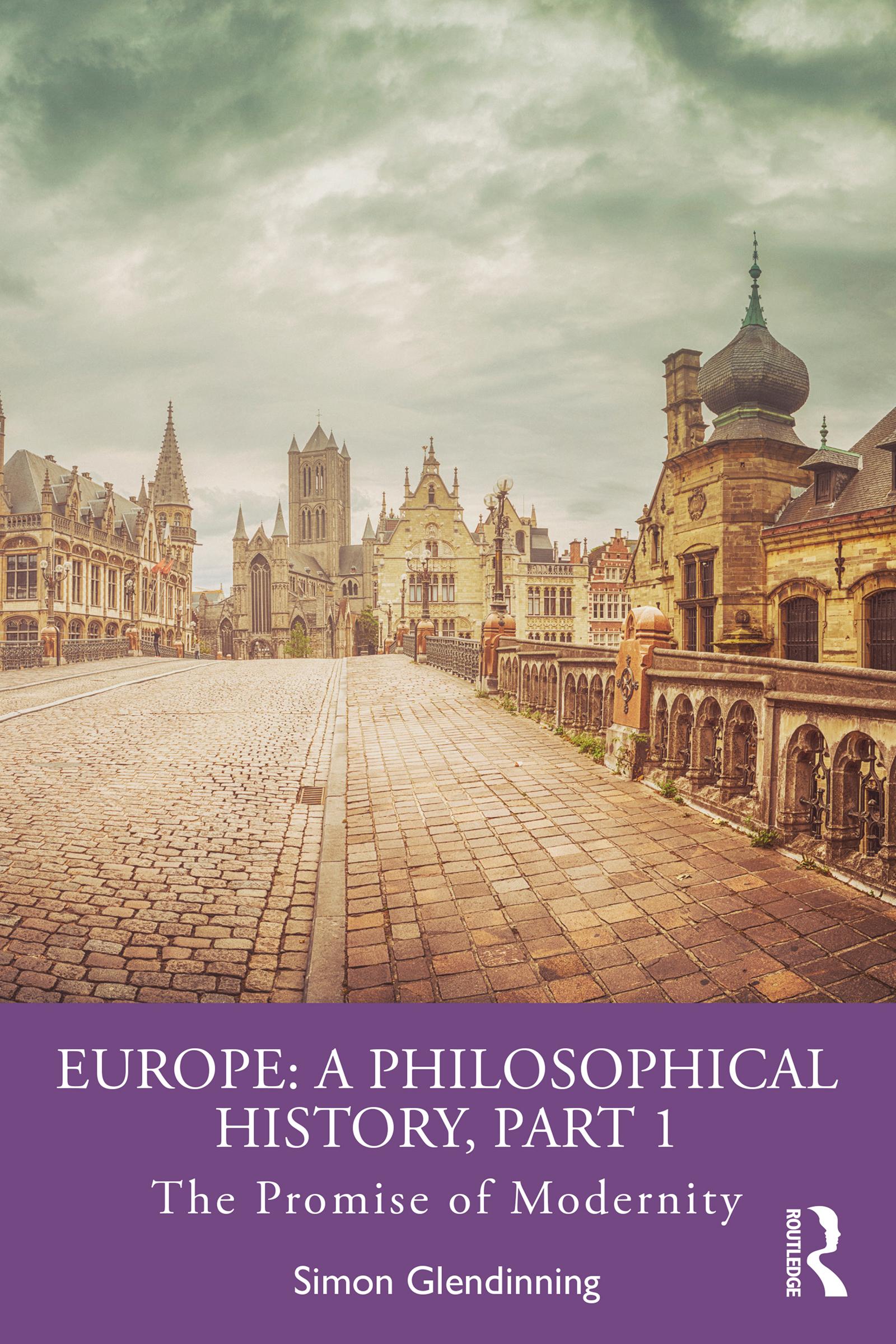
Europe is inseparable from its history. That history has been extensively studied in terms of its political history, its economic history, its religious history, its literary and cultural history, and so on. Could there be a distinctively philosophical history of Europe? Not a history of philosophy in Europe, but a history of Europe that focuses on what, in its history and identity, ties it to philosophy.
In the two volumes of Europe: A Philosophical History - The Promise of Modernity and Beyond Modernity - Simon Glendinning takes up this question, telling the story of Europe’s history as a philosophical history.
In Part 1, The Promise of Modernity, Glendinning examines the conception of Europe that links it to ideas of rational Enlightenment and modernity. Tracking this self-understanding as it unfolds in the writings of Kant, Hegel and Marx, Glendinning explores the transition in Europe from a conception of its modernity that was philosophical and religious to one which was philosophical and scientific. While this transition profoundly altered Europe’s own history, Glendinning shows how its self-confident core remained intact in this development. But not for long. This volume ends with an examination of the abrupt shattering of this confidence brought on by the first world-wide war of European origin – and the imminence of a second. The promise of modernity was in ruins. Nothing, for Europe, would ever be the same again.
Part 2: Beyond Modernity is available now from Routledge. ISBN 9781032015828
Płać wygodnie kartą, Klarną, Apple Pay lub Google Pay. Nie jesteś zadowolony? Zawsze masz 14-dniową gwarancję zwrotu pieniędzy. Więcej przeczytasz w naszych warunkach. Masz pytania? Napisz do nas na hello@memmo.org.
Memmo ułatwia naukę – gdziekolwiek jesteś na świecie. U nas znajdziesz podręczniki i sprytne narzędzia do nauki w jednym miejscu: streszczenia, quizy, podcasty i fiszki. A do tego Ted, Twój kumpel do nauki, który odpowie na wszystko, co Cię nurtuje. Ponad 50 000 studentów już tu się uczy – stworzone, byś uczył się szybciej i mniej stresował.